
Beef Welfare Scheme closing date approaching
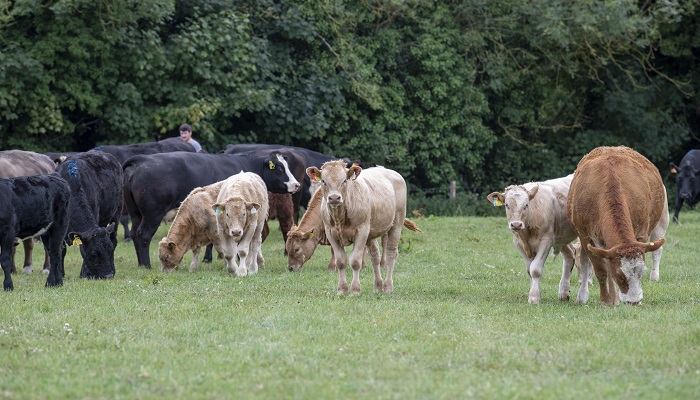
Providing financial support to further increase economic efficiency, enhance farm biosecurity, animal health and husbandry measures on farms, Anne O’ Malley, Teagasc Advisory Mayo, reminds farmers that applications to the 2026 Beef Welfare Scheme will close on 23 September 2026 at 5pm.
The Beef Welfare Scheme is open to suckler beef farmers with eligible calves born in the herd of the applicant between 01 July 2025 and 30 June 2026. To qualify, the calves must be born to a beef-bred suckler cow, sired by a beef breed bull and the dam must rear their calf by suckling.
Each participant must maintain records and receipts to demonstrate compliance and completion of action(s) chosen at application stage.
The maximum payment is up to €75 per eligible calf up to a maximum of 45 eligible calves. All information, including penalties for non-compliance, is available on the Department of Agriculture, Food and the Marine website.
Category 1- Meal Feeding – Mandatory Action
Meal feeding is mandatory and all participants must select the number of calves at application stage. Feed compound ration containing minerals and vitamins for a minimum of four weeks pre-weaning and two weeks post-weaning to reduce stress during weaning time.
Participants must purchase sufficient meal for calves selected between 14 October 2025 and 13 October 2026 and retain receipts of purchase.
Recommended feeding rates are 1kg per calf per day for a period of four weeks pre-weaning and 2kg per calf per day for two weeks post-weaning. The rate of payment is €35 per eligible calf up to a maximum of 45 eligible calves.
For more guidance on meal feeding under the Beef Welfare Scheme, view the Teagasc factsheet: 2026 National Beef Welfare Scheme Meal Feeding
Category 2 – Vaccination – Optional Action
This is an optional action and, if selected online at application stage, participants must implement a vaccination programme against clostridial diseases and/or calf pneumonia and/or bluetongue in suckler animals and record details of the vaccination.
Consult with private veterinary practitioner (PVP) to select the most suitable vaccination programme for your herd. Participants must purchase sufficient vaccines for all animals selected for vaccination between 14 October 2025 and 13 October 2026 and retain receipts of vaccines purchased. The rate of payment is €15 per eligible calf up to a maximum of 45 eligible calves.
- Clostridial Vaccination:
- Clostridial diseases include a range of serious bacterial infections such as blackleg. Clostridial diseases can affect animals at all ages depending on the strain but cattle between three and twelve months of age are at the highest risk. Vaccinate calves from two weeks of age. Consult with your PVP as incorrect use of vaccines leaves animals at risk.
- Pneumonia Vaccination:
- Pneumonia is the leading cause of death in cattle of all ages over one month old. Bacteria, viruses but also lungworm when on pasture can cause respiratory disease in calves. Aim to minimise stress during weaning. Purchased weanlings are under more stress than home bred weanlings. Participants should consult with their PVP for the most suitable bovine respiratory disease vaccination programme for their herd.
- Bluetongue Vaccination:
- Bluetongue is a viral disease impacting sheep, cattle, goats and deer and is transmitted by biting midges. The current variant of the virus is bluetongue serotype-3 (BTV-3). You must contact your PVP to apply for a license from DAFM to possess and administer the vaccine and up to date information on bluetongue is available is available at on the DAFM website. As part of ongoing disease surveillance farmers in collaboration with PVPs can submit abortion samples (post-abortion dam bloods and deformed/aborted foetuses) to their local Regional Veterinary Lab (RVL) for diagnoses.
Category 3 – Faecal Testing or Forage Testing – Optional Action
This optional action allows farmers to select either Faecal or Forage Testing and only one of these actions is eligible for payment. Participants must complete two faecal tests, a minimum of four weeks apart and submit for analysis to an approved laboratory. The farmer in consultation with a PVP will identify the most appropriate faecal test(s), whether fluke screen or faecal egg count (FEC).
If a participant selects forage testing, participants must take three silage samples and submit for analysis to an approved laboratory. Dry Matter Digestibility (DMD) is a key measure of quality. 74+ DMD is suitable for young growing animals, below 66 DMD is sub-maintenance feed for most classes of stock and 68-70 DMD is adequate for dry cows requiring little body condition gain. Rate of meal supplementation can be determined based on silage analysis.
Test kits must be purchased between 14 October 2025 and 13 October 2026 and participants must retain receipt of purchase. The participant must prove purchase of test kits by 13 October 2026, which is the commitment to complete the action, but the test can occur after 13 October 2026. The rate of payment is €25 per eligible calf selected for meal feeding up to a maximum of 45 eligible calves.
Contact your FAS advisor if you need help with your 2026 online BWS application. Please also remember health and safety on farms when working with animals this autumn and winter. Teagasc research indicates that 65% of all farm injuries are livestock related.