
Blowfly control in sheep flocks
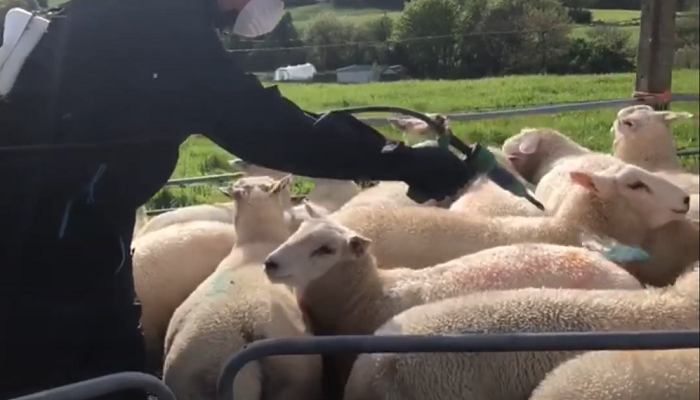
Blowfly strike is a condition that should be prevented rather than treated. Michael Gottstein, Head of Sheep KT, writes on the different options available to farmers to aid in the control of blowfly strike.
Flystrike is a common, production limiting, costly and sometimes fatal condition in sheep in Ireland. It affects all ages of sheep and is caused when blowflies lay their eggs on the fleece of a sheep.
The flies are attracted by soiled areas on the fleece and once the maggots hatch, they secrete fluids which attract other flies to lay their eggs on the fleece also. Typically sheep are most at risk during the summer months; however, it is not unusual to see cases of blowfly strike in late spring and autumn also.
Blowfly strike is a condition that should be prevented rather than treated. The disease causes significant pain and discomfort to affected sheep and, if untreated, can lead to more severe illness from secondary infections as well as death. There are a number of different options that are available to farmers to aid in the control of blowfly strike. Some products prevent the condition only and some will both treat and prevent cases.
1). Plunge dipping
This is effectively plunge dipping sheep in a suitable insecticide. The insecticide bonds to the wool and prevents future attacks for a period of time. For this process to be effective, it is important that:
- The dip solution is made up to the correct strength and that fresh dip concentrate is added into the dip bath periodically (follow manufacturer’s instructions).
- The sheep remain immersed in the dip solution for a minimum of 60 seconds. This is where most dipping falls down in so far as the sheep are not retained in the bath for long enough time. There is a strong correlation between the length of time that the protection will last for and the length of time that the sheep remain in the dipping tank.
2). Insecticidal pour-ons
There are a number of Pyrethroid based pour-ons which offer short term cover (6-8 weeks) from flystirke on the areas where they are applied. These products will also kill maggots if the product is applied directly to the larvae.
3). Insect Growth Regulators (IGRs)
IGRs are sprayed onto the fleece of the sheep. They move around the entire body of the sheep in the lanolin on the wool. IGRs work by preventing the maggots from developing for the stage one (non-feeding larvae) to stage two larvae (feeding – damage causing larvae).
Maggots that hatch from eggs laid after the application of an IGR will die as they cannot feed on the sheep. However, maggots that have hatched and developed to stage two larvae prior to IGR application will be unaffected and cause harm. It is therefore important to remember that IGRs are only useful as preventative management. There are a number of different products on the market with varying lengths of cover depending on the concentration of the active ingredient. The duration of cover ranges from; Clikzin (up to 8 weeks), Clik (up to 16 weeks) & Clik Extra (up to 19 weeks).
4). Shearing
Shearing will provide protection from maggots due to the inability of the flies to attach eggs to the fleece and for the maggots to have protection in the wool. However, this protection is only short lived (a number of weeks) and is not a reliable control method.
Summary
For season long control of blowfly, the best option is to use a long duration insect growth regulator pour-on. This needs to be applied before sheep are at risk of flystrike. For farmers aiming to sell lambs from the end of June onwards, it needs to be applied in mid-May to ensure that the 40-day meat withhold period has elapsed before lambs are ready to draft.
For shorter term control and shorter meat withhold periods, use a short acting IGR or Pyrethroid. These will provide 6-8 weeks cover with a 7-8 day meat withhold period.
Where sheep have already been struck or other external parasites also need to be controlled (e.g. ticks, lice etc.), then choose between plunge dipping or a Pyrethroid based pour – on.
For more information, click here for a series of podcasts on applying pour-on products.
In this video Michael gives an overview of the different pour-ons on the market and also demonstrates the best way to apply the pour-on: