
14 November 2024
Bluetongue: What are the risks for Irish cattle farmers?
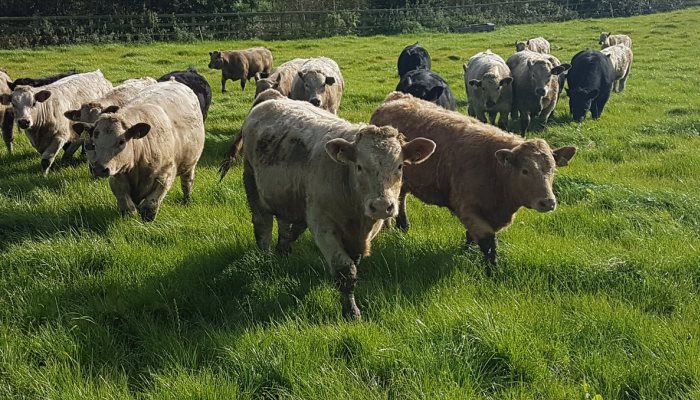
Although no cases of bluetongue have been detected in Ireland, Beef Specialist at Teagasc, Catherine Egan reminds us that Irish cattle and sheep remain at high risk from the disease.
Bluetongue is a serious disease of cattle, sheep, goats and camelids. It is caused by a virus which is transmitted between animals by biting midges (Culicoides species). There are many strains of the virus; during 2024 the strain bluetongue virus 3 (BTV3) spread widely across northwestern Europe, including to eastern and central England.
While no cases have been detected in Ireland, Irish cattle and sheep remain at high risk from this disease. Temperature plays a key role in bluetongue transmission and gives rise to the seasonality associated with the disease. The midges which spread the virus, which are present in Ireland, are less active now that temperatures have dropped, but midge activity will resume around April as the summer approaches. At that stage, the risk of spread across the Irish Sea will correspondingly increase. Weather conditions may lead to wind dispersal of infected midges from France, England or Wales onto the east coast of Ireland.
Dr. Eoin Ryan Head of the National Disease Control Centre within the Department of Agriculture, Food and the Marine (DAFM) will out outline in detail the risks for Irish cattle farmers and ways farmers can help prevent it at this year’s Teagasc National Beef Conference, which is taking place in the Landmark Hotel, Carrick on Shannon, Co. Leitrim on Tuesday 19th November at 5pm.
Eoin qualified as a vet from UCD in 2002. He worked in mixed practice and then completed a PhD in foot and mouth disease in the Pirbright Institute, UK. He has worked for the UN Food and Agriculture Organisation and in various roles in the Department of Agriculture, Food and the Marine.
Bluetongue is a notifiable disease, any suspect case of bluetongue must be reported to the Department of Agriculture, Food and the Marine (DAFM) without delay. Farmers, veterinary practitioners and other relevant stakeholders should remain vigilant for bluetongue. It is important that bluetongue is considered as a possible differential diagnosis if suggestive clinical signs are present, as quick detection is key for successful management and control.
Conference speakers
Additionally, at the Teagasc National Beef Conference, Dr John Donlon, Research Officer at Teagasc Grange, will out outline ways to control pneumonia in suckler weanlings.
Other speakers on the night include:
- Dr Peter Doyle, Research Officer at Teagasc Grange, will outline the impact of red and white clover on animal performance in suckler calf-to-beef production systems.
- Dr Patrick Forrestal, Senior Research Officer from Teagasc Johnstown Castle, will discuss some practical nutrient management solutions that beef farmers can implement on their farms to increase efficiency, reduce costs and address environmental pressures facing the sector.
- Martina Harrington, Programme Manager of the Teagasc Future Beef Programme, will outline Innovations on the participants of Future Beef Suckler Farms
- Shane Pearson, Design Your Life Coaching, will outline ways for farmers to stay resilient on farms through stressful times of the year.
There will be an opportunity for farmers to meet with members of the Teagasc Organic team, Agricultural Sustainability Support and Advisory Programme (ASSAP) and Signpost Programme to discuss any queries you may have. The Teagasc Future Beef and DairyBeef 500 teams will also be in attendance at the conference with updates from both programmes. There will be a focus on farmer health and wellbeing with a number of health professionals with information stands on the night also.
This is a free event. All are welcome to attend.
Further details on the Teagasc National Beef Conference are available here.
Also read: Setting the scene for the Teagasc National Beef Conference