
BroadGen – assessing the genetic diversity and resilience of four native broadleaf tree species in Ireland
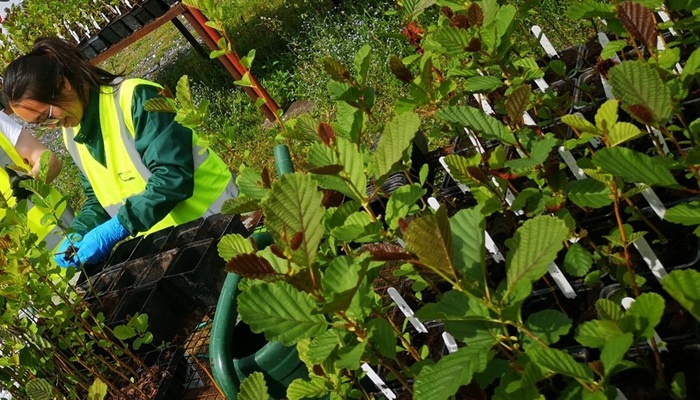
The BroadGen project, has focused on improving our understanding of the genetic diversity, growth performance and disease tolerance of ash, alder, silver birch and downy birch, Teagasc Walsh Scholar, Jie Huang and Dheeraj Singh Rathore, Tree Improvement Research Officer, tells us more.
Ireland’s broadleaf tree species play an important role in supporting biodiversity, improving soil health and providing valuable timber resources
Strengthening the genetic foundations of these species is essential to ensure that future forests remain productive, resilient and adaptable to emerging environmental challenges.
The BroadGen project, launched in January 2022, has focused on improving our understanding of the genetic diversity, growth performance and disease tolerance of selected plus-trees of ash, alder, silver birch, and downy birch within the broadleaf tree improvement programmes at Teagasc.
Why genetic diversity matters in tree breeding
Tree breeding and improvement programmes identify superior individuals from natural populations, often referred to as plus-trees, based on observable traits such as growth rate, stem form and overall vigour.
These traits provide initial indicators of wood volume, timber quality and adaptability, which are further evaluated through progeny testing. While this targeted selection accelerates genetic improvement, it can also reduce genetic diversity, if the breeding population becomes too narrow.
Maintaining adequate genetic diversity is therefore essential to ensure that improved trees populations remain resilient to climate change and emerging pests and diseases.
Studying Ireland’s breeding populations
The BroadGen combined genomics, quantitative genetics and field trails to assess the genetic resources used in Irish broadleaf tree improvement programmes. Key areas of research included:
- Assessing genetic diversity of alder, silver birch and downy birch breeding populations and assessing the risk of inbreeding
- Evaluating the growth performance of alder progeny in field trails
- Studying how strongly growth traits are passed from parent trees to their offspring
- Exploring genomic tools can help improve the selection of faster-growing trees
- Developing a laboratory test to detect the fungus responsible for ash dieback disease
- Investigating factors that influence the timing of spring budburst and disease tolerance in ash
The project also investigated methods for distinguishing silver birch, downy birch and their hybrids, which is important for correctly identifying species used in breeding and planting programmes.
Key findings from alder breeding research
One of the major components of the project involved evaluating the genetic diversity and growth performance of alder trees within the Irish alder breeding programme.
The results showed that:
- The genetic diversity of selected alder plus-trees in the breeding programme is similar to that found in the natural alder populations in Ireland
- Around 15% of the alder families tested in field trials showed better height and girth growth compared with the control material
- Growth traits showed moderate levels of inheritance, meaning there is good potential to continue improving alder through breeding
These results confirm that the Irish alder breeding population maintains strong genetic diversity while still allowing the selection of improved trees. The best-performing families identified in the trials will help strengthen future seed orchards and support the increasing demand for high-quality alder planting stock in Irish forestry.
Supporting resilient forests
Overall, the BroadGen project provides valuable insights into the genetic resources used in Ireland’s broadleaf tree improvement programmes. Maintaining genetic diversity while selecting improved trees is essential for ensuring the long-term sustainability and resilience of Irish forests. The results of the project will support the continued development of improved planting material, helping to establish more productive, resilient and diverse woodland ecosystems.
Next steps
The project is currently consolidating findings across the four species studied and finalising research outputs. Work is also ongoing to develop molecular tools that measure levels of the ash dieback pathogen in ash trees, helping to better understand variation in disease tolerance among ash trees.
Further information on Teagasc’s BroadGen project is available here