
Building a healthier, more productive and profitable herd starts with calf care
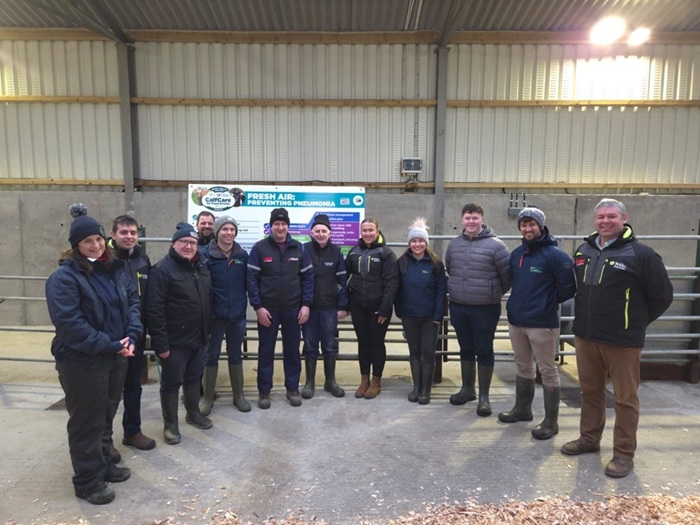
The actions you take from birth right through to weaning are central to building a healthier, more productive and profitable herd. Ned Loughlin, Dairy Advisor in Teagasc Naas, recaps on some of the key messages shared at a recent AHI/Teagasc CalfCare event in Co. Laois.
Calving is one of the most important events on any livestock farm. Good preparation reduces calf and cow losses, lowers veterinary costs, reduces farmer stress and improves animal welfare. In the Teagasc Laois Offaly Kildare Region, Lorcan Dooley recently organised a calf care event. Held on the farm of John, Patricia and Rory McEvoy, Clonaheen, Rosenallis, Teagasc and Animal Health Ireland (AHI) hosted a calf health workshop.
Newborn care and feeding
Sarah Cussen and Donnchadh Dowling, Teagasc detailed the importance of correct colostrum management in building calf immunity.
Key takeaways include:
- Ensure the first feed of colostrum is fed within the first 2 hours of life and that each calf gets at least 3 litres.
- Ensure only high quality colostrum – over 22% on the Brix refractometer, is fed to calves.
- Provide clean feeding equipment and consistent feeding routines to support gut health and growth.
Housing and environment
Good ventilation and fresh air help prevent pneumonia, a leading cause of calf loss. It’s critical that damp and poorly ventilated pens are avoided. Ensure dry, clean bedding and adequate calf housing space to minimise pathogen exposure.
Key actions:
- Have stomach tubes, bottles, gloves, lube, disinfectant ready
- Have plenty of straw available and use generously in calving / calf pens
- Lime and disinfectant available and used
- Offer ever calf high quality colostrum
- Complete forage tests and use the information provided when formulating diets
- Adhere to safe working practices
Nutrition and healthy growth
Maintain consistent nutrition for calves, supporting rumen development and the smooth transition to solid feeds. Clean water and quality feeds are essential for ongoing health and optimal daily weight gain.
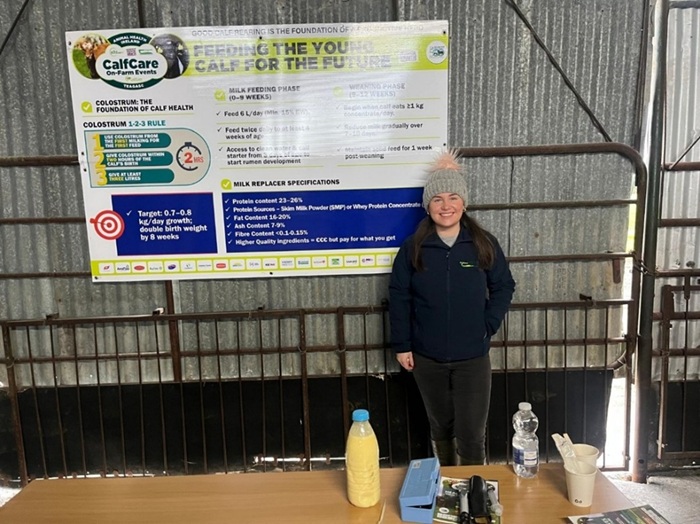
Sarah Cussen at her board where she demonstrated to farmers how to test colostrum using a refractometer
Disease prevention and health checks
Early detection and active prevention of scour, pneumonia and digestive upsets are essential in preventing health set backs put also to reduce mortality. Correct colostrum feeding practices and keeping fresh beds under calves is essential to achieve this. Assess parasite risks and manage before grass turnout and housing changes.
Pain management and handling
Utilise pain relief during calving and routine procedures; good handling improves welfare and feed intake.
Conclusion
These combined practices, focusing on colostrum quality and quantity, keeping sheds well bedded, proper nutrition for calves and cows, and proactive health management, makes a big difference in keeping calves healthy and alive, reducing workload and stress and maximising productivity. Teagasc Laois/Offaly/Kildare are grateful and extend its thanks to host farmers John, Patricia and Rory McEvoy, Clonaheen, Rosenallis for opening up their farm and allowing us to use their facilities to host our calf care workshop. Without all our host farmers, events such as this wouldn’t be possible.
More information can be found at the Animal Health Ireland website.