
Building momentum: Supporting women in agriculture
Representing just 13.4% of farm holders in Ireland, the role and supports available to women in agriculture are coming increasingly under the spotlight.
On April 14, 2026, Teagasc hosted a workshop event at its Ashtown Conference Centre, Dublin to help inform Teagasc research and knowledge transfer activities to further support women in agriculture.
Opening the event, Teagasc Director of Knowledge Transfer, Dr. Stan Lalor said: “Teagasc recognises the essential role women play in agriculture and farming. Opportunities exist to improve and increase female participation and to develop, grow and support female involvement.”
Dr Lalor added: “The Food and Agriculture Organisation of the United Nations has declared 2026 as the International Year of the Woman Farmer. This is a major opportunity to springboard Teagasc’s activity in supporting women in agriculture and the continued roll out of the ‘Supporting Women in Agriculture Framework’.”
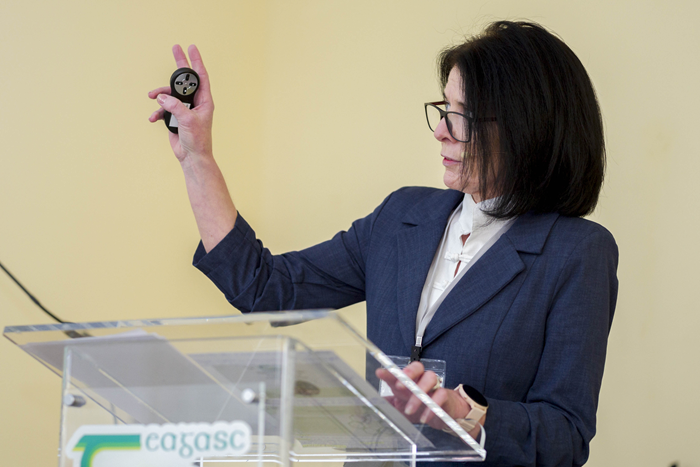
Loreto Ferguson (pictured below), Business Delivery Officer at Teagasc, also addressed the workshop event, where she outlined some of the ongoing initiatives already in operation in Teagasc for female clients and farmers.
“Female only discussion groups are gaining traction within Teagasc. In 2025, 295 members across 15 different groups benefited from this structure to share information, experiences and concerns.
“Featuring both dairy and beef farmers, these groups meet regularly to discuss topics such as farm succession, farm management, grassland management and on-farm technical decisions. The momentum and level of engagement within these groups will continually be monitored, not only to track the level of engagement but to ensure that they are of benefit to the participants.”
Also speaking from the event, Anne Kinsella, a Senior Economist in Teagasc, said that a review of existing research on women in agriculture in Ireland will be completed as part of the action plan.
“This will involve examining work carried out over the past decade, including projects such as GENFARMS, HER-SELF and the EU FLIARA project. It is hoped that this review will highlight gaps in existing women in agriculture research and identify opportunities for further research,” Anne Kinsella commented.
Key findings from the EU FLIARA project were also shared by Anne Kinsella, which concluded with the publication of a policy booklet titled: ‘Infrastructures for Female-Led Innovation in Agriculture and Rural Areas’.
Key takeaways from this publication include: the need to address the social and cultural conditions affecting women-led rural and farm innovation; the removal of barriers in policy support systems; the introduction of mechanisms to improve access to finance, knowledge and skills development; and the need to recognise women-led innovation as an untapped opportunity for strengthening rural and farm economies.
Speakers at the workshop event also included Dr. Aisling Murtagh, EU FLIARA and University of Galway; Dr. Martina Roche, HER-SELF Project, Maynooth University; Vanessa Kiely O’Connor, dairy farmer and ICOS nominee to the Teagasc Authority; and Ursula Kelly, Managing Director of Cormac Tagging and FLIARA Project Ambassador.
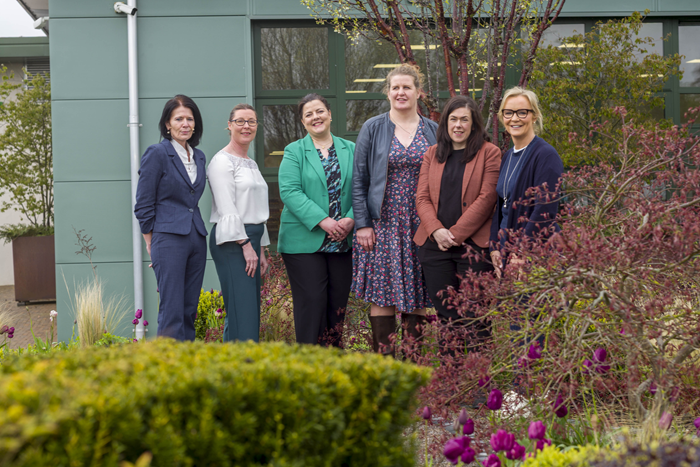
Featured image caption: Pictured at the Women in Agriculture Workshop are: Loreto Ferguson, Business Delivery Officer, Teagasc; Vanessa Kiely O’Connor, dairy farmer and ICOS nominee to the Teagasc Authority; Anne Kinsella, Senior Economist, Teagasc; Dr. Martina Roche, HER-SELF Project, Maynooth University; Dr. Aisling Murtagh, EU FLIARA and University of Galway; and Ursula Kelly, Managing Director of Cormac Tagging and FLIARA Project Ambassador.