
18 January 2025
Calving preparations and performance at Ballyhaise
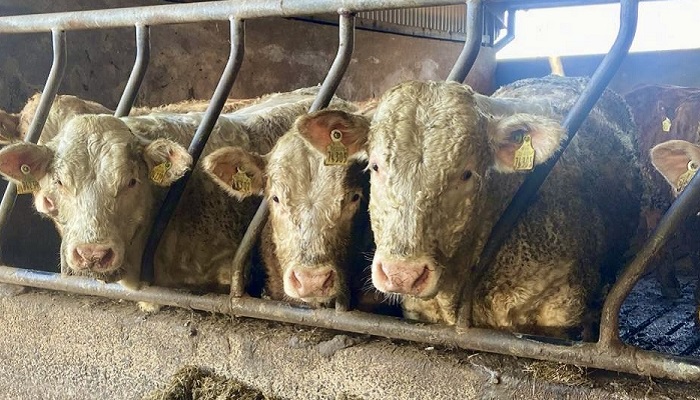
Consisting of 35 spring-calving, continental-type suckler cows, Liam McWeeney and Noel Prunty provide an update on the performance of the Ballyhaise suckler herd and outline how they are preparing for the upcoming calving season.
The main objective of the suckler enterprise at Ballyhaise Agricultural College is to demonstrate best practice to our students in managing a suckler-to-beef production system, focusing on breeding, nutrition, herd health, finishing, financial performance, and sustainability.
All progeny, with the exception of retained replacements, from the college’s suckler herd are brought to beef. Last year, the bulls produced an average carcass weight of 390kg at 14.5 months, while the heifers averaged a 340kg carcass at 20 months.
Weaning and winter housing performance
To demonstrate best practice to our students at Ballyhaise, significant emphasis is placed on preparing calves for weaning and housing. This ensures that no setbacks in performance occur and stress is minimised.
Weanlings are vaccinated against pneumonia, with their primary vaccine administered on the 1st of September and a booster shot given on the 1st of October. This ensures calves have full immunity from mid-October, when weaning generally starts. Dosing, as required, is also carried out to eliminate stomach and lungworm burdens before weaning. Additionally, to minimise stress, weaning takes place gradually, with cows housed and calves kept outdoors. Following this blueprint, and with housing occurring in mid-November, the weanlings have performed well to date, and no treatments for pneumonia have been required.
Heifers were weighed this week and are averaging 360kg. They have gained 0.7kg/day since housing on a diet of 75 DMD silage and 2kg of concentrate. The bull weanlings are averaging 480kg, having gained 1.3kg/day since housing. They are on the same silage and are currently on 7kg of concentrate. They will be built up gradually to ad-lib concentrates by mid-February and will be finished in May at a target liveweight of 680–700kg.
Preparations for calving
Calving is due to start on the 1st of February. Previously, calving did not traditionally start until mid-February, with the plan to get cows to grass in early March. The reason for pulling calving back two weeks is to ensure the majority of cows calve before our first-year students go on placement in March. This allows students to gain hands-on experience in calving cows and caring for newborn calves, preparing them for their placements. Many of their beef skills, including calving, stomach tubing, tagging, and disbudding, are demonstrated and assessed at this stage.
At present, student practicals are focused on preparing the cows for calving. Cows have been on 100g/day of pre-calver minerals since early December. Cows were scanned in August and are penned according to calving date. They have received both scour vaccines, which will cover Rotavirus, Coronavirus, E. coli, and Cryptosporidium. Cows’ body condition scores have been monitored throughout the winter, with the aim to calve down at 2.75. Difficult calvings are uncommon due to the emphasis placed on calving difficulty when selecting sires for the cows.
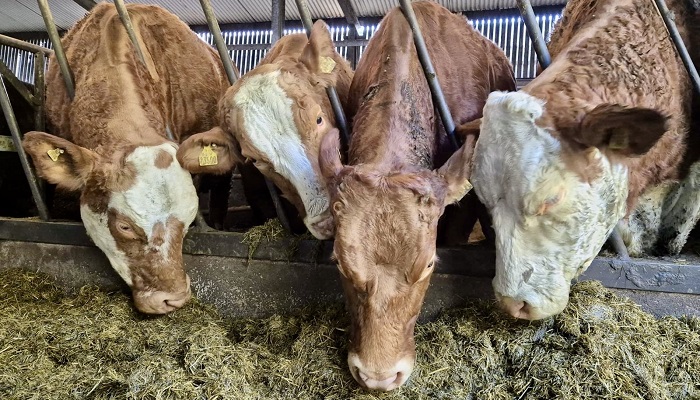
Calves are closely observed after calving to ensure they consume a sufficient amount of colostrum. If, for some reason, calves do not suckle, they are assisted or stomach-tubed to ensure they consume 2–3 litres of high-quality colostrum. Calves are left in individual pens with the cow for 2–3 days before being moved to a creep area, where they will have access to suckle cows on slats. A strong emphasis is placed on ensuring creep areas are well-bedded, draught-free, and well-ventilated to avoid scour outbreaks and chills in calves.
More information
The Ballyhaise suckler herd, along with all other enterprises, can be viewed at its upcoming open day on the 14th of March, 2025.
For more information on Ballyhaise College, including the courses and programmes offered, visit here.
Also read: Making sustainability real – a Ballyhaise experience
Also read: The benefits of the Teagasc Green Cert in improving farm performance