
Can Irish rye meet food quality specifications?
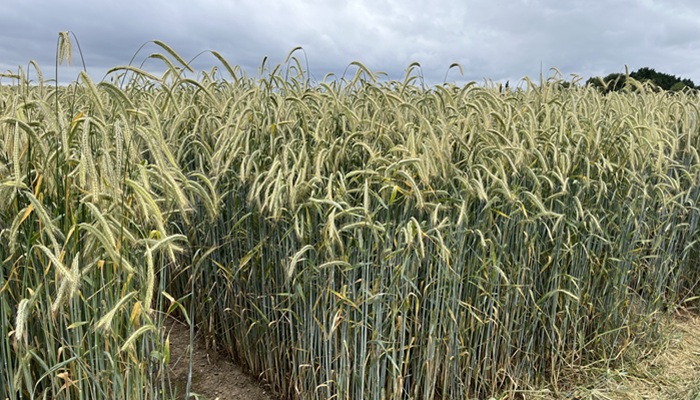
Irish grown rye could have a future beyond feed. That’s according to research examining its suitability for human food markets and shared with delegates at the recent Teagasc National Tillage Conference.
While winter rye remains a relatively minor crop in Ireland, Teagasc Walsh Scholar, Sinead Dermody explained that its area has increased significantly in recent years, rising from 476ha in 2020 to 3,713ha in 2025. However, most of this crop is grown for feed. Worldwide up to 30% of rye production is used in food applications – rising to 40% in countries such as Germany.
Sharing research findings as part of the PROTEIN-I project, Sinead Dermody explained that the research aimed to assess whether rye grown under Irish conditions could meet food quality specifications already set out in other countries.
“As a result of the increase in rye area and the limited markets often experienced in Ireland, we looked at the potential of this crop in terms of human food applications,” she said.
To do this, replicated field trials were established across three years and two locations – Carlow and Waterford – where hybrid and multipurpose rye varieties were cultivated.
“The overarching aims of the work were to characterise varieties in terms of agronomic traits, food quality and nutritional traits,” Sinead Dermody explained. “Collecting this data allowed us to benchmark Irish-grown rye against specifications set in countries with established rye food markets.”
As part of this research, quality traits – such as the Hagberg Falling Number, protein content and test weight – were assessed. Regarding Hagberg Falling Number, an indicator of sprouting damage and processing performance, several varieties exceeded the minimum target of 100 over the three seasons in the context of UK specifications. While this was also the case for protein and test weight, the data reflected variability between these traits between locations.
“However, when we compare the overall results to international specifications, many varieties meet minimum quality requirements across locations and years.”
Grain yield data was also considered alongside quality performance. Hybrid rye varieties delivered higher mean grain yields than populations, by 1.4t/ha across the three years, while in many cases, also meeting food-grade specifications under Irish conditions.
“Based on this research, hybrid varieties produced high grain yields and meet UK food specifications under Irish growing conditions,” Sinead Dermody said. “While some population varieties met specifications, they typically produced lower mean yields.”
Overall, this early stage research acknowledges the need for further testing of the downstream functionality testing and safety of Irish rye flour.
More from Teagasc Daily: Teagasc launches new rye growers’ guide
More from Teagasc Daily: The cost of growing your crops
More from Teagasc Daily: Tillage a valuable cog in Irish agri-food system