
16 October 2024
Can straw help to buffer tight silage supplies this winter?
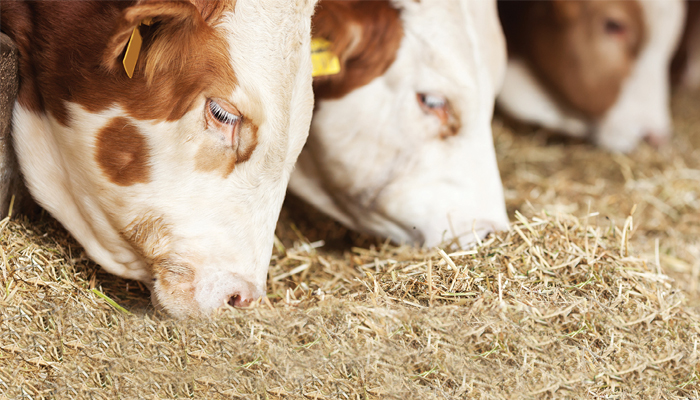
It has been a difficult year on grass growth and therefore silage supplies are tight on some farms. Could straw fill some of the gap this winter? Martina Harrington tells us more.
Yes, is the answer, but there are several issues around feeding straw.
While the suckler cow in good BCS (BCS of ≥ 3.0) can cope with some BCS loss in advance of calving, it is important that this is monitored carefully and that the diet is sufficiently balanced for protein during this period to support the growing calf and ensure sufficient quality colostrum at birth.
A 700 kg cow will eat approx. 8-9 kg DM during this period, however, this is limited by the forage quality with more fibrous feeds limiting intake as they take longer to breakdown in the rumen.
Feeding straw is only suited to month 6 and/or 7 of pregnancy. Monitoring body condition is essential.
Table 1. The UFL requirements of the suckler cow for maintenance and gestation at different mature cow bodyweights.
| Cow liveweight | Maintenance(UFL/ day) | Month of pregnancy | |||
| 6 | 7 | 8 | 9 | ||
| 550 | 5.2 | 5.7 | 6.3 | 7.0 | 8.1 |
| 600 | 5.5 | 6.1 | 6.6 | 7.4 | 8.4 |
| 650 | 5.8 | 6.4 | 6.9 | 7.7 | 8.7 |
| 700 | 6.2 | 6.7 | 7.2 | 8.0 | 9.0 |
| 750 | 6.5 | 7.1 | 7.6 | 8.4 | 9.4 |
Points to note about feeding straw to suckler cows
- Should only be considered in the 6th or 7th month of pregnancy. A pregnant suckler cow needs to be fed to maintain her own needs and that of the growing calf in the last trimester, with the energy and protein needs of the calf increasing rapidly through month’s seven to nine of gestation (Table 1 references the UFL requirements).
- Suitable for dry cows in good body condition: Only mature cows in already good body condition, scoring 3.0 or above on the body condition score scale, should be considered and it is not suitable for cows in poor body condition, first calvers and heifers as these animals are still growing.
- Low nutritional value: Straw is low in energy (UFL value of 0.44), crude protein (4.5% CP), and minerals making supplementation crucial. Grass silage at 66 DMD which is more typically fed to the dry suckler cow has a UFL value of 0.73 and CP of 10-12%. The fibrous nature of straw (80% NDF vs silage 45-50 % NDF) will also limit the intake potential as it will take longer to breakdown in the rumen.
- Supplementation rates: For a cow’s rumen to work properly it must have a diet with a minimum of 9% crude protein to feed the rumen microbes, which break down the straw for the cow’s use. If not you risk rumen impaction, leading to reduced appetite, poor digestion, and potentially death. A good quality 18% CP (0.94 UFL) blend or a 75 % barley, 25 % soya mix at 3-4 kg will suffice; ensure to watch animal dungs to see if they are very dry and hard, if so you may need to increase meal or add in some silage. In months 6 and 7, a cow needs 6.7 to 7.2 UFL. Feeding 3.5 kg of concentrate will give 3.3 UFL, 1.5 UFL can come from the cows body reserves, as long as she has it, so straw has to make up the balance of 2.15UFL. Straw has a UFL of 0.44/kg, so she needs to eat 5 kg of straw per day. To ensure your cows are achieving this 30 cows should be eating a 150kg bale of straw per day. If they are not eating this after a week you need to increase the concentrate levels. In the last 8 weeks of pregnancy cows should be transitioned back to a grass silage diet as the energy demands increase rapidly.
- Mineral supplementation: Straw is very low in essential minerals such as calcium, phosphorus, magnesium, and trace elements like copper and selenium. Feed a high quality mineral, designed for straw-based or maize diets, at a rate of 100-120 grams per head per day, as per the manufacturer’s label to ensure cows get their daily intake.
- Cost: A typical diet of 66 DMD silage, costing €45/bale and containing 220kg DM, will cost approx. €1.80 per day at 9 kg DM/cow/day. In comparison, a 150 kg bale of straw at €25 is costing approx. 17c/kg DM*. Five kg DM of straw (0.85c/cow/day) supplemented with 3.5 kg meal (€1.12/cow/day @ €320/ton) and minerals @ 15c/cow/day will cost €2.12/cow/day plus the additional requirements around management including the labour involved in feeding it out and ensuring that there is appropriate facilities in place to support it.
- Feed access: Ensure all cows have access to the straw, concentrate and mineral at the same time by ensuring you have enough space at the feed barrier, max 7 animals per bay, you don’t want cows injured while trying to get up to the barrier. At higher concentrate feeding levels this may need to be split to two feeds.
- Straw type matters: Oaten straw is preferred, followed by barley straw; wheaten straw is less suitable. All straw must be clean and free of any mould.
- Water availability: The diet is very dry, so a plentiful supply of clean water is essential.
- Smooth transition at eight weeks pre calving: As calving approaches, consider introducing silage alongside straw for a smoother dietary transition and ensure to transition to a pre-calver mineral with a high level of Magnesium in advance of calving.
- Monitor Body Condition Score: A cows’ body condition score is a key indicator of whether their nutritional needs are being met. Aim to keep dry cows between a score of 2.5 and 3.0 to ensure they maintain optimal health and productivity. If cows start losing condition, increase the amount of concentrate or supplement with higher-quality forages, like silage.
- Straw is not suitable in the latter stages of pregnancy due to the rapid increase in energy and protein demands so ensure cows are transitioned back to silage at an appropriate stage.
Conclusion
Straw can be utilised as a forage source during the housed period for mature cows in good body condition, provided they are supplemented accordingly and BCS is monitored. In addition to the extra costs involved, it is important that this diet is managed well to ensure all animals have access to supplement when provided. This diet would be most appropriate for suckler cows housed early to ensure grass availability for younger growing stock and to ensure better quality forage is reserved for young cattle, in calf heifers and first calvers, and for animals in close proximity to calving/freshly calved animals. Monitoring intakes and body condition score is essential and you need to act fast if animals are not eating enough straw and/or are losing body condition score.
*add 2c per kg dm for every €5 increase in the cost of a bale of straw