
28 February 2023
Care with ‘harvesting’ TAMS 3 grants
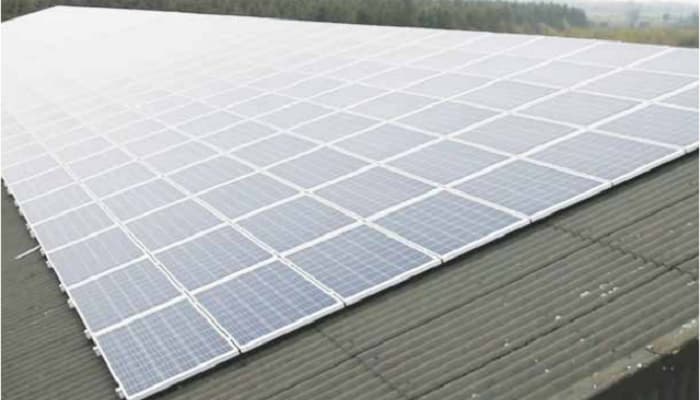
The first capital investment scheme within TAMS 3, the Solar Capital Investment Scheme (SCIS) is now open for applications.
The details of this grant scheme, application procedure etc. are available on the Department of Agriculture, Food & the Marine website. Tom Fallon, Teagasc Farm Buildings and Infrastructure Specialist, outlines some of the issues those wishing to apply to the SCIS need to consider before applying.
Start preparing for TAMS now
The Animal Welfare, Nutrient Storage Scheme (AWNSS) will be available by mid-March. It is very important that farmers planning to do any building work under TAMS would discuss their plans with their advisor or consultant as soon as possible. Planning permission will be invariably needed and there is a short window for this process to be completed before the first tranche of applications closes on June 16.
Some farmers almost go after grant aid as if the grant itself justifies the investment decision. It is always wise in making investment decisions to look at the return on investment and to give your main business (that is your farming activity) priority. This is especially true for farmers thinking about getting involved in energy generation.
Is the Solar Capital Investment Scheme (SCIS) for me?
Farmers considering seeking grant aid under the Solar Capital Investment Scheme need to ask themselves the following questions:
Is your farm at the correct stage of development for solar?
Investment needed in liming, installing paddock fencing, piped water etc. will all give a higher return and should get priority. Investments that are or will be compulsory also need priority, such as extra soiled water or slurry storage. It is important to have a facility with the bank for this investment because strong positive cash flows can easily change.
Have you changed electricity supplier in recent years?
This needs to get everyone’s attention as the first step towards reducing energy costs. Pumping water is expensive, servicing the pump, installing metre(s), cut off valves and correcting leaks can all pay dividends. Can dairy farmers do more with plate cooling for example?
Buyer beware
There is already a big demand for solar PV from non-farming sectors so buyer beware. The feedback from farmers who have installed solar PV is mixed. Some farmers are delighted with them where they use the energy to build ice for cooling milk together with a heat recovery unit to provide hot water. For example, a land-mounted solar PV system is reducing electricity consumption by 50% for a 260 cow liquid milk herd in Waterford. In general, it only makes sense to invest in solar energy if there is capacity to use the majority of the energy generated on the farm.
Limits on size of solar PV system:
- Maximum Import Capacity (MIC ) = Maximum Export Capacity, even though you might not intend exporting electricity the ESB line and Transformer must be capable of handling the load you plan to generate.
- You cannot apply for a system that is sized above your annual electricity consumption (including one dwelling house). Within that context you can export some electricity. ‘An On Farm Solar Survey’ is a requirement for a SCIS TAMS 3 grant application.
The Department of Agriculture, Food and the Marine has other important documents on their website including ‘S198 Minimum Specification for the Installation of Solar PV Systems – March 2022’ and a ‘Solar PV Registered Installer List’. Please click here for more information.