
11 April 2024
Challenging year curtails profitability on DairyBeef 500 farms
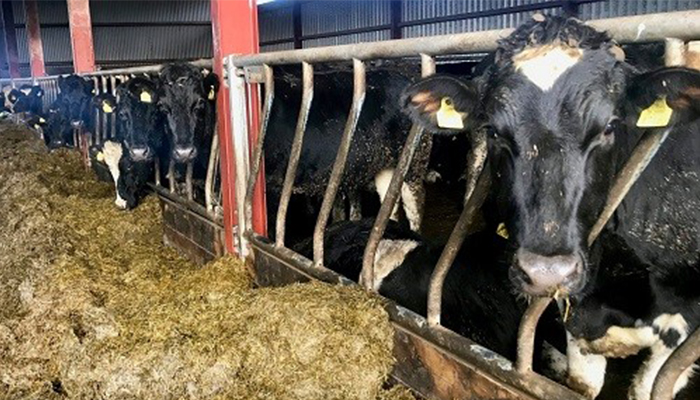
Profitability levels recorded on farms enrolled in Teagasc’s DairyBeef 500 Campaign were curtailed by challenging weather conditions and somewhat lower levels of animal performance over the course of 2023, Alan Dillion, Co-ordinator of the Campaign, tells us more.
Like the first quarter of this year, 2023’s weather challenges posed many problems for farmers enrolled in the DairyBeef 500 Campaign. Excessive volumes of rain forced animals indoors earlier, thus shortening the grazing year and requiring an additional outlay on ‘hard’ feedstuffs.
Additionally, poorer grazing conditions from July onwards reduced average daily gains we’d typically see at grass, resulting in year one and year two animals being lighter at the time of housing. In the case of year two animals, this resulted in the production of lighter carcasses at the point of sale and/or an extended finishing period while indoors.
Carcass data from the demonstration farms supports the former. At comparable ages, dairy-sired steer carcass weights declined by approximately 10kg when compared to those marketed over 2022, while beef-sired steer carcasses declined by 12kg from year previous levels. In terms of impact and using the average price received for each category of animal over 2023, this represents a potential reduction in earnings of €48/head for dairy-sired steers and €60/head beef-sired steers.
Despite the weather-induced decline in animal performance, average gross output levels recorded across the farms were strong – a key element in profitable dairy-beef systems. As an average and reflecting sales minus purchases plus/minus inventory change, the group recorded a gross output of 1,322kg/ha or €3,300/ha on average.
However, a fluctuating market place for farm inputs along and additional spend on concentrate feeds did result in variable costs increasing by 1% when compared to 2022 to come in at €1,990/ha. Some key costs to note are: young stock costs – relating to milk replacer, calf ration and forage – which increased by 7% to €1,187/ha when 2022 and 2023 is compared; contractor costs which moved upwards by 20% to €173/ha, driven by a focus at farm level of making additional silage; and veterinary costs which increased only marginally to €128/ha.
As expected, fertiliser costs did decline on the DairyBeef 500 participating farms – averaging €288/ha in 2023 and falling by 23% when compared by 2022. This fall, however, is somewhat limited by the fact that many farmers had purchased fertiliser stocks before the market showed signs of correction in quarter two of 2023.
Table 1: Physical and financial performance of DairyBeef 500 farms in 2023
| Average | |
|---|---|
| Stocking rate (LU/ha) | 2.37 |
| Gross output (kg/ha) | 1,332 |
| Gross output (€/ha) | 3,330 |
| Variable costs (€/ha) | 1,990 |
| Gross margin (€/ha) | 1,341 |
| Fixed costs (€/ha) | 799 |
| Net margin (€/ha) | 542 |
| Net margin (% change 2023 versus 2022) | +3% |
Given the levels of gross output and variable costs outlined above, gross margin levels of the campaign farms averaged €1,341/ha in 2023 (gross output – variable costs) – an increase of 5% when compared to year earlier levels. Despite this increase though, a slight slippage in the efficiency levels being achieved on farm was recorded. Typically in an efficient, well-run dairy-beef system, we’d target variable costs of <55% of gross output. As an average across the farms, this figure rose to 60% over 2023 – caused by additional meal feeding levels and reduced levels of performance at slaughter on account of the challenging year.
A key aim of the DairyBeef 500 Campaign is to generate a net margin of €500/ha, excluding subsidies from calf to beef systems. This figure is generated by subtracting fixed costs from gross margin. On average, the group did achieve this targeted in 2023, generating 3% higher profits than 2022 at €542/ha last year. However, fixed cost spend did increase by 3% to €799/ha in 2023. This fixed cost increase is not a reflection on additional spend on infrastructure over 2023 but rather a consequence of farmers having invested in their businesses over the past five years.
Alan Dillon featured on a recent episode of the Beef Edge podcast. For more information on the profitability levels and slaughter performance from DairyBeef campaign farmers, listen in below:
More information on the DairyBeef 500 Campaign.