
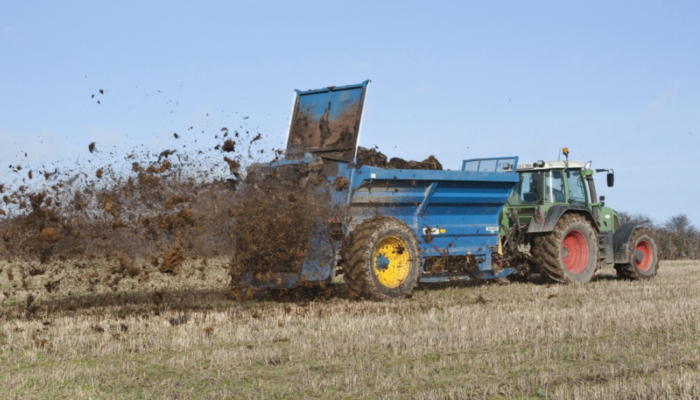
November 1 marks another key date in the farming calendar, as the closed period for the spreading of farmyard manure comes into play.
As outlined in Ireland’s Nitrates Action Programme, and taking effect from today, November 1, applications of farmyard manure will not be permitted until January 13th for farms in Zone A, January 16th for farmers in Zone B and February 1 for farmers in Zone C.
Zone A includes the counties of Carlow, Cork, Dublin, Kildare, Kilkenny, Laois, Offaly, Tipperary, Waterford, Wexford and Wicklow. Zone B consists of the counties Clare, Galway, Kerry, Limerick, Longford, Louth, Mayo, Meath, Roscommon, Sligo and Westmeath. The Zone C counties are Cavan, Donegal, Leitrim and Monaghan.
After a two-year transition period, dairy farmers must also be aware that the closed period for soiled water takes effect for all dairy farms this year. From December 1 to December 31, spreading of soiled water will no longer be permitted.
Table 1: Prohibited spreading periods (Source: DAFM)
| Fertiliser type | Start date | End Date in Zone A | End Date in Zone B | End Date in Zone C |
| Chemical | September 15 | January 26 | January 29 | February 14 |
| Organic | October 1 | January 12 | January 15 | January 31 |
| Farmyard manure | November 1 | January 12 | January 15 | January 31 |
| Soiled water | December 1 | December 31 | December 31 | December 31 |
Although the closed periods for slurry, farmyard manure and chemical fertilisers containing nitrogen and phosphorus are now in place, farmers are still permitted to apply lime and straight potassium (Potash) products.
The benefits to liming pastures that are low in pH are as follows:
- Grassland soils can release up to 80kg N/ha (nitrogen per hectare) (64 units N/acre) per year, once restored to soil pH 6.3.
- Increase the availability of soil phosphorus (P) to the grass sward
- Annual grass production can be increased by 1.0 to 1.5 tonnes of grass dry matter (DM)/ha where soil pH was increased from pH 5.5 to 6.3.
- Increased persistence and productivity of both perennial ryegrass and clover.
Lime should only be applied based on a recent soil test report. The target soil pH for grassland (mineral soils) grass only swards is greater than 6.3, for grassland (mineral soils) for grass-clover swards a higher pH is beneficial, target reaching pH 6.5 to 6.8, and for grassland (peat soils) the target is 5.5 to 5.8. Don’t exceed 7.5 tonnes per hectare (t/ha) in a single application. Soils with high molybdenum status may give rise to copper deficiency in grazing animals. To reduce elevated molybdenum levels, maintain a somewhat lower soil pH 6.0 to 6.2.