
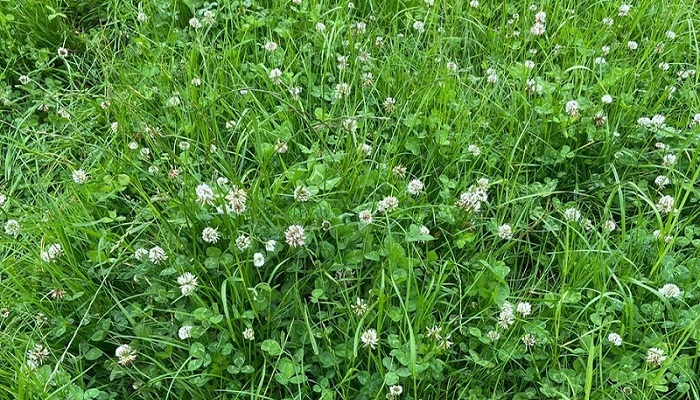
Suckler beef farmers can reduce nitrogen fertiliser use and increase liveweight gain by incorporating clover into grassland pastures, explain Peter Doyle, Peter Bennett, Mark McGee, Paul Crosson, Michael O’Donovan and Nicky Byrne.
International studies have shown that incorporating white and red clover into perennial ryegrass pastures has the potential to reduce fertiliser nitrogen requirements, increase animal performance and reduce greenhouse gas emissions. However, in Irish suckler beef systems there is a deficit of information on the benefits of incorporating clover into pastures.
Two studies were carried out at Teagasc Grange to fill this knowledge deficit. In the first study, yearling suckler steers and heifers grazing grass-white clover pastures over their ‘second’ grazing season (12 to 19.5 months of age) had a 24kg greater liveweight gain (LWG) of +0.1kg/day than those grazing grass-only pastures. This equated to a 14kg difference in carcass weight per animal.
Cattle on the grass-clover system had a 27kg greater final liveweight than those on a grass-only system.
The second study investigated the impact of a grass-only (150kg N/ha) or grass-clover (75kg N/ha – white clover for grazing and red clover for silage) pasture systems on lifetime cattle performance (from birth to finish).
The suckler progeny had a greater LWG from birth to weaning on the grass-white clover compared to the grass-only pasture, and a greater liveweight gain over the first winter on grass-red clover silage than grass-only silage, with no difference in liveweight gain over the ‘second’ grazing season. This equated to a 27kg greater final liveweight and 18kg greater carcass weight for the cattle on the grass-clover system.
Therefore, suckler beef farmers that incorporate red and white clover into grassland pastures can reduce their requirement for nitrogen fertiliser inputs and increase animal LWG in a suckler calf-to-beef system. This will improve their farm profitability, while also helping to meet sectoral climate targets.
Read more from Teagasc Research Impact Highlights 2024
Contact: peter.doyle@teagasc.ie
Other contributors: University College Dublin
Funding: Teagasc Walsh Scholars Programme; Teagasc core funding
Impact Pathway: Technology Development & Adoption