
26 May 2022
Control Grass Quality and Boost Profits
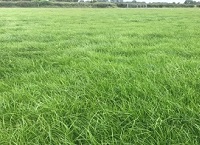
There is an old saying that “A wet and windy May fills the barn with corn and hay” and this certainly true this year. Grass growth rates have shown a 20% increase in the last week. High grass growth can be challenging for farmers. Teagasc Advisor Kay O’Connell has some advice on managing this growth
Farms are in a good position with average growths of 70 kg dry matter per hectare across the country recently. Data from the Teagasc grass management package, Pasturebase Ireland, shows the average dairy farmer is stocked at 3.9 livestock units per hectare and has a demand for growth of 56 kg DM/ha. Growth is exceeding demand on many farms. The current spell of showery weather, good soil temperatures and sunny weather, will keep growth rates high.
Grass growth model
The Teagasc grass growth model is predicting that grass growth for this week could hit 100 kg DM per ha. This high grass growth will bring a challenge for farmers as it will be difficult to have cows going into the ideal grass pre-grazing yield of 1,300/1,400 kg DM/ha i.e. when the grass is at its three leaf stage.
Heavy grass covers
Figures from farmers using Pasturebase Ireland show that 42% of them are currently grazing covers of 1,600kg/ha or greater. These covers are too heavy. This is worrying heading into the second half of May as grass changes into the reproductive phase and starts to produce a seed head, which is poorer feed quality. At 1,600 kg of a pre-grazing yield the plant is at fourth leaf – the first leaf begins to die off, the plant has more stem and grass digestibility reduces.
Poorer quality feed results in lower milk protein and less kilos of milk solids sold which hits profitability for the farmer. In simple terms at a growth rate of 70 kg DM/ha/day it will take 20 days to reach the ideal pre-grazing yield of 1,400 kg DM/ha. If growth rates are going to be 80 kg/day the rotation will need to be shortened to 17/18 days by skipping paddocks for silage. The difference between going into a pre grazing cover of 1,400 and 1,660 kg DM/ha to a dairy farmer is a 5% drop in milk solids. This is worth about €420 per week for 100 cows.
Cut paddocks for silage?
On farms where pre-grazing cover is higher than target, advice is to act now. Either skip those paddocks for grazing and cut for silage straight away or let them bulk up for a week or so. This decision will vary from farm to farm as it depends on growth rates, demand and stocking rate on the farm. On some farms, the option might not be possible and in these cases, a mechanical fix after grazing will be needed i.e. topping.
You have control and can provide high quality grass for your cows by ensuring they are going into the right covers and grazing out to 4cm. Key will be measuring – get out and walk the farm – ideally every 4 to 5 days when growth rates are high. Further information on the management of grass is available by contacting your local Teagasc Advisor.