
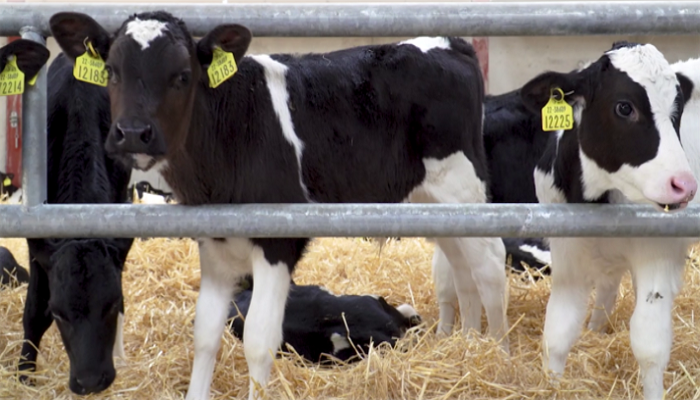
Dairy farmers nationally are on the cusp of the busy spring-calving period. There is, however, an opportunity to make last-minute adjustments or tweaks to your calf housing to improve the health and welfare of your calves.
A good quality calf shed has five key requirements, these are:
- Ventilation – well-ventilated with clean, fresh air that is well distributed;
- Draught free – calves exposed to draughts will lose excessive body heat;
- Warm – temperature is important for young calves, the optimal air temperature for calves under three weeks old is 15-20oC;
- Dry – sufficient floor slope, no damp walls, no rain ingress or no leaking water troughs;
- Clean and cleanable – easy access to clean without impacting other pens.
Ventilation and controlling draughts
Where farmers are aware they had issues with ventilation in the calf shed last year and have yet to complete remedial action, the use of fans or an air tube to help remove stale air from the shed is one possibility. When this option is selected, ensuring the device is adequately designed for the shed in which it is fitted to provide the best results and to ensure that air is flowing in the right places is essential.
Alternatively, where a calf shed is fitted with sliding doors, gates sheeted with stock board can be fitted on the inside of these sliding doors. On days when the ventilation is poor within the shed, the sliding doors can be opened to increase the air inlet area. When this option is selected, draughts need to be minimised through the use or wind breakers above gate height and rubber below and around the hung gates to prevent air ingress at calf height.
Warmth
Calves perform optimally in a temperature of 15-20oC – a challenge faced on Irish farms during the spring period. Adding to this challenge is the lack of heat produced by calves until their rumen is developed.
Having an adequate bed of straw to allow calves to ‘nest’ is one solution. However, where straw bedding is scare, calf jackets may be an option.
Some important considerations with calf jackets are:
- Ensure the calf jacket is dry before fitting to the calf;
- The jacket needs to made out of a breathable material;
- The calf jacket must have adjustable straps, to ensure comfort as the calf grows;
- When re-using calf jackets, hygiene is essential and they must be washed before re-fitting;
- Only remove calf jackets when the temperature is suitable, preferably at four weeks of age. Avoid doing so during periods of cold weather.
Moisture and cleaning out
Before the calf shed comes into use, ensure that moisture sources – such as leaking water troughs – are fixed. Moisture present within the calf shed not only serves as a pathway for bug and pathogen survival, but it also lowers the temperature of the calf house.
One simple solution to reducing the amount of moisture present within the calf shed is by washing all feeding utensils and equipment externally of the calf shed. If this can’t be achieved, the resulting dirty water should place in a drain to exit the calf shed quickly, rather than simply pouring the waste water out in the feed passage of the shed to make its own way to the drainage system.
Where the calf shed is in use, farmers are also encouraged to regularly carry out the ‘kneel test’ in areas of the shed where calves tend to lie down. By moving your nose within 6 inches of the bedding, it will allow you to quickly identify the presence of ammonia. The presence of this pungent smelling gas, which can have a negative impact of the calves’ respiratory system, along with wet knees is a quick fire way of telling whether the shed needs cleaning out.
Where the need to clean out is identified, removing the waste bedding and then applying lime to the shed’s floor before bedding is preferred. This approach, rather than washing the shed with high pressure hoses, serves to reduce the dispersal of pathogens in water droplets through the washing action and it also maintains shed temperature, as the floor doesn’t need to dry prior to restocking.