
Cow fertility: It’s not just luck
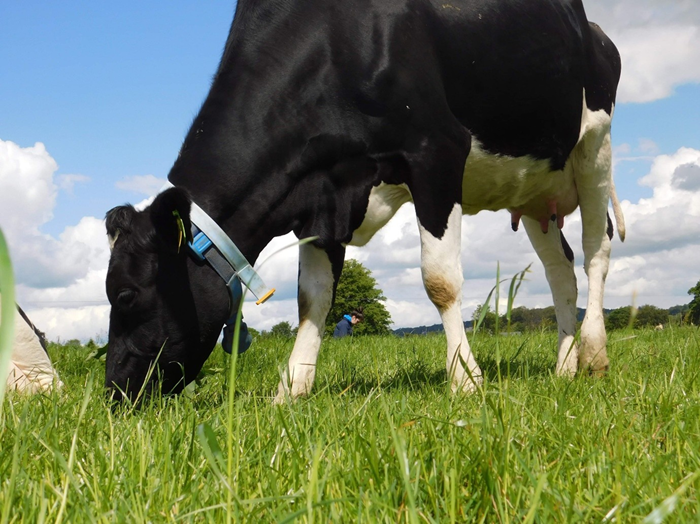
Fertility in dairy cows is a major concern for Irish farmers operating spring-calving, grass-based systems where every extra day open means lost revenue.
While we often focus on feeding, body condition score or heat detection, a recent study carried out by the Teagasc Animal and Grassland Research and Innovation Centre, Moorepark, has shown that the answer might lie in the cow’s genes, and how they interact with what she’s being fed after calving.
Science Communication and Engagement Officer at Teagasc, Eimear Ferguson sat down with Animal Reproduction Technologist, Rachel Doyle, first author on the publication, to find out more.
The publication in the Journal of Dairy Science looked at three distinct groups of cows: high EBI Holstein Friesians (‘elite’), average EBI Holstein Friesians (‘national average’) and Jerseys. The cows were managed under three spring-calving feeding treatments: a standard grass and concentrate diet (control), restricted grass (low grass allowance), and higher meal feeding (high concentrate). These feeding treatments were representative of the extremes used in Irish pasture-based dairy systems.
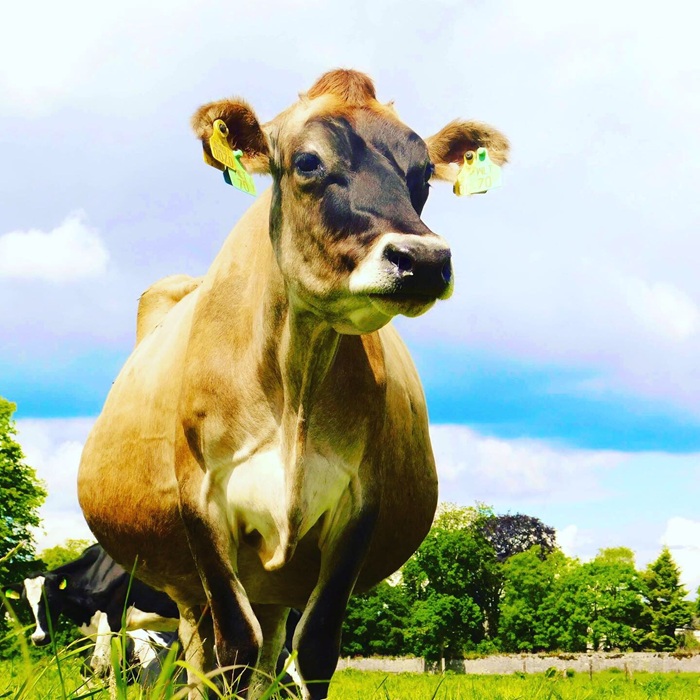
Image source: Rachel Doyle Photography
Rachel and the team tracked how quickly the cows recovered after calving, focusing on the health status of the reproductive tract. This was done by scoring vaginal discharge twice weekly on each individual cow until a score that indicated full recovery was achieved.
Key findings
From this research, it was found that cows with the best genetics for fertility (the elite group) recovered faster after calving than either national average Holstein Friesians or Jerseys.
“On average, the elite cows achieved a clean vaginal discharge score about three days sooner. This might not seem like much, but in a tightly managed breeding season, three days can make the difference between holding a calving interval or falling behind,” Rachel explained.
There were other factors at play too. Older cows (those in second or third lactation) recovered faster than first-calvers. Unsurprisingly, cows that calved without assistance also bounced back quicker than those needing assistance. Interestingly, cows that had medium weight calves had the fastest recovery; very small or very big calves seemed to cause more issues, probably because first-calvers had a higher proportion of lighter calves.
But the interesting part came when they looked at hormones, particularly progesterone which is critical for initial establishment and maintence of pregnancy. Progesterone is a hormone produced by a structure on the ovary called the corpus luteum (often referred to as “CL”). This structure forms after ovulation and is maintained for the full duration of pregnancy. When cows are examined, a CL on the ovary indicates that the cow is cycling. The elite cows had higher blood concentrations of progesterone during the period after ovulation, and is likely an important factor that contributes to their greater reproductive performance.
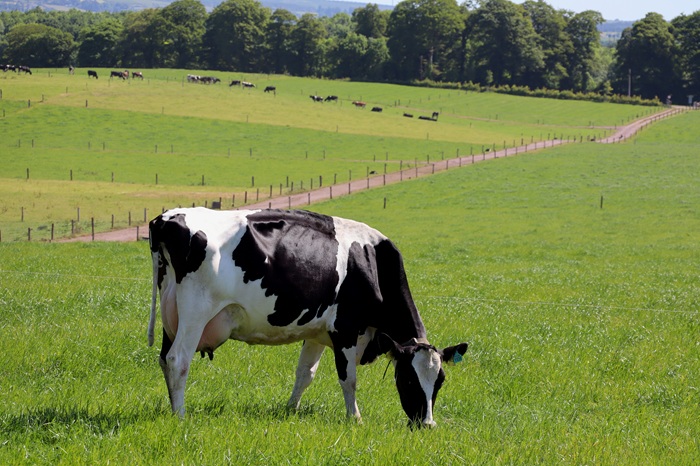
Image source: Rachel Doyle Photography
The feeding treatments also told a story. While high meal feeding might boost milk output, it may come at a cost to fertility. Cows on the high-concentrate diet had lower levels of reproductive hormones, including both oestradiol (important for triggering ovulation and heat behaviour) and progesterone. The researchers suggest this is due to higher liver blood flow clearing out hormones faster.
Takeaway messages
Professor Stephen Butler, Principal Research Officer, who leads this research group added: “This study confirms that genetic selection for fertility traits works. Cows selected to have better fertility traits, not just milk yield, show real, biological improvements that translate into faster uterine recovery after calving and reproductive hormone profiles that increase the chance of successful pregnancy establishment. But farmers also need to be mindful of herd nutritional management. While extra concentrates may help with energy and production, it may not be beneficial to the reproductive system.”
For further insights, read the full article on the Journal of Dairy Science here.
Featured image source: Rachel Doyle Photography