
Creating profitable and future-proofed dairy-beef systems
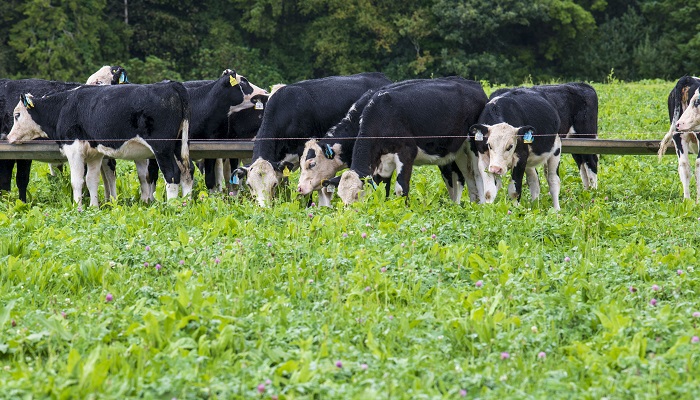
Dairy-beef systems require knowledge of calf rearing, animal health and grassland management to ensure profitable systems for beef producers.
At Farming for a Better Future Open Day, taking place at Teagasc, Johnstown Castle, Co. Wexford on June 10, the best practises of efficient dairy-beef production will be showcased and targeted to both dairy farmers, the producers of these calves, and beef farmers who ultimately need to make a return from this system.
Speaking ahead of the event and outlining what to expected from the dairy-beef presence, Dr. Ellen Fitzpatrick, Research Technologist at Teagasc, Johnstown Castle, said: “Dairy-beef now accounts for 62% of Irish beef production, and is built around the efficient use of pasture, with 80-90% of animal’s lifetime feed requirement coming from grazed and conserved forages.
“Through the Dairy-Beef Village at the Farming for a Better Future Open Day, we’ll highlight the role of efficient calf rearing in maximising growth, profitability and sustainability in dairy-beef systems.
“Teagasc researchers, specialists and advisors will also discuss the latest trends in profitability from the Teagasc DairyBeef 500 Campaign, the use of tools such as the Commercial Beef Value (CBV) to drive on-farm performance and efficiency, and the latest from Teagasc research centres on production systems, genetics and animal performance targets.”
What to expect?
The open day will also put a spotlight on the many years of research conducted at Teagasc, Johnstown Castle in the area of dairy-beef heifer systems. Nationally, dairy-beef heifers have the highest probability of failing to meet carcass specifications, with carcass weight and conformation presenting the greatest challenges.
Dairy-beef cattle sired by late-maturing beef breeds generally have superior carcass merit compared to those sired by early-maturing breeds; however, their performance within forage-based systems at significantly reduced finishing ages, compared to the current national average, remains largely unknown. Increasing sward diversity through the inclusion of clovers and herbs has been shown to enhance animal performance while reducing dependence on chemical nitrogen (N) fertiliser.
Teagasc researchers, Dr. Nicky Byrne, Pauric Coleman and Dr. Jingjing Liu will be present at the open day to present the results of the Johnstown Castle dairy-beef heifer experiment and will outline a performance blueprint based on pasture type and animal maturity to optimise animal performance and farm profitability.
Additionally, researchers Dr. Cliona Ryan and Dr. Jamie O’Driscoll will outline on the day how CBV can be used to identify dairy-beef animals with superior profitability potential. They’ll discuss recent Teagasc research which demonstrated that selecting on the basis of high CBV values results in heavier, earlier finished and more profitable animals.
On the back of a year where higher beef prices and improved carcass performance led to high profitability, the Teagasc DairyBeef 500 team of Alan Dillon, Gordon Peppard, Tommy Cox and Fergal Maguire will also be at hand to share findings from the demonstration farmers enrolled. Importantly, the DairyBeef 500 team will be there to guide farmers on how to navigate price volatility and how to implement best management practises on farm to drive performance and profitability.
For more from the Farming for a Better Future Open Day, visit here.