
26 April 2025
Cutting farm emissions: Know your entitlements
Communications and Engagement Specialist with the Teagasc Signpost Programme, Dr. Siobhán Kavanagh takes a closer look at the supports available to farmers to reduce greenhouse gas emissions (GHG) emissions.
Farmers see themselves as custodians of their land and want to reduce greenhouse gas emissions, enhance biodiversity, and improve water quality and soil health. There are many schemes which provide advice and/or financial support.
TAMS
TAMS grants offer farmers financial support to adopt more sustainable practices to reduce greenhouse gas emissions with other environmental benefits also including water quality and soil health etc.
Some of the key grant aided activities include:
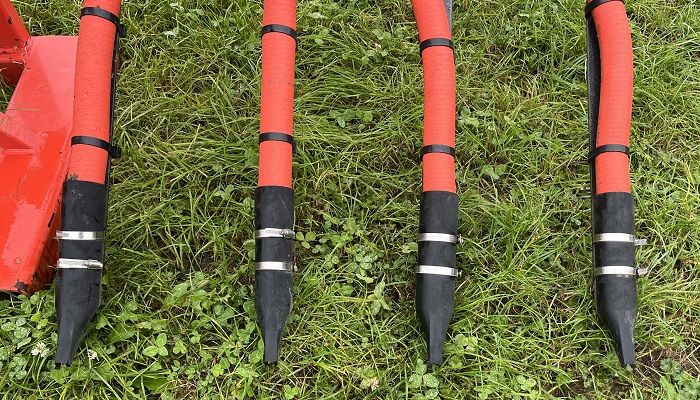
- LESS equipment & upgrading of slurry organic manure storage,
- Precision agriculture – GPS controlled equipment,
- Rain water harvesting support, soil aerators,
- Solar panels, biomass boilers, and heat pumps on farms,
- Grass measuring tools, water systems & infrastructure,
- Milk recording equipment and weighing equipment.
Impact on emissions
Availing of these grants can help lower emissions by reducing reliance on chemical N through better use of organic manures and precision fertiliser application; reduced energy costs reducing CO2 emissions; reduced emissions per kg of product produced through careful monitoring of animal performance; and reduced animal and manure methane emissions through better grassland management.
Payment
The grant Aid Rate is standard 40%, with 60% available for young farmers, female farmers & organic farmers. There is an investment ceiling of €90,000 per holding over the scheme’s duration. If two or more farmers are in a registered farm partnership, the ceiling increases to €160,000.
Forestry Programme
The Department of Agriculture, Food and the Marine (DAFM) Forestry Programme supports the integration of trees as an accessible, practical, and financially viable choice for farmers. With an attractive range of planting options, there is a place for trees on every farm.
Programme features include:
- Support for all forest types and sizes: from small scale native planting to more commercially-focused forest types.
- Agroforestry – enabling sustainable benefits from the integration of trees with either livestock or crops on the same land.
- Native woodland, emerging forests and continuous cover forestry options.
- Education and Guidance: The programme includes comprehensive decision supports through advisory and training services, and access to forestry specialists, making the transition to trees in the landscape accessible to farmers.
Impact on emissions
New forest creation is a highly significant measure to help address the effects of climate change. Trees and forests play a key role in the capture and removal of carbon dioxide from the atmosphere.
Payment
The Forestry Programme covers up to 100% of the forest establishment costs. Attractive annual premium payments are income tax-free, and eligible applicants can continue to claim Direct Payments (BISS/CRISS) on their forested land.
Examples:
- Native Woodland Establishment Grants of €6,744 /ha, with additional fencing grants and a 20-year annual premiums of €1,103/ha/year
- Agroforestry Establishment Grants up to €8,555 /ha, with additional fencing grants and 10-year annual premiums up to €975/ha/year
Processor incentive schemes (technology)
Many processors have sustainability action payments available for milk/meat suppliers, to enhance on-farm economic and environmental performance. These initiatives provide an incentive for farmers to implement technologies which enhance environmental sustainability. The technologies are closely aligned with the Teagasc MACC / 12 steps plan.
Impact on emissions and payment rates
The actions supported by these programmes include reducing reliance on chemical N; using NBPT-protected urea; improved animal performance; planting of hedges etc. These actions reduce greenhouse gas emissions while also enhancing biodiversity, soil health and water quality.
Payment rates vary depend on the processor. For example, some of the dairy processors are offering 0.25-0.50c/litre for implementing 3-7 measures per year.
Eco-scheme
The Eco-scheme is an environmental scheme applied for via your BISS application. Farmers must implement either: two agricultural practices from a list of eight or a single enhanced agricultural practice on all eligible hectares must be selected. Actions that contribute to reducing emissions include: maintaining at least 7% of farmland for biodiversity; maintaining low stocking rates (≤1.4 LU/ha); planting native trees and/or hedgerows; limiting chemical N usage, use of GPS for fertiliser spreaders or sprayers; soil sampling and applying lime; and planting a break crop as well as using multispecies and legumes.
Impact on emissions
Better management of hedgerows and planting of native trees/hedgerows will lead to increased carbon stored on farm while lower stocking rates mean less animal and manure methane emissions. Using soil sample results to correct pH and fertility issues will help reduce chemical N use.
Payment
The Eco-scheme is an estimated payment of €65–€70 per hectare per year and is available to all active farmers receiving the Basic Income Support for Sustainability (BISS).
Organic Farming Scheme
The Organic Farming Scheme provides financial support to encourage the production of organic foods. Partial conversion of the farm to organic farming is allowed, subject to certain rules.
Impact on emissions
This scheme offers financial support to farmers transitioning to organic farming, and offers multiple advantages to the environment – reducing greenhouse gas emissions, improving water quality, enhancing biodiversity and carbon sequestration potential.
Payment
Drystock farmers entering into a contract may qualify for yearly payments of up to €300 per hectare during the conversion period, and up to €250 per hectare when they have achieved full organic status. Higher payment rates are available for organic horticultural and tillage farmers, and dairy farmers. An amount of €2,000 will be paid to OFS participants in the first year of conversion and €1,400 for every subsequent year of the contract.
Straw incorporation measure (SIM)
This scheme is designed to provide financial support for tillage farmers. It enables them to increase soil organic carbon (SOC) levels by chopping and incorporating straw from cereal and oilseed rape crops. Straw incorporation is an important measure for tillage farmers in Teagasc’s Marginal Abatement Cost Curve (MACC), which outlines actions farmers can take to both reduce greenhouse gas (GHG) emissions and capture carbon.
Impact on emissions
Incorporating straw into the soil has been shown to deliver significant carbon sequestration (capture) benefits. According to the MACC, this practice can achieve an annual reduction of 1.08 tCO2 ₂ eq per hectare.
Payment
The payment is €250/ha for cereals and €150/ha for oilseed rape, up to a maximum of 40 ha.
Protein Programme
The payment provided under this scheme is an important support for tillage farmers for the growing of protein crops, including beans, peas, lupins and the protein cereal mix crop.
Impact on emissions
As protein crops fix their own nitrogen from the atmosphere, they require zero chemical nitrogen which is good for the environment and good for the pocket. Reduced imported feed means less transport energy costs and fewer emissions associated with the growing of the growing of protein sources in some parts of the world.
Payment
Annually the government has committed to 7 million euro for this scheme, and may add more if oversubscribed. Annual payments were generally c. €250/ha but in 2025 this looks likely to rise to almost €500/ha.
The Signpost Advisory Programme
The Signpost Advisory Programme provides all farmers, Teagasc clients and non-clients, with the support to enable them to adopt the main technologies to reduce greenhouse gas emissions. When a farmer signs up to this free advisory service, they get access to the AgNav programme and the total emissions for their farm.
Signpost advisors will support farmers to identify the actions that might suit their own farm and from that develop a tailored three-year plan for the farm.
Impact on emissions
The advisors in this programme focus on the 12 steps to reduce greenhouse gas emissions on all farms.
Find out more about the Teagasc Signpost Advisory Programme here.
Other schemes
The following are schemes that farmers are participating in but that are not currently open to new entrants or may become available in the future.
- Agri-Climate Rural Environment Scheme (ACRES): This incentivises actions to improve biodiversity, climate resilience, air, and water quality. Key actions include buffer zones along watercourses, hedgerow planting, and habitat preservation.
- Soil sampling scheme: This provides farmers with free soil sampling and detailed insights into the nutrient status of their farms, for more targeted soil management practices.
- Carbon farming: DAFM is developing a National Carbon Farming Framework to enhance participation in carbon removal, emission reductions, and ecosystem services.
- Multi-species sward & red clover silage measure: The red clover silage measure aims to encourage farmers to establish red clover silage swards. In 2024, DAFM contributed up to €300 per hectare for the establishment of Red Clover Silage Swards mix to farmers participating in the measure.
- Knowledge Transfer Groups: The programme aims to increase participants’ understanding of topics such as climate change biodiversity, water quality, air quality and soil health etc. Farmers are paid up to €750/participant/year.
- European Innovation Partnerships: These engage researchers, farmers, and other stakeholders to implement innovative solutions with a ground up approach e.g. FarmPeat Project.