

Edited By
Dr Joe Patton
Head of Dairy Knowledge Transfer
Compiled and edited by Dr. Joe Patton, Head of Dairy Knowledge Transfer, the Teagasc Dairy Specialist team share management notes for the month ahead, including top tips, managing drying off, monitoring cow body condition score and setting up the farm to graze next spring.
Top tips for November
- Drying off
- Dry off heifers, they need at least 12 weeks dry. Cows also need 8 weeks dry. Check your calving dates and note cows that may need to be dried off in November. Reduced dry period will greatly affect 2027 performance.
- Silage testing
- Test your silage and make a feeding plan for dry cows, milking and young stock.
- Replacement heifers
- Weigh replacement heifers. Generate ICBF heifer weight report and group according to weight.
- Book time away
- Book a few days away. Once it is booked and confirmed, it will likely happen. If it is only a hope that you will get away, it will be unlikely to happen.
- Extra help
- If your short of help, now is a great time to look. Word of mouth, local adverts and online are the main ways farmers find help.
- Closing the farm
- Watch farm cover and house accordingly. Grass is more valuable to freshly-calved cows in spring.
- Cashflow planning
- If cashflow and creditors are becoming a concern, contact your local advisor to discuss and decide on a plan of action.
Cleanliness is the foundation of a successful dry-off
Preventing bacteria from entering the udder at the time of dry off is key to the successful implementation of selective dry cow therapy (SDCT). This is particularly important when using sealer alone, as there is no antibiotic to treat an infection that may be inadvertently introduced during the dry off procedure.
A Moorepark study compared a guidelines-based dry-off procedure with a standard farm procedure in cows with somatic cell count (SCC) below 100,000 cells/ml.
The results showed that cows receiving teat sealant alone using the guidelines-based procedure had significantly better SCC outcomes in the following lactation than cows dried off using the standard procedure, thus demonstrating that good hygiene is extremely important for successful implementation of SDCT.
Preliminary results from the current Smart Dry project being conducted by Dr. Pablo Silva Bolona across commercial dairy farms also show that the guidelines-based dry-off procedure is delivering better SCC outcomes on commercial dairy farms.
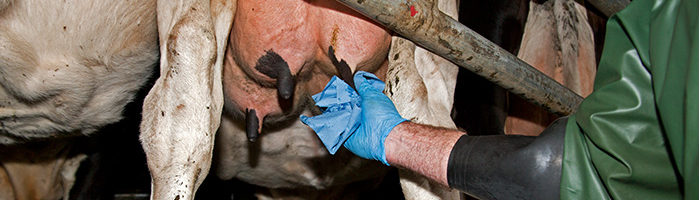
The Teagasc guidelines to attain maximum teat hygiene at the point of dry off are:
- Remove excessive udder and tail hair before dry-off.
- Use a new pair of clean gloves.
- Apply teat disinfectant and allow at least 30 seconds of contact time before drying the teats.
- Dry each teat thoroughly with a clean paper towel.
- Clean the teat end with cotton wool and methylated spirits, followed by an alcohol wipe, until it is visibly clean.
- Use partial insertion when administering the teat sealant, pinch the base of the teat and do not massage the sealant into the udder.
These steps reduce the risk of introducing bacteria into the teat canal and help ensure the sealant remains in the lower teat, where it forms a physical barrier against infection.
When it comes to drying off, success begins with a clean teat end. Selecting the right cows for SDCT is important, but ensuring the dry-off procedure is carried out correctly is equally essential.
Managing body condition score
We are all aware of the importance of having cows at the target body condition score (BCS) of 3 to 3.5 at calving. Failure to achieve this can lead to more cows requiring calving assistance, poor cow performance and an increase in metabolic issues such as milk fever.
Changes in BCS are an indication of the energy balance of the cow. At its simplest, if a cow consumes more energy than she requires for maintenance and production her BCS will increase. In a similar fashion, shortfalls in the energy supply of the diet will lead to a drop in BCS.
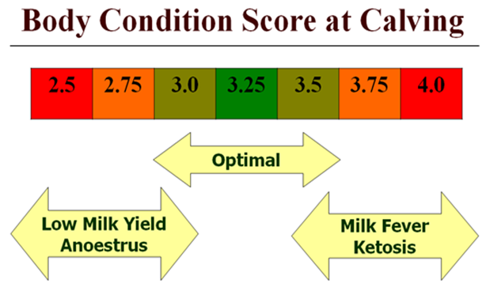
Now is the ideal time to assess BCS and put a plan in place to ensure as many cows as possible calve down at the target BCS. It is preferable to correct issues with BCS early in the dry period, as waiting until closer to calving can lead to issues at calving.
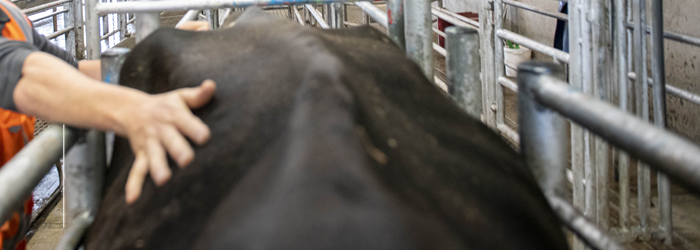
Cows should be grouped based on BCS, with each group managed accordingly to achieve the targets. Once a cow is back on target, she can be moved to the main group again.
Over a standard 60-day dry period, cows at 2.75 BCS at dry off and fed ad-lib silage of 68 to 70 Dry Matter Digestibility (DMD) silage would be expected to reach the target BCS range by calving.
Under conditioned cows will either require an extended dry period, higher quality silage or supplementary feeding. Over conditioned cows will need their energy supply restricted, either by restricting feed intake or by feeding poorer quality silage. Restricting intake can be challenging and requires sufficient feed space for all cows to feed at once. Where this cannot be achieved, including straw in the diet will effectively reduce the energy density of the diet.
Table 1: Managing effects on body condition score
| Silage DMD | |||
| 62% | 68% | 72% | |
| 8-week dry period | |||
| BCS change in dry period | -0.16 | 0.20 | 0.50 |
| Management options for BCS | |||
| Extra 6 weeks dry | +0.20 | +0.45 | +0.55 |
| OAD milking for 7 weeks | +0.18 | +0.18 | +0.18 |
Early spring grass supply
Ground conditions have remained favourable in many parts of the country, despite significant rainfall over the October Bank Holiday weekend.
With settled weather expected during the first half of November, there is a temptation for farmers to keep stock out grazing longer than planned. However, delaying closing can have serious consequences for spring grass supply.
Remember, spring grass is far more valuable than autumn grass. Calving patterns are becoming more compact, herd demand for feed is increasing and modern dairy cows have much higher intake requirements during early lactation.
Approximately 67% of the grass available in February and March grows during October and early November. Therefore, most paddocks closed during October should remain closed.
Every week that closing is delayed can cost your farm over 100 kg DM/ha of grass in spring.
For example, on a 40ha farm with an average farm cover (AFC) of 600 kg DM/ha on the 15th of November, grazing one additional average-sized paddock with a cover of 1,300 kg DM/ha could reduce AFC by approximately 65 kg DM/ha. This could reduce the closing cover on the 1st of December from 750 to less than 685 kg DM/ha (assuming growth of 10 kg DM/ha/day for the second half of November), with significant implications for spring grass supply.
Target closing cover
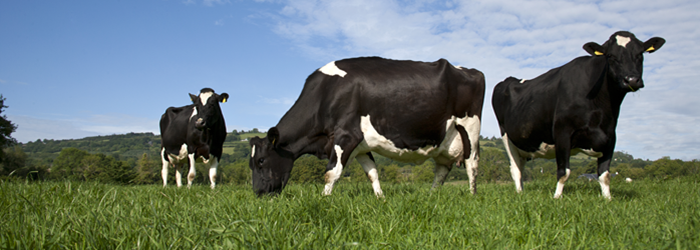
Farms with early calving dates, high six-week calving rates and high stocking rates should target a closing AFC of at least 800 kg DM/ha on December 1st (industry standard).
Don’t sacrifice valuable spring grass for a few extra days of autumn grazing!
National Dairy Conference 2026
This year’s Teagasc National Dairy Conference will take place in Cork on Wednesday, 25th November. The theme of this year’s conference is “Developing Resilient Dairy Farming Systems”, and is taking place in the Radisson Blu Hotel, Little Island, County Cork. The conference is focused on the latest developments and research in the Irish dairy sector.
For more information, including the sessions and workshops planned, visit here.
The Dairy Edge Podcast
The Dairy Edge is Teagasc’s weekly dairy podcast for farmers. Presented by James Dunne and Stuart Childs, Teagasc Dairy Specialists, the podcasts will cover the latest information, insights and opinion to improve your dairy farm performance.
Listen to recent shows from the Dairy Edge podcast below: