

Edited By
Dr Joe Patton
Head of Dairy Knowledge Transfer
Focused on putting the farm in a stronger position for 2027, Dr. Joe Patton, Head of Dairy Knowledge Transfer, shares management notes for the month of October, centred on grassland, heifer management, preparing for drying off and budgeting.
October grazing – make the most of grass but keep spring in mind
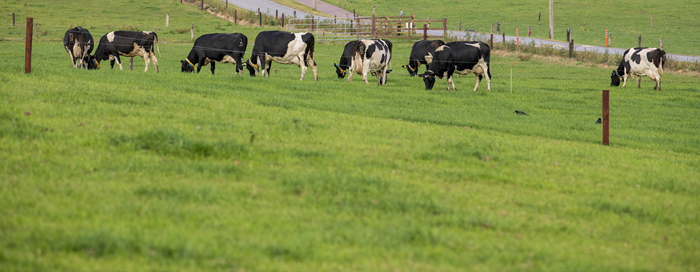
The October grazing strategy has two aims: keep grass in the cow’s diet for as long as conditions allow and build the spring grass wedge. In other words, graze every suitable kilogram in October, but close paddocks strategically for spring.
On most farms, the final rotation will generally start around October 5-10. Difficult soils may require closing earlier. When selecting paddocks to close, prioritise drier paddocks with good roadways, access and water for grazing during difficult conditions next spring.
Aim to have around 60% of the farm closed by November 1. Higher-stocked or compact-calving farms may need more than 75% closed. Monitor clean-outs carefully, particularly where silage is being fed, and use a strip wire where necessary. High-clover paddocks should be closed later to encourage clover development.
Some farms remain tight for winter feed; it is vital not to graze too late in response because this will reduce spring grass supply.
Weigh heifers — don’t guess by eye
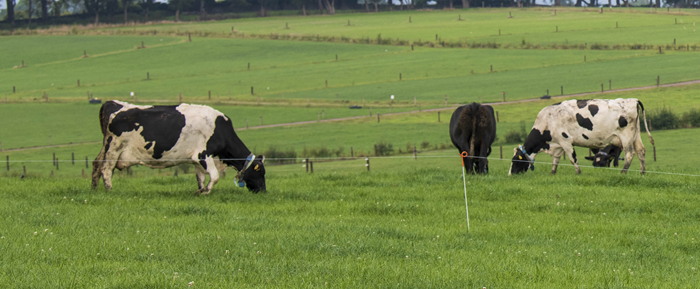
Summer 2026 conditions have tested youngstock on many farms, whether through drought or excessive rainfall. Appearance is not an accurate measure of performance – the scales are.
If not already done, weigh replacement heifer calves during October. The earlier you identify animals that are behind target, the easier and cheaper it is to correct them before housing, when managing multiple groups becomes more difficult.
Table 1. Guideline dairy heifer weights by breed type
| Age | Target | HF | HF/JEx |
| 9 months | 40% | 220 | 200 |
| 15 months | 60% | 330 | 300 |
| 24 months | 90% | 495 | 450 |
Table 2. Guideline dairy heifer weights by EBI Maintenance Index
| Maintenance Sub-Index (€) | Mature liveweight | 6 month weight | 15 month weight |
| 59 | 500 | 200 | 300 |
| 44 | 525 | 210 | 315 |
| 29 | 550 | 220 | 330 |
| 15 | 575 | 230 | 345 |
| 0 | 600 | 240 | 360 |
| -14 | 625 | 250 | 375 |
| -28 | 650 | 260 | 390 |
| -43 | 675 | 270 | 405 |
Drying off – treat based on individual cow data
Drying off preparation should start now. Use recent milk recording, SCC history and treatment records to identify cows that require antibiotic dry cow therapy and those suitable for selective dry cow therapy – don’t treat the whole herd by default.
Milk recording results should ideally be less than 30 days old at drying off. Herds drying cows over an extended period may therefore need more than one recording.
Where antibiotic treatment is required, milk samples for culture and sensitivity testing can help identify the bacteria involved and guide product selection. Sampling must be carried out hygienically to avoid contamination.
Teat sealant is an important part of the dry-off strategy and should be considered across the herd, alongside good cubicle and housing hygiene.

Budget cash flow and fodder
2026 has put pressure on margins through higher input costs, lower milk prices and poor grass growth. Do a quick cash-flow check: (Current account balance – 1 January balance – current creditors) ÷ average herd size.
A result of around +€100/cow or better provides a useful benchmark. A substantially lower figure warrants a full cash-flow budget for the next six months.
Finalise the fodder budget now. If there is a deficit, act early – buy feed or review stock numbers before winter tightens the squeeze.
Date for the diary – National Dairy Conference
This year’s National Dairy Conference will take place in the Radisson Hotel, Little Island, Cork on Wednesday, November 25th. The theme of the event is ‘developing resilient dairy systems’ and is timely at the end of a challenging year for the sector.
As always, this event aims to deliver an engaging and varied agenda for dairy farmers, featuring a blend of industry position papers and practical advice.
Keynote speakers on the day will include Professor Laurence Shalloo, Teagasc Moorepark, who will look at farm system metrics, and John Lancaster, StoneEx Group, who will deliver a dairy markets perspective for 2027.
Leading dairy farmers will share their strategies for building resilience to weather events, while the ever-popular practical workshop format returns for the afternoon sessions. Attendees can choose from a range of workshops on topics such as dairy cow nutrition, investment costs, pasture management and labour rostering.
Details on registration will be available at www.teagasc.ie or contact your local office/advisor.
The Dairy Edge Podcast
The Dairy Edge is Teagasc’s weekly dairy podcast for farmers. Presented by James Dunne and Stuart Childs, Teagasc Dairy Specialists, the podcasts will cover the latest information, insights and opinion to improve your dairy farm performance.
Listen to recent shows from the Dairy Edge podcast below: