

Edited By
Mark Treacy
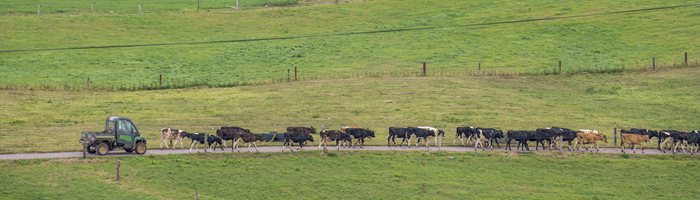
Teagasc Dairy Specialist, Mark Treacy shares management notes for the weeks ahead, focused on feeding the herd over the coming months, maintaining replacement heifer performance and managing cashflow after a challenging year for cash reserves.
As more typical Irish weather has returned, we are seeing improvements in grass growth rates. However, while growth rates are improving, they are still below average across large parts of the country, with large variations between farms.
It is vital to walk your farm weekly to establish your current growth rate, to monitor paddock recovery, and to establish what your average farm cover is.
Average farm covers are typically low due to the recent drought, posing a challenge to achieving the target end of September average farm covers required to maximise autumn grass availability.
The key to allowing your farm recover from the drought period and for building average farm cover is a long rotation, with a target rotation length of 30 to 35 days in September. This will allow the farm to recover, maximising utilisation of fertiliser and slurry, and optimising animal performance by allowing animals to graze the correct cover of grass in autumn.
By establishing your current average farm cover, it will be possible to calculate the required weekly increase in cover required to hit your desired peak cover, and to set supplementation rates appropriately to achieve this.
For example, if current farm cover is 680 kg DM/ha, and your target cover for the end of September is 1000 kg DM/ha, you will need to increase farm cover by 320 kg DM/ha over the next three weeks, an average of about 15 kg DM/ha/day. The only way to achieve this will be to set demand at 15 kg DM/ha below the daily growth rate, and supplement to fill any shortfall in the diet.
Fertiliser and slurry
Where fertiliser has not been applied since the end of the drought, an application of 20 to 25 kg N/ha, either as chemical or organic fertiliser, should be applied where growth rates are greater than 35 kg DM/ha per day before closed period for chemical fertiliser applications commence on September 14.
Dr. David Wall, Enterprise Leader at Teagasc Johnstown Castle, joined Stuart Childs on a recent episode of the Dairy Edge podcast to discuss the timing of fertiliser applications over the coming weeks to maximise the return from nutrients applied while minimising the risk to water quality.
Complete a fodder budget
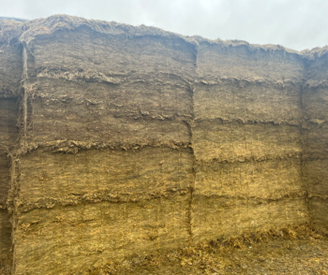
Complete a winter fodder budget as soon as possible. The sooner a plan is put in place to rectify any deficits, the easier it will be to achieve. This can be completed on PastureBase Ireland, or contact your advisor if you require assistance.
A key target is to have at least 80% of your winter requirements available as forage in the yard. Where larger deficits are found, appropriate action is required immediately.
Purchasing additional forage, where available, is the simplest solution. However, this may be difficult in some areas and will also be a significant drain on cash reserves.
Reducing stock numbers for the winter period may be more appropriate, reducing the requirements for winter feed, while also introducing cash to the business.
Where feed is tight, complete a milk recording and pregnancy scan, if not done already, and sell cull cows early.
Replacement heifer performance
Much emphasis is placed on choosing the best available genetics to produce quality heifers. However, how well these animals are reared will have a large influence on whether the true potential of these animals is realised or not when they become part of the miking herd.
Underweight heifers will be less likely to go in calf or may end up calving later in the calving season. Even where these animals do go in calf, there are still negative consequences, with underweight heifers being shown to have poorer production and longevity within the herd.
Most farmers are aware of the importance of having heifers at 60% of mature cow weight at breeding. However, it is important that heifer weight is monitored throughout the rearing process to identified issues early when they can still be easily rectified.
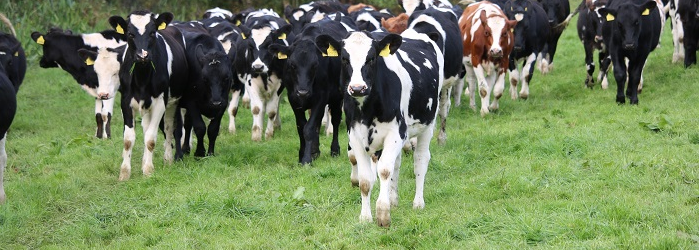
Heifer calves should be 30% of mature cow weight at six months of age, increasing to 40% of mature weight by nine months. Preferential treatment should be given to calves which are behind target, with the most practical method being to run as a separate group.
Cashflow planning
This year has been a challenging year for cash reserves, with milk price substantially lower than last year and a large amount of additional expenditure on feed occurring on many farms.
Complete a cashflow budget to assess your situation. We are entering a period of low cash income and therefore reserves will be required to carry the farm through the winter period.
Assess the situation on your farm from now until the end of March. Where a cash shortfall is predicted, act early and discuss with your advisor or accountant.
Options to consider include retrospectively financing machinery or building work already financed out of cashflow, selling surplus stock, or securing appropriate finance from a lending institution.
The Dairy Edge Podcast
The Dairy Edge is Teagasc’s weekly dairy podcast for farmers. Presented by James Dunne and Stuart Childs, Teagasc Dairy Specialists, the podcasts will cover the latest information, insights and opinion to improve your dairy farm performance.
Listen to recent shows from the Dairy Edge podcast below: