
Deadline for planting catch crops approaching
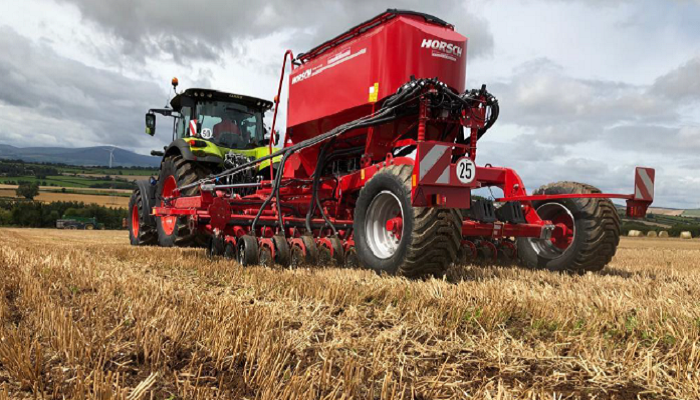
Despite an early finish to harvest on many farms, establishment of cover crops has been relatively slow so far, with very dry soils making conditions difficult in many areas. However, as Teagasc Crops Specialist, Ciaran Collins writes, growers participating in cover crop schemes, need to be aware of the different sowing date deadlines that apply.
For the Farming for Water EIP – Measure 6A (Other Cropping Systems), cover crops must be sown no later than September 1. This is earlier than the deadline under ACRES which is September 15.
Participants who were accepted into the Farming for Water EIP last year can sow the same area again this year. The area established under measure 6A must be declared by October 1, with payment based on the area actually planted. Across Measures 6A (4 month) and 6B (2 month) combined, participants can receive payment on a total area of between 0.5 and 40 hectares.
The deadline for establishing ACRES cover crops is September 15, giving growers participating in ACRES an additional two weeks compared with the Farming for Water EIP.
Choose the right seed mixture
Growers should only buy seeds that are tested under the Higher Voluntary Standard (HVS). The seeds that meet this standard have been tested free of Blackgrass, Sterile Brome and Wild Oats.
Seed mixture requirements are similar for both schemes, but it is important to select species that fit with the farm rotation. A minimum of at least two species must be used using the monoculture seed rates from the prescribed list. There is no maximum in terms of the number of species that can be used, but at least 100% of a full sowing rate must be reached (i.e. there is no minimum seed rate). You should not have any more than one species at 60% of a full sowing rate in the mix.
Fodder brassica species are the most suitable if fodder is scarce on the farm, and they are suited to late planting along with oats.
It is important to avoid species that could create problems for subsequent crops. For example, brassica species such as forage rape, leafy turnip or fodder radish should be avoided where oilseed rape forms part of the rotation, as they can increase the risk of club root.
Cover crops may be grazed from January 1 in both schemes.
Establishment
Ploughing is not permitted for establishment. Crops can be drilled directly into stubble or seed can be broadcast followed by a light cultivation and rolling.
Good seed to soil contact is essential, particularly if the soil is dry. Where mixtures contain seed of very different sizes, broadcasting the large and small seed separately may help achieve a more even spread. Growers should also allow for potentially lower establishment when broadcasting compared with drilling.
Keep seed records
Proof of seed purchase should be retained, including details of the species and quantity purchased. Seed bag labels, invoices and ACRES catch crop seed dockets should be kept for five years in case they are required during an inspection.