
Drawing on personal experience and research, Michael Hennessy, Head of Crops Knowledge Transfer, highlights the hidden, long-term impact of noise and eye injuries on farm.
Regrettably, we hear all too often about farm fatalities and serious accidents. What we hear less about are the injuries that are not immediately life-changing yet cause significant hardship over time. My father farmed for over 60 years, and towards the end of his career, it was clear that the physical demands of the job were taking their toll. Nowhere was this more evident than in his hearing loss, which limited his full participation in family life away from the farm. He was very conscious of this and regularly encouraged those working alongside him to wear ear protection.
More recently, while working on a machine using an impact gun, I stopped myself after a few minutes due to the loud noise. The noise was intense and amplified by the close working space. I took the time to find proper ear protection before finishing the task – a small decision, but an important one.
Exposure to loud noise over years on machinery, in the yard and in the workshop is quietly destructive. Research and HSA/Teagasc reporting show that farmers are at a much greater risk of noise-induced hearing loss than the general population. Studies suggest that around 25% of farmers show signs of hearing loss by age 30, rising to approximately 50% by age 50, with early signs now being detected in teenagers from farm households. These are not trivial figures. Repeated exposure to loud noise over decades leads to permanent, irreversible damage, and once hearing is gone, it does not return.
The practical steps are straightforward and effective. When working with loud machinery, in enclosed workshops, or around running engines, always wear hearing protection that fits. When choosing protection, farmers should consider reusable filtered earplugs or custom-moulded earplugs, rather than relying solely on basic foam plugs. These modern options reduce harmful noise while still allowing conversation and warning sounds to be heard, making them far more practical for everyday farm and workshop use. Comfort and ease of use are critical; hearing protection only works if it is worn consistently. Well-fitting earmuffs also remain a good option for particularly noisy tasks.
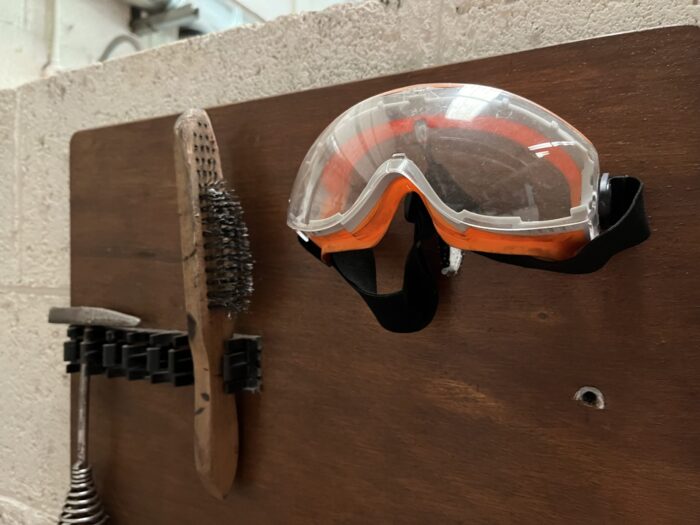
Eye injuries are another under-reported hazard. Teagasc commentary highlights that eye injuries account for a significant proportion of serious farm workplace injuries, while many minor incidents go unreported as they are treated informally. Grinding, hammering and welding are common scenarios where a single flying particle can result in permanent sight loss or long-term damage.
Good workshop practice ties these risks together. Maintain a ready supply of PPE: certified safety goggles, face shields for grinding and welding, and both earplugs and earmuffs – and make their use non-negotiable. Store PPE where it is easy to access, such as at the workshop door or in the tractor cab and replace worn items promptly. Perhaps they might even make a worthwhile Christmas present – to yourself.
Finally, the Christmas break offers a chance to rest both body and mind. If you have been coping with worsening hearing, reduced vision or rising stress levels, don’t put it on the long finger. Have a conversation with a friend, your GP or your local advisor. Protecting hearing and eyesight is not just about farm safety, it is about maintaining quality of life at home and time with family.
More from Teagasc Daily: Know the costs of growing your crops
More from Teagasc Daily: Overhanging stocks dampening tillage outlook