
07 April 2025
Doubling the rate of gain in the Dairy Beef Index
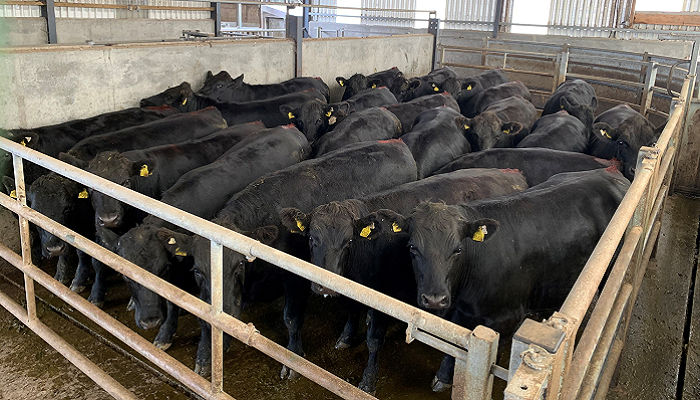
A new initiative to accelerate genetic gain in beef bulls used on the dairy herd is being evaluated by Teagasc pending stakeholder discussions and support, Laurence Shalloo, Stephen Butler, Cliona Ryan, Rachel Doyle, Padraig French and Nicky Byrne, Teagasc, tells us more.
The establishment of a nucleus herd breeding programme would involve an investment of circa €300,000 on an annual basis with a return to the beef and dairy industry of circa €6 million per year.
Since the 2022 dairy cow breeding season, incremental growth in availability and usage of sex-sorted semen for generating replacement dairy females is reducing the number of male dairy calves born annually.
Consequentially, there is potential for more than 1 million beef-sired calves to be born from dairy dams, therefore the beef merit of these calves is going to be increasingly important in meeting market specification and enhancing profitability of Irish beef production. Research has shown that for each €1 increase in the Commercial Beef Value (CBV) of calves, there is a corresponding increase in beef farm profitability of over €1.70.
The Dairy Beef Index (DBI), launched in 2019, plays a key role in identifying beef bulls to be used on dairy females that combine strong carcass traits with minimal impact on calving difficulty and gestation length. However, to date, an active breeding programme designed to maximise genetic gain within the DBI has been lacking. This gap has limited the speed at which genetic improvement can be realised.
An action identified in the Department of Agriculture, Food and the Marine (DAFM) Dairy Calf to Beef Ten-Point Action Plan, launched by the Minister on 18th January 2024, was to develop strategies to accelerate the rate of genetic progress within the DBI.
In response to this action, Teagasc commissioned AbacusBio to assess the current level of genetic progress in beef bulls being used on the Irish dairy herd, as well as quantifying the potential genetic progress along with the economic costs and benefits of a range of breeding strategies to increase genetic gain within the Angus breed.
The Aberdeen Angus breed was selected as it accounts for the greatest number (431,500 in 2023) of beef calf birth registrations from the Irish dairy herd with an estimate that approximately 50% of these births are from AI. The Angus breed exhibits significant variation in carcass and calving traits, which can be harnessed to accelerate genetic improvement. Globally, large-scale breeding programmes with diverse breeding objectives exist for the Angus breed, offering a valuable source of genetic variation. Internationally, much of the growth in dairy beef breeding programmes is in early-maturing breeds due to their calving ease characteristics, short gestation length, potential performance from pasture-based systems and their meat-eating quality characteristics and early age at finishing.
Establishing a nucleus herd
Establishment of a nucleus herd breeding programme and implementing assisted reproductive technologies was identified in the AbacusBio report as the strategy that generated the most significant increase in genetic gain. A summary of the AbacusBio report was published at the Teagasc Dairy Calf to Beef conference and is available to view here (PDF). The rate of genetic gain in DBI could be almost doubled in the Angus breed, relative to the status quo by implementing this strategy.
The proposal outlined in the AbacusBio report, which is being considered, is to establish a breeding programme that produces 180 elite, high genetic merit DBI Angus calves annually. The strategic objective of the dairy beef nucleus herd is to combine the use of genetics, genomics, modern reproductive technologies and early-life phenotyping to identify young bulls and heifers with the best genotypes and phenotypic performance for economically and environmentally important traits.
The calves will be generated from the best Angus females using a combination of Multiple Ovulation and Embryo Transfer (MOET) and In Vitro Embryo Production (IVP). Semen of elite bulls will be sourced nationally and internationally to compliment donor dams to generate embryos. Dairy cow dams in multiple Teagasc and commercial herds will be used as recipients to provide a surrogate pregnancy service.
Each year, the best genetic and phenotypic performing bulls generated by the nucleus herd will be made available and will be targeted towards Irish AI (Artificial Insemination) and pedigree breeding programmes.
Preliminary briefings on the initiative with the Irish Aberdeen Angus association have taken place, while further discussion with interested stakeholders will take place over the next period of time. For this programme to be successful, it will require strong support from the Aberdeen Angus breeders in Ireland.
Additional research
Additionally, research will be completed around assisted reproductive technology to develop protocols to increase the yield of transferable embryos from elite donors. Management protocols for surrogate animals will be developed to increase the likelihood of successful pregnancy establishment. The knowledge gained will be made available to all pedigree cattle breeders that are interested in using assisted reproductive technologies, thereby increasing technology adoption and accelerating genetic gain.
The environmental footprint of beef production is being increasingly scrutinised from both a methane emission and age at finishing perspective. Currently, accurate recording of early-life phenotype measurements for methane emissions and feed efficiency is only possible on research farms. It is envisaged that methane emissions will be measured on animals in the nucleus herd, allowing this important phenotype to be considered in the selection of sires. Disseminating the genetics of high DBI Angus bulls for use on dairy farms that generate offspring with reduced methane emissions, improved feed efficiency and early finishing age will improve the sustainability credentials of the beef and dairy sector, providing a competitive advantage in export markets.
Expected benefits
The expected benefits to Irish farmers include:
- Higher DBI bulls available, facilitating increased profitability for beef and dairy farmers.
- Faster genetic improvement in beef bulls used on dairy cows, increasing the economic value of their calves.
- More consistent, high-quality dairy-beef animals that meet processor and market requirements.
- Reduced finishing age while meeting carcass market requirements.
- Reduced carbon footprint of beef production through improved growth, feed efficiency and methane emission reductions.
- Provision of high merit sires to the Irish national Angus breeding programme.
- Blueprint for breeding programmes of accelerated genetic gain for all cattle breeds.