
26 September 2024
Drilling cereals in early October
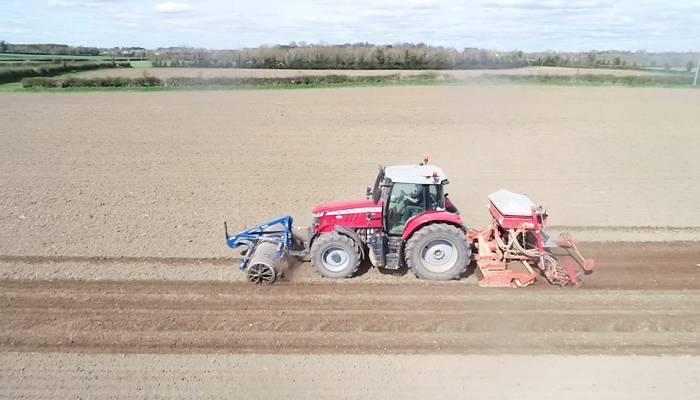
As September turns to October, Crops Specialist at Teagasc, Shay Phelan shares key advice on seeding rates for those drilling cereals in early October, autumn weed control strategies and agronomic advice for winter oilseed rape crops.
There is quite a choice of varieties that growers can drill over the coming weeks, and varieties should be selected on their agronomic details rather than just yield potential.
When you have a variety selected, the next decision is to calculate the seed rate. This will have changed from the setting used last year, as the thousand grain weight (TGW) of 2024 seed is different than 2023. To aid farmers is selecting the most appropriate seed rate, Teagasc produces a seed rate calculator every year, which is based on the establishment rate, the target plant count and the TGW. Table 1 below gives an indication of the seed rates required for sowing in early October. Conditions this year are somewhat better than last year
Table 1. Seed rates for wheat and barley 2024/2025 (note 6 row hybrids will have lower seed rates)
| Planting date |
October Week 1 |
October Week 2 |
||
|---|---|---|---|---|
| Barley | Wheat | Barley | Wheat | |
| Target plants (m2) | 280 | 250 | 290 | 260 |
| Sowing seeds (m2) | 350 | 313 | 387 | 347 |
| Establishment % | 85% | 80% | ||
| TGW | Seed rate (kg/ha) | |||
| 50 | 165 | 146 | 180 | 162 |
| 51 | 168 | 150 | 185 | 166 |
| 52 | 171 | 153 | 189 | 169 |
| 53 | 175 | 156 | 192 | 172 |
| 54 | 178 | 159 | 196 | 176 |
| 55 | 181 | 162 | 199 | 179 |
| 56 | 186 | 165 | 203 | 182 |
Autumn weed control
Pre-emergence herbicides have been shown to be more effective at controlling weeds rather than post-emergence options. Options include Firebird; Flight; Defy + DFF; Tower; or Firebird Met. There are also generic versions of the products mentioned that may help to reduce costs.
Avoid reducing rates, as this will also reduce the residual effect of the herbicide, so the length of control will be significantly shorter. Choose herbicides that will control the majority of weeds in your fields and note that this may change on a field by field basis.
Over the last few months, we have seen a number of cases of herbicide resistance with annual meadow grass to ALS herbicides such as Pacifica Plus. Therefore, using pre-emergence herbicides is one way of trying to prevent this from occurring on you farm. For further details, contact your local advisor.
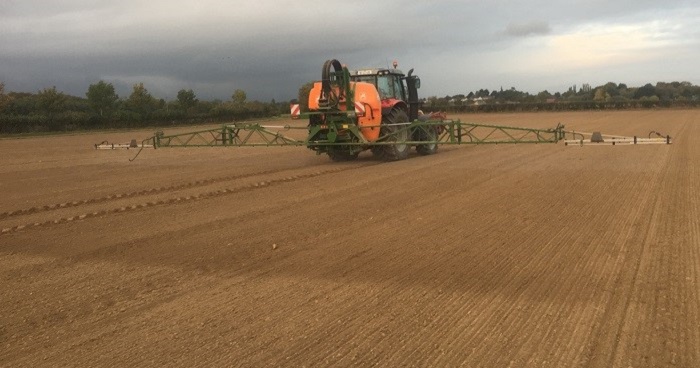
Figure 1: Pre-emergence herbicides work best in the autumn
Winter oilseed rape
Volunteer cereals and some grass weeds seem to be growing well at the moment, and are competing with some crops. If they haven’t already been treated, any of the approved graminicides e.g. Falcon, Fusilade Max etc. can be applied now at three-quarter to full rate – depending on the weed issue.
Slugs are reported to be a problem in some crops, but not all, so assess crops before applying any pellets. Place bait traps and if there are any slugs found in the traps then consider treatment. Many of the early-sown crops are at lower risk, as they are quite advanced now but the later-sown crops are more at risk.
Tillage Edge podcast
On this week’s Tillage Edge podcast, Michael Hennessy is joined by Ciaran Collins and Shay Phelan to discuss the key factors in selecting varieties and why certain ones may be more suitable.
Listen in below: