
05 September 2024
Drilling oilseed rape and creating a cropping plan for winter crops
Crops Specialist at Teagasc, Shay Phelan offers key advice on establishing and managing winter oilseed rape crops, while also focusing on the key elements of a cropping plan for winter crops.
Winter oilseed rape
There is still time to drill winter oilseed rape. From now on, however, hybrid varieties are the ones to choose to drill. Seed rate is normally 60-80 seeds/m2 but, as sowing date moves later, the higher end of this range is recommended.
Weed control should still be carried out pre-emergence of the crop, as this gives control of the widest range of weeds.
Some crops have already emerged and volunteer cereals are now starting to grow quite quickly. Over the next few weeks, an appropriate graminicide, e.g. Falcon, Fusilade Max, Stratos Ultra etc., should be applied to control these and any grass weeds that may have emerged. Where annual meadow grass is also a problem, Centurion Max will give better control.
Figure 1: Control of volunteer cereals using graminicide
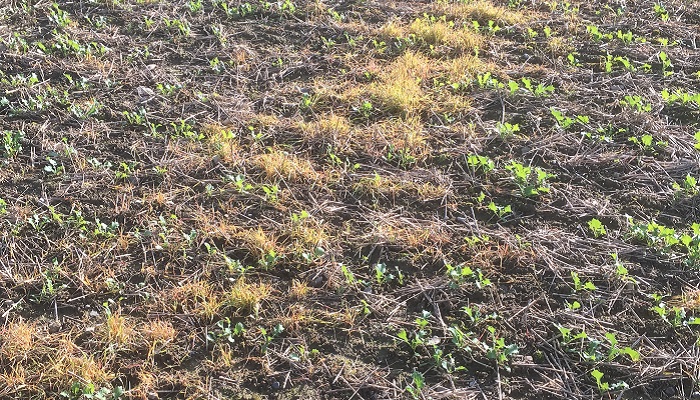
Additionally, it is important to continue to watch out for signs of slug damage. If there are any signs, then apply some pellets to reduce the damage. Later-sown crops can also often be at risk from pigeons who have been known to pull entire seedlings out of the ground, so be aware.
Create a cropping plan for your winter crops
The new Department of Agriculture, Food and the Marine (DAFM) Recommended List is now available and should form the basis for all crop planning over the next few weeks. Have a look at each variety and decide which variety is most suitable for your farm.
Access the DAFM Recommended List (PDF) here.
Don’t just look at the overall yield as the main factor in choosing a variety, but also look at other traits such as: disease susceptibility; straw characteristics; grain quality; and, in the case of winter barley, there are some varieties with BYDV tolerance which could be suitable, especially if you are considering early drilling.
Plan you rotation as well and aim to put crops in their best slots where possible. One comment from the 2024 harvest is that crops following a break seemed to perform the best. Also you need to bear in mind that at the time of writing the three crop rule will again be in place for 2025 unless there are some unforeseen circumstances.
Plan you soil tests
Any soil tests taken after September 15 will be valid for four years, which means that you will not have to take them again until September 2028; tests taken before September 15 will only have a three year lifespan.
Compaction
Investigate any filed issues like compaction. At the Teagasc Crops Forum, next Wednesday, September 11, Teagasc Soils Specialist, Veronica Nyhan will explain the double spade method of soil assessment. Remember, if areas of a field performed poorly in the year gone out then, unless some remedial action is carried out, it is likely that the same issues will arise.
Figure 2: A soil pit can highlight issues below the soil surface
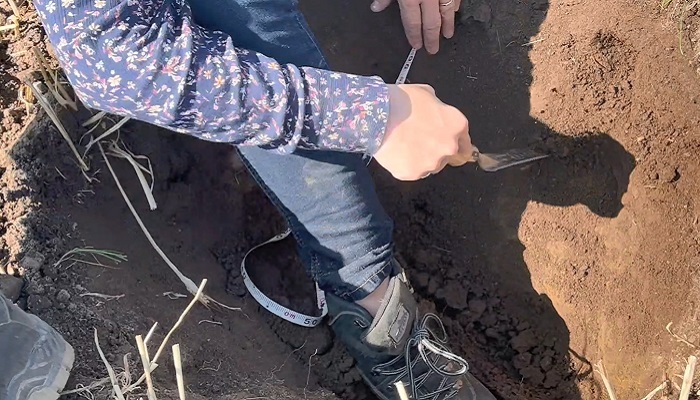
A video showing how to carry out a soil assessment is currently in production and will be published on Wednesday on the Teagasc Crops YouTube channel
Also read: What’s planned for the Teagasc Crops Forum?