
01 April 2025
Dropping farm cover knocks grass growth
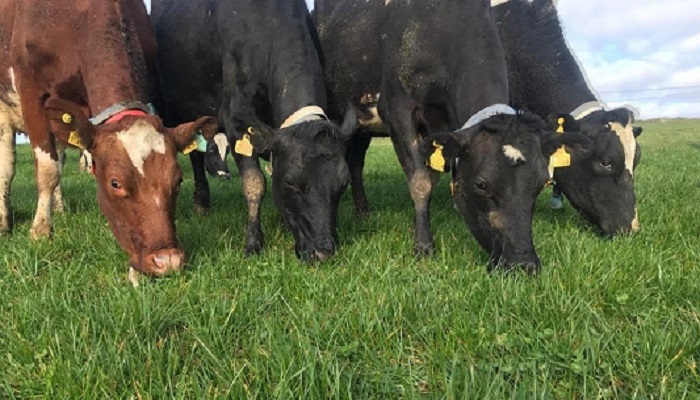
Dairy farmers have been reminded to pay careful attention to the average farm cover on their grazing platforms over the coming days and weeks. This message comes as failing to do so could have knock-on effects on grass production for the remainder of the year.
A measure of the average grass available for grazing across a farm or milking platform, Head of the Grassland Science Department at Teagasc Moorepark, Dr. Michael O’Donovan eluded to PastureBase Ireland data from last week, which showed that 60% of dairy farms had an average farm cover of 600kg DM/ha or below.
Joining Teagasc Dairy Specialist, James Dunne on this week’s Dairy Edge podcast as part of a wider conversation on how to increase grassland performance on dairy farms, Dr. O’Donovan noted that there has been some slippage on the grazing targets being achieved on dairy farms, particularly in terms of the average farm cover targets for winter closing, spring opening and the start of the second rotation.
“60% of farms were at a cover of 600kg DM/ha last week,” he explained, “and they have to mind average farm cover. Dropping farm cover too low is going to be a costly exercise to correct.”
He continued: “Opening farm covers are too low on a lot of farms, subsequently the farm cover by April 10th is too low. If this cover drops too low, you are probably bringing down growth rate by 30% in the April period.”
For farmers facing the prospect of having lower than desired farm covers as the start of the second round fast approaches, Dr. O’Donovan urged patience. Firstly, he reminded them to complete a grass walk and budget to assess the quantities of grass available.
Secondly, he advised, farmers must ensure nitrogen applications are up-to-date. The Teagasc target is to have 75kg of N/ha applied by mid-April – a combination of chemical and organic N.
“The nitrogen that you apply in that March/April period is crucial to getting substantial growth in that peak period. May and June are the months that you have to have growth, they are the heavy lifting months for having decent production on farm,” Dr O’Donovan explained.
And thirdly, to protect average farm cover, the start of the second rotation may have to be delayed out until April 10. To achieve this, some farmers will have no option but to supplement with silage and concentrate – the level of feed supplementation required will be very farm specific and will hinge on the completion of a grass and feed budget.
However, for farms on the point of commencing their second rotation with adequate grass supplies available, Dr O’Donovan reminded them to aim for 1,400kg DM/ha covers as these covers are critical to achieve “a balance between intake, graze outs and performance”.
For further insights, listen to the full episode of the Dairy Edge podcast below: