
Dry weather in the South-East: Advice on grazing, supplementation and silage feeding
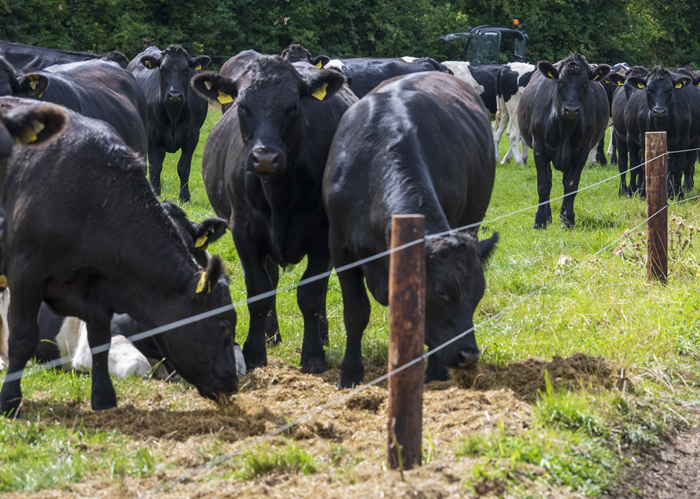
Soil moisture deficits are continuing to increase across the South-East, and with grass beginning to burn back on the driest farms, Future Beef Programme Manager, Martina Harrington outlines the actions farmers should take now.
On Thursday, July 9, there was 20mm of rain in the forecast and on July 10, 5mm was forecast, but nothing fell. That probably sums up the difficulty farmers in the South-East are facing at the moment.
Soil moisture deficits (SMD) are now at 64–69 mm and increasing. Ground is extremely dry and the warm and windy conditions forecast over the coming days will further remove moisture from already dry soils.
There may be rain in the forecast, but rainfall amounts are changing daily. The advice: assess your own farm and act on what is in front of you – not on rain that may or may not arrive.
Eat what you have
Conditions are very variable, not only between farms but between paddocks on the same farm.
On very dry, free-draining ground, grass is beginning to burn back. In these situations, there is little point holding cattle back from covers simply to maintain a rotation if that grass is rapidly losing quality and disappearing.
Graze the grass that is there before it burns back.
Keep stock moving through paddocks and target a clean graze-out to approximately 4 cm.
Remember, the dry matter content of grass is high in dry weather. Animals may get longer from paddocks than expected, so walk the farm and assess what is actually happening.
On the driest ground, the priority is to utilise the grass that is there.
Protect what is still growing
The situation may be very different on heavier ground, newer ryegrass swards or paddocks with good soil fertility. Some of these fields may still be growing grass, but growth is slowing.
Where grass is still growing, the priority is to keep enough grass on the farm to allow it to continue growing.
Look at how quickly cattle are moving through the rotation. On a 100 acre grazing block, a 25-day rotation means grazing approximately 4 acres per day or 28 acres per week.
If cattle are moving through more ground than this, they are eating grass faster than it can regrow. Introduce silage, hay or concentrate to reduce grass intake and stretch the rotation.
Opening a bale now can help hold grass on the farm, give grazed paddocks more time to recover and prevent covers from falling too low.
Do not wait until the farm is bare before supplementing.
The aim is to bring grass demand equal to or below grass growth. It takes grass to grow grass, and maintaining cover now will also help the farm recover more quickly when rain eventually arrives.
Reduce demand early
Look at every group of stock on the farm and ask: can they be sold, finished earlier, weaned or supplemented?
On suckler farms, autumn-calving cows that are safely back in calf can be weaned and restricted. Spring-calving cows during the breeding season and replacement heifers going to the bull to calve at 24 months should be prioritised.
Cull empty or unproductive cows and sell stock that are fit for sale.
For cattle close to finish, feeding 5 kg or more of concentrate per head per day, where appropriate, may maintain performance and bring forward slaughter.
Where second-cut silage ground has low covers and a viable crop is unlikely, consider whether it should be brought back into the grazing rotation.
On sheep farms, wean lambs and prioritise the best grass for them. Introduce meal to forward lambs to maintain performance and finish them quickly. Draft finished lambs regularly and sell cull ewes.
Every animal removed, finished earlier or supplemented reduces pressure on the grazing platform.
Silage feeding
If feeding silage, feed enough to make a difference. The purpose of feeding silage is to reduce grass demand and slow the rotation.
A typical good-quality surplus grass bale contains approximately 230 kg of dry matter.
Thirty suckler cows, with a daily dry matter intake of approximately 13 kg per head, would require 390 kg DM per day if fully fed on silage – approximately 1.7 bales per day.
Thirty 350 kg weanlings, eating approximately 7 kg DM per head, would require 210 kg DM – approximately 0.9 of a bale per day.
Thirty 550 kg cattle, eating approximately 11 kg DM per head, would require 330 kg DM – approximately 1.4 bales per day.
These figures are for animals fully fed on silage. If grass is providing half of the animals’ daily requirement, approximately half of the bale requirement will be needed.
The key message is to feed enough silage to make a difference. Opening one bale occasionally may do very little to slow the rotation if cattle are still grazing through the farm too quickly.
Where cattle are being held in a paddock to feed silage, choose fields with shade where possible and ensure unrestricted access to clean water.
| Stock type | Intake/head/day | Requirements for 30 head | Bales/day if fully fed |
| Suckler cows | 13 kg DM | 390 kg DM | 1.7 bales |
| 350 kg weanlings | 7 kg DM | 210 kg DM | 0.9 bales |
| 550 kg cattle | 11kg DM | 330 kg DM | 1.4 bales |
Feed out safely
Cattle quickly become accustomed to supplementary feeding and can become excited and crowd tractors and machinery. Take care when feeding cattle in fields.
Where possible, move or temporarily fence cattle away from the feeding area before entering with machinery. Do not get out of the tractor in the middle of cattle competing for feed and never stand between cattle and feed, machinery or a feeder.
Take particular care with cows and calves, bulls and strong cattle.
Plan the job. Control the cattle. Feed out safely.
Moisture, not nutrients, is limiting growth
On severely moisture-stressed ground, moisture is the limiting factor – not nutrients. Where SMD is above 60 mm and swards are dry or bare, delay nitrogen applications until meaningful rain is forecast.
Do not spread fertiliser in the hope that rain will arrive.
However, conditions vary between farms and paddocks. Where there is still moisture in the soil and grass is actively growing, apply 20 units N/ac as soon as possible to take advantage of the moisture that is there.
Where permitted within the farm’s nutrient allowances, apply a compound such as 18-6-12. Where P and K are not required or there is no allowance, use protected urea.
The sooner nitrogen is applied to actively growing swards, the better the opportunity to get a grass growth response while moisture remains.
Similarly, avoid applying slurry where no meaningful rain is forecast. Dry conditions increase the risk of nitrogen losses through volatilisation and slurry can crust on the soil surface.
Wait for suitable conditions and rainfall to improve nutrient recovery and reduce losses.
Act now
The situation is different from farm to farm and paddock to paddock.
On very dry ground – eat the grass that is there before it burns back.
Where grass is still growing – protect it by slowing the rotation, reducing demand and supporting growth where moisture remains.
Do not wait for a forecast to make the decision for you.
For more from the Teagasc Future Beef team, visit here.
For more on managing your farm during this dry spell of weather, visit here.