
Early finishing the focus in Elphin
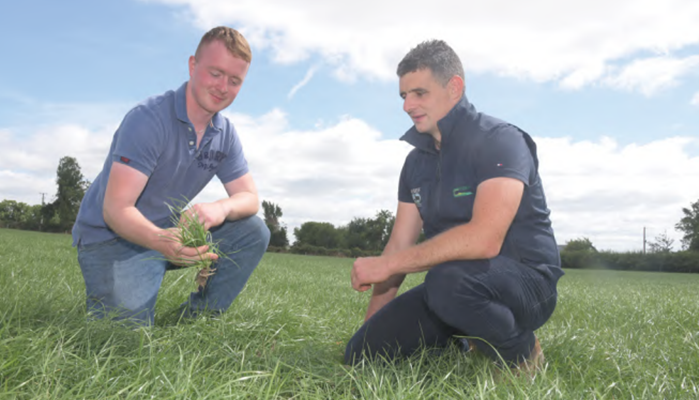
Getting cattle finished early is the main goal of the calf-to-beef system on this Roscommon farm. Through a recent Today’s Farm article, Teagasc DairyBeef 500 Advisor, Tommy Cox tells us more.
Gerry, Anne and Cian Beirne farm at Tullyloyd, Elphin, Co Roscommon. The family farm 80ha, with just under half dedicated to their calf-to-beef enterprise. More than 100 early-maturing Angus and Hereford steers and heifers are reared and finished on this block.
The remainder of the farm carries the Beirnes’ 35 continental-bred suckler cows, with calving split between spring and autumn. The calves are sold as weanlings.
“Both Cian and myself work off the farm so having a system that is efficient and manageable is important,” says Gerry. “For the calf-to-beef enterprise, our target is clear: Buy the right calf, get it off to a good start, and finish it as young as possible.”
Calf to beef and sucklers working in tandem
The calf-to-beef and suckler systems also complement each other well in several ways. From a labour point of view, the calf-to-beef enterprise has a busy period when calves arrive and are being settled in, but it becomes a more streamlined system once the calves are settled, compared with the demands associated with calving and managing suckler cows and young calves. There is also less requirement for intensive day-to-day intervention once the calf-rearing stage is completed.
The suckler herd, meanwhile, is run at a lower level of intensity, with the cows making use of the more marginal parts of the farm that are less suited to the intensive calf-to-beef system. This allows the Beirnes to make productive use of land that would otherwise be more difficult to bring into the calf-to-beef enterprise, while keeping the more productive ground focused on growing quality grass for the finishing cattle.
There is also a financial benefit to having the suckler enterprise alongside the calf-to-beef system. The Beirnes like the option of breeding some of their own stock, which was particularly important this year when calf prices were high. Producing a proportion of the calves themselves gives them some insulation from the cost and availability of buying in calves.
The suckler calves are sold as weanlings, with a number going into the export market, while some pedigree animals born on the farm are sold as pedigree breeding stock. Demand for these cattle has been strong, with the Beirnes achieving good prices for the type of weanlings and breeding animals they are producing.
Having the two systems allows the workload and land resources to be spread across the farm, which is particularly important when both Gerry and Cian are working off farm. Rather than one system being dependent on the other, the two enterprises complement each other and allow the family to make efficient use of both their land and available labour.
Starting with the calf
Calves are sourced directly from just three farms and arrive on the farm at around three weeks of age. The Beirnes mainly buy early maturing Angus and Hereford calves, with approximately 35 autumn-born calves making up part of the annual intake and the remainder arriving in spring.
Once they arrive at Tullyloyd, the calves are introduced to a highly palatable calf ration and fed through an automatic milk feeder. The first few weeks are all about getting the calves settled, healthy and eating.
“Concentrate intake can be slow enough initially,” says Cian. “But once milk volume starts to reduce, the calves quickly increase the amount of ration they are eating.
“Keeping the troughs clean and ensuring fresh feed is available is vital.”
By weaning time, the calves are generally eating over 2kg of concentrate per day. They are weaned at approximately 90kg liveweight. Concentrates are continued after weaning and right through until turnout.
“The aim is to have a strong, well-developed calf ready to make the most of grass when it goes outside,” says Cian.
Age at slaughter is key
The biggest focus in the system is the age at which the cattle are finished. “We are not looking to carry cattle into a second winter if we can avoid it,” says Gerry. “We want animals to be growing consistently from the time they arrive on the farm until they leave for slaughter.”
The early-maturing Angus and Hereford cattle suit this system particularly well. Their performance figures show the consistency of the approach. In 2024/25, the steers were slaughtered at an average age of 20.8 months, with an average carcass weight of 261kg. The heifers averaged 21.2 months and produced an average carcass weight of 259kg.
In 2025 there was a significant improvement in performance with heifers averaging a carcass weight of 265kg at 20.9 months, while the steers averaged 305kg carcass weight at 21.7 months.
For a calf-to-beef system achieving good carcass weight at a young age is important. Every extra month an animal remains on the farm carries a cost, particularly once it has gone through another winter. The younger the animal can be finished without sacrificing carcass performance, the more efficient the system is.
Getting more from 39ha
With just under 39ha dedicated to the calf-to-beef enterprise, grassland utilisation is hugely important.
“We have been investing in the grazing platform, and we recently developed a new paddock system,” says Gerry.
More than 29 acres have been reseeded in the last two years with plans for further reseeding before the year ends, with the aim of improving the quality and productivity of the grassland.
The paddock system gives Gerry and Cian greater control over grazing and allows fields to be rested and regrown between grazing periods.
“The goal is straightforward,” adds Cian. “Grow more quality grass and get more of it into the cattle. “For cattle that are being targeted for slaughter at around 21 months, maintaining good levels of liveweight gain during the grazing season is critical. A period of poor growth can be difficult to recover from later.”
The first grazing season
The first summer at grass is therefore a key period in the Beirnes’ system. The work done during the calf-rearing stage aims to have calves ready to utilise grass properly once they are turned out.
“By having calves eating more than 2kg of concentrates before weaning and maintaining that feed until turnout, we are aiming to have the calves well developed before they become predominantly grass-fed animals,” says Gerry Beirne.
Good grassland takes over as the main feed source
The new paddock system should help to keep cattle moving onto fresh grass and prevent animals from spending too long on paddocks once grass quality begins to fall. The recent reseeding programme is another part of the same plan. More productive swards provide better-quality grass during the main grazing season and help maintain cattle performance.
The right animal for the job
“Our choice of calf is key to achieving an early slaughter age,” adds Gerry. “Angus and Hereford cattle with their earlier maturity suit the system. The aim is not to maximise the weight of every animal regardless of age. The goal is to produce a suitable carcass at the youngest practical age.”
The 2024/25 and 2025/26 figures demonstrate that this approach can be repeated year after year. The steers and heifers are generally leaving the farm at around 21 months, with carcass weights in the region of 260-310kg depending on sex and year. That gives the Beirnes a clear target to work towards throughout the animal’s lifetime.
Part-time farming
Both Gerry and Cian work off the farm. Work efficiency must be considered alongside animal performance.
“The calf-to-beef system involves a lot of work at the start, particularly during the calf-rearing period,” says Cian. “But once calves are established, the focus shifts towards grassland and cattle management which is not quite as demanding.”
Having the calves arrive from just three farms also provides some consistency in the system. The split of spring- and autumn-born calves spreads the workload across the year. The cattle are not being carried for long periods simply to add more weight. The objective is to keep them growing and have them ready for slaughter at the target age.
A difficult grazing year in 2026
“The 2026 grazing season has been challenging, with a late spring turnout followed by the summer dry conditions putting pressure on grass growth,” says Cian. “To manage grass demand, we fed silage at grass for a number of weeks and brought 25 of the heaviest cattle indoors in late July for feeding.
“This helped reduce pressure on the grazing platform and ensured the remaining cattle kept performing despite the difficult conditions.”
Despite the difficult conditions, cattle performance remains on target. The spring 2025-born cattle were slightly heavier going to grass and were averaging 440kg liveweight by mid-July, while the younger calves averaged 190kg in mid-August. These weights give Gerry and Cian confidence that the cattle remain on track for their target finishing age.
Developing the system
The Beirnes are not standing still with the system. The development of the paddock infrastructure and the reseeding of more than 29 acres are significant investments in the future of the calf-to-beef enterprise. Currently a six-bay slatted shed is in the process of being constructed to accommodate the extra stock that will be going through the system.
The carcass figures achieved over the last two year show that the system is capable of producing a good carcass while keeping age at slaughter low.
Keeping the focus simple
For Gerry and Cian, the success of their calf-to-beef system comes down to a few key points:
- Buy the right calf.
- Get it off to a good start.
- Grow plenty of grass.
- Keep the cattle growing.
- Finish them young.
There is no single change that has transformed the system. Instead, it is the combination of calf nutrition, early rumen development, suitable genetics, better grazing infrastructure and improved grassland that is allowing the Beirnes to target slaughter at around 21 months.
For more on the Teagasc DairyBeef 500 Programme, visit here.
The above first appear in the October-December 2026 edition of Today’s Farm. Access the full publication here.