
Early harvest opportunity for forage crops
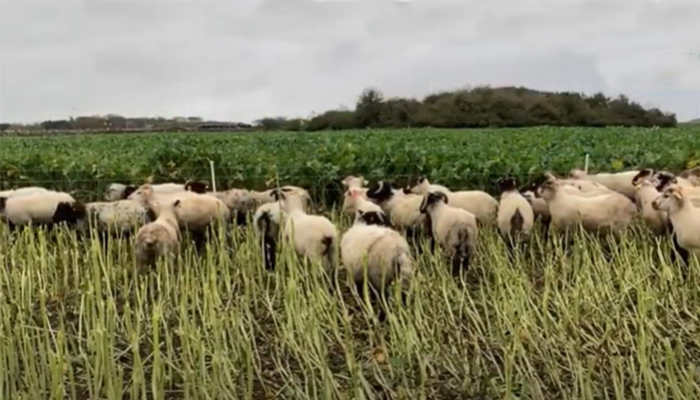
The earlier than normal harvest has created an opportunity for the establishment of forage crops on tillage farms, suited to carrying store lambs or ewes over the winter months.
Joining a recent episode of the OviCast podcast, Dr Frank Campion, a research officer at Teagasc Athenry, discussed some of the options available when in conversation with Teagasc Sheep Specialist, Ciaran Lynch.
“We will have lots of farmers coming to the market in the next few weeks that will be selling lambs, be it off the hills or even in lowland areas…where we can put in cover crops after a tillage crop and graze lambs on them, it brings more options to the table,” Dr Campion explained.
Choosing the right crop
A range of brassica crops can be grown for grazing, including forage rape, hybrid brassicas, stubble turnips and swedes. However, the most suitable crop will depend on when it is planted, the expected yield and the type of sheep that will graze it.
“Forage rape and hybrid brassicas are an above ground plant… for lambs, which still have their lamb teeth, it’s an easy crop for them to graze.
“Intake isn’t as impacted by poor ground conditions, particularly with a slightly heavier yielding crop…so we don’t tend to lose as much crop with lambs trampling it into the ground when ground gets wet and soft later in the year,” Dr Campion explained.
Stubble turnips, he explained, may be more suited for adult ewes, which are better able to scoop the turnip from the ground and make full use of the crop. However, farmers should avoid grazing broken-mouthed ewes on turnips, as these animals may struggle to eat them.
Yield potential
Forage rape and other grazing brassicas can produce between 3t and 6t DM/ha. Crops edging towards the higher range are generally those planted in early July and having received additional fertiliser.
For forage rape crops, Dr Campion explained: “We have seen yields somewhere around 2.5t to 4t DM/ha. That is a very important figure when we are discussing how the crop is going to be used by lambs.”
Yield potential is also linked to sowing date, he explained. Ideally, crops should be planted by the middle of July. Where sowing is extended into late August / early September, the yield potential from a grazing perspective is hampered.
For tillage farmers considering establishing forage brassica crops for grazing, Dr Campion urged them to be cautious of the rotation given the risk of clubroot and its potential implications for crops such as oilseed rape. Farmers must also ensure that any crop is established and managed in accordance conditionality.
“This year presents a unique opportunity to put more of these crops into the ground, where they fit within the farm rotation,” he said, “The important thing is to have the plan in place and be ready to sow when conditions allow.”
For further information, tips and advice, listen to the full episode of the OviCast podcast below: