
13 May 2025
Early planning essential for slurry storage facilities
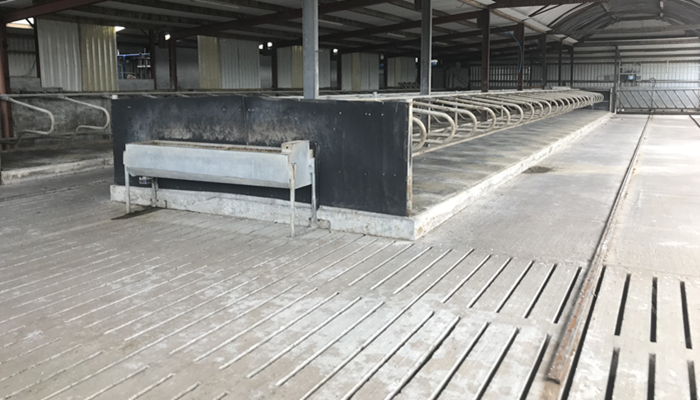
Dairy farmers have been encouraged to review their slurry storage capacity now and take early action if the need for additional slurry storage is identified.
This message came from Séamus Nolan, a Schemes Support Specialist at Teagasc, who joined James Dunne on a recent episode of the Dairy Edge podcast to detail the Nutrient Storage Investment Scheme available under TAMS 3.
Through this scheme, eligible farmers can apply for grant aid for the construction of nutrient storage investments, such as manure pits, mass concrete tanks, circular slurry stores and geomembrane lined stores. Grant aid of up to 60% is available for eligible investments, and a separate ceiling of €90,000 for individual applications is used from the other schemes included under the TAMS umbrella.
For farmers considering applying for funding under the Nutrient Storage Investment Scheme, Séamus Nolan encouraged them to act early. His reasons:
- In the vast majority of cases, investments under the Nutrient Storage Investment Scheme require full planning permission, this takes at least three months to obtain, so farmers are advised to start early to avoid delays.
- Preliminary results from the Teagasc National Slurry Storage Monitoring Programme have indicated that higher slurry storage will be required on dairy farms – potentially increasing by 20-25% from the current 0.33m3 of slurry storage per cow per week requirement.
- As farmers are required to have sufficient storage in place for the winter before applying for the Nutrient Storage Investment Scheme, any increase in the slurry storage requirements may limit their future potential to apply for such a scheme.
- Approval under TAMS takes time and, in some cases, it may be five months from the closing of the tranche to receiving full approval.
- Given the above, it may take farmers 7-8 months to receive full planning permission and TAMS approval before the commencement of building can occur, therefore careful planning is required.
On the potential for new slurry storage regulations, Séamus Nolan explained that the Department of Agriculture typically introduces new regulations with a transition period of about 12 months, but this is not guaranteed. This gives farmers time to become compliant, but delaying investments could mean missing out on the opportunity to meet updated standards.
Additionally, he noted, that farmers should plan their slurry storage based on future needs. For instance, if you intend to increase cow numbers in the coming years, you should build sufficient storage capacity to accommodate this growth, thus allowing farmers to maximise the benefits of the grant aid available.
For all dairy farmers, Séamus Nolan encouraged them to consult their local advisor to assess their slurry storage capacities and to develop a plan to facilitate additional storage if needed.
For more information, listen to the full Dairy Edge podcast below: