
Efficient suckler farming and practical decision making highlighted at Future Beef farm walk
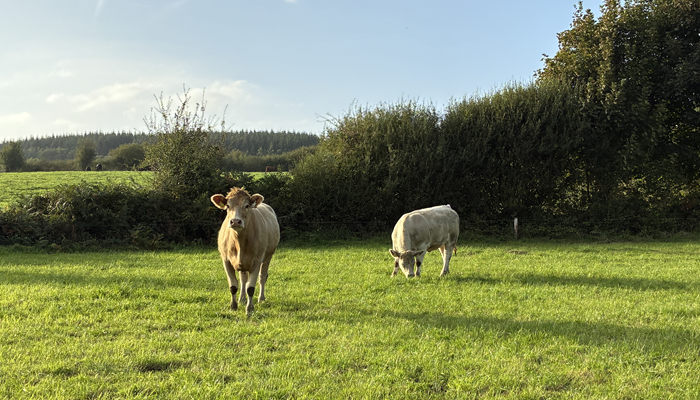
With a 27-cow, spring-calving suckler herd and full-time, off-farm employment, Teagasc Beef Specialist, Catherine Egan writes on how James Skehan and his family have developed a farming system focused on labour efficiency, herd performance and grass utilisation.
A large crowd gathered for the final Future Beef Programme farm walk of the year, last Friday, September 11, on the farm of James Skehan, Ballynevin, Bridgetown, Killaloe, Co. Clare.
Opening the farm walk, local Teagasc Advisor, Thomas Gleeson outlined the key features of the system and highlighted the importance of good organisation in managing a suckler herd alongside full-time employment.
Labour is a major challenge for many beef farmers and James has focused on developing a system that can be managed efficiently.
Farm organisation, well-developed grassland infrastructure, careful breeding management, excellent handling facilities and good family communication all contribute to reducing the time required for routine tasks.
Focus on breeding performance
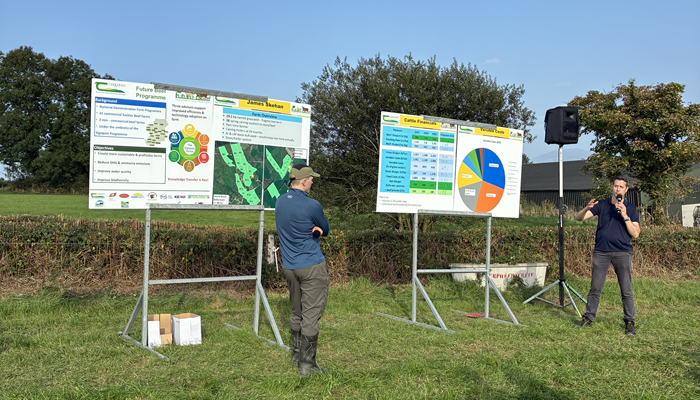
The breeding performance of the herd and its key performance indicators were detailed by Stephen O’Neill, a Teagasc Advisor in Ennis.
The herd currently has a Replacement Index of €140, and Stephen O’Neill emphasised the importance of matching the appropriate sire to each cow, with particular attention given to calving difficulty and highly reliable data.
Emphasis has been placed on the use of artificial insemination (AI) on farm to improve the herd’s genetic merit. Synchronisation has been an important component of this breeding strategy, allowing James to achieve a compact calving spread while also making the breeding programme more manageable around his off-farm employment. For the current breeding season, James opted to synchronise both cows and heifers.
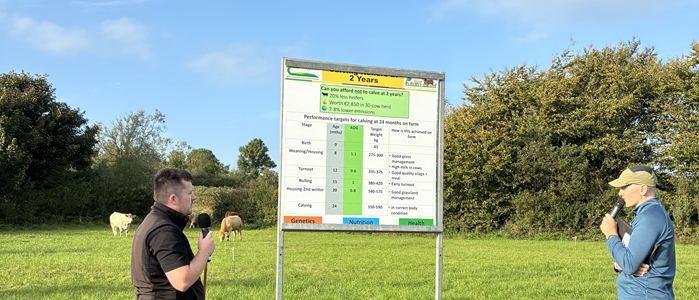
Calving heifers at 24 months
Calving heifers at 24 months of age is a key part of the system and was the focus of Teagasc Advisor Ross Fitzgerald’s discussion, where the weight targets required to successfully achieve this were outlined.
The importance of nutrition during the first winter, with heifers needing to reach approximately 380-420kg at breeding, was a central theme. Achieving these targets requires careful management of nutrition, along with close attention to the health and development of the heifer from birth through to first calving.
Grassland management and soil fertility
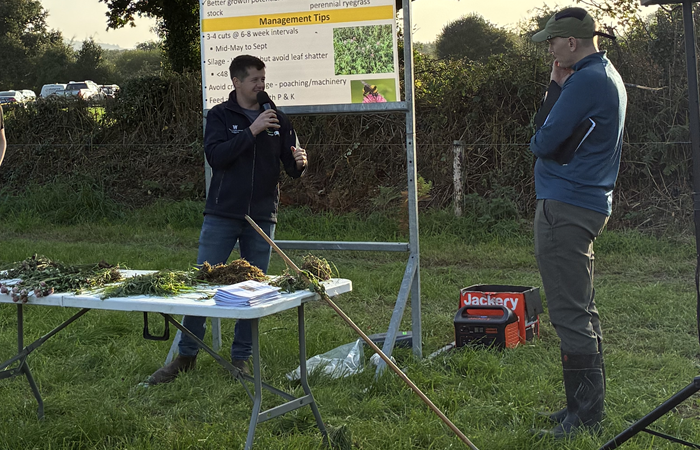
Grassland management has improved significantly on the farm over recent years. Teagasc Advisor, Conor O’Reilly highlighted the importance of regular soil sampling and maintaining soil fertility through the appropriate application of lime and balancing phosphorus (P) and potassium (K).
Conor O’Reilly also discussed the Ground Truth project and the role that healthy soils play in underpinning good grass growth and utilisation.
Additionally, Teagasc researcher, Dr. Peter Doyle outlined the potential benefits of incorporating red clover in the system. Red clover can provide higher levels of protein and improved digestibility, which can contribute to increased animal intake and improved growth performance.
Investment in grazing infrastructure
James has also carried out significant work developing grazing infrastructure on the farm.
Teagasc Walsh Scholar, Sarah Lily James outlined the layout and structure of the paddocks and the improvements that have been made to facilitate more efficient grazing management.
This economics of this investment were discussed by Teagasc Advisor, Niall Lynch, with the total cost of the grazing infrastructure placed at €3,430/ha. He outlined the potential return from this investment, and the practical benefits James has experienced, particularly in terms of grass utilisation, animal movement and labour efficiency.
The investment in infrastructure has allowed James to make better use of the available grass while reducing the labour required to manage the herd.
Climate actions delivering environmental and economic benefits
Teagasc researcher, Bright Ketadzo outlined the range of climate actions undertaken on the farm. Since 2022, James has committed to actions projected to reduce farm emissions by 82t of CO₂ over a five-year period, while also generating an estimated economic benefit of between €2,000 and €2,500. The measures demonstrate how environmental improvements can also contribute to the overall efficiency and profitability of a beef enterprise.
Herd health remains a priority
Animal Health Ireland’s Eilish Gill highlighted the importance of having a robust herd health programme, with vaccination playing an important role in disease prevention.
With the potential for increased lungworm activity in the coming weeks, Eilish Gill encouraged farmers to remain vigilant and monitor stock closely for signs of disease. Also emphasised was the importance of using the correct product for the specific stage of liver fluke and ensuring that treatments are timed appropriately. Depending on the timing of treatment and the life stages present, further treatment may be required.
Finish or sell – a live farm discussion
The evening concluded in James’ yard, where one of the most practical discussions of the night centred on a decision facing many beef farmers – whether to finish or sell store cattle.
James currently has a number of store bullocks weighing approximately 563kg. At the current beef price, these cattle would be expected to sell for approximately €2,350/head.
The alternative would be to bring the steers through to slaughter. Based on the costs discussed on the evening, finishing for approximately 120 days would involve 6kg meal/head/day at €350/t, costing approximately €250/head, while silage at €50/bale and an estimated input of 3.5 bales would add approximately €175/head. Once haulage, health and fixed costs are included, the total additional cost of finishing was estimated at approximately €520-€530/head.
This would bring the required value of the finished animal to approximately €2,850-€2,900/head.
John Hogan, working with ABP, outlined that while the beef market was positive for the coming weeks, it was difficult to predict what price would be available in three to four months’ time when the cattle would be ready for slaughter.
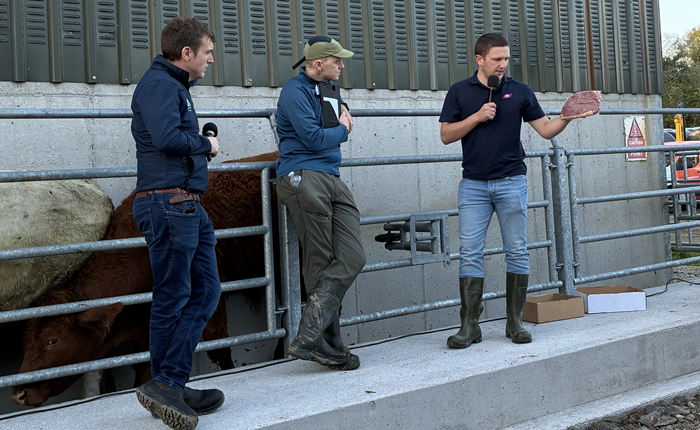
Based on expected performance of a 150kg LWG in the 120 day finishing period, a KO% of 55%, a carcass weight of 390kg could be forecast. With the costs involved, a beef price of approximately €7.40/kg would be required to cover the cost of finishing.
Following a lively discussion, James ultimately decided he will sell the bullocks live through the mart rather than take the finishing risk.
A key consideration was the farm’s silage reserves. James felt that finishing the cattle would require silage that was currently available on the farm and, given the uncertainty around future beef prices, he was not prepared to take that risk.
The discussion provided a useful example of the type of day-to-day decisions that beef farmers must make, balancing potential returns against input costs, feed availability and market uncertainty.
A well-run and efficient suckler system
Wrapping up the evening, Teagasc Head of Drystock Knowledge Transfer, Pearse Kelly commended James and his family for the work they have carried out on the farm over the past number of years.
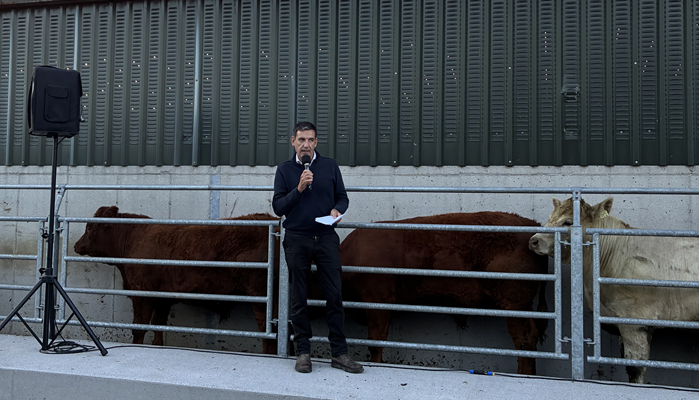
He also acknowledged their involvement in the Future Beef Programme and thanked the family for hosting the event and sharing their experience with fellow farmers.
The farm walk demonstrated how a well-organised suckler enterprise can be successfully managed alongside full-time employment, with a combination of genetics, breeding management, grassland infrastructure, herd health planning and a focus on labour efficiency all contributing to the overall performance of the system.
For more on the Teagasc Future Beef Programme, visit here.
Find out more about James Skehan’s farm, and involvement in the Future Beef Programme, here.