
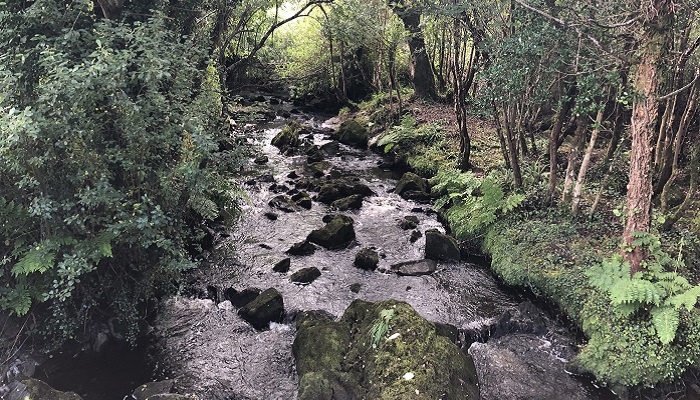
Philip Murphy, Noel Meehan and Pat Dillion explain the aims of the Better Farming for Water Campaign, and how targeted actions at catchment and farm level can protect and improve water quality across Ireland.
The protection and improvement of water quality is a long-term process, but every individual and targeted action in the short term pays dividends. The value of an action is determined by its effectiveness at minimising or eliminating the pollutant of concern (nutrients, sediment, morphology/channelisation etc.) entering a waterbody. Maximising that effectiveness requires data-driven decision-making at catchment scale and action by all practitioners at farm scale.
The Better Farming for Water Campaign is therefore a catchment-to-farm scale approach to selecting the right measure for the waterbody, adapting it for its implementation, and monitoring its effectiveness. The toolkit of measures starts with the 8 Actions for Change:
Nutrient Management
1. Reduce purchased nitrogen (N) and phosphorus (P) surplus per hectare.
2. Ensure soil fertility is optimal for lime, phosphorus and potassium.
3. Ensure application of fertiliser and organic manure at appropriate times and conditions.
Farmyard Management
4. Have sufficient slurry and soiled water storage capacity.
5. Manage and minimise nutrient loss from farmyards and roadways.
6. Fence off watercourses to prevent bovine access.
Land Management
7. Promote targeted use of mitigation actions such as riparian margins, buffer strips and sediment traps to mitigate nutrient and sediment loss to water.
8. Maintain over-winter green cover to reduce nutrient leaching from tillage soils.
Using local water quality data, these 8 Actions for Change will be adapted to address the pollutant of concern and ensure the right measure is in the right place on every farm.
The Campaign is currently prioritising six catchments in the South and East of Ireland: Boyne, Slaney, Barrow/Nore, Suir, Blackwater, and Lee/Bandon.
In each catchment, the campaign will be delivered through six key pillars:
- Stakeholder engagement through a Multi-Actor Approach
By engaging farmers, industry, community and government to support the implementation and adaptation of the 8 Actions for Change. - Building awareness through acquisition and utilisation of water quality data
To enable a clear understanding of local water quality challenges amongst farmers and practitioners on the ground. - Upskilling farmers, students, advisors, teachers and industry professionals
Through the provision of targeted training using a suite of tailored solutions. - An impactful Knowledge Transfer programme
Through farmer–advisor tailored measures using the Source–Pathway–Receptor ideology to specifically address the pollutant of concern. - A supporting Research Programme to identify and develop effective mitigation actions
By aligning agricultural research programmes and their outputs to validate environmental loss processes and estimate the potential to minimise them. - A strong Communications Plan with the target audiences
Catchment-specific Communications Plans will deliver clear, positive and simple messaging to enhance understanding of agricultural pressures on water quality, and enable all practitioners on the ground to work together using the same key messages.
Results
Work is ongoing to utilise existing resources of water quality information through the use of:
- EPA Pollution Impact Potential (PIP) Maps for identifying the distribution of nitrate and phosphate potential risk.
- EPA Targeted Agricultural Measures (TAM) Map for identifying the distribution of issues of concern from agricultural pressures.
- LAWPRO catchment assessment and ASSAP targeted advice, further enabled by the Better Farming for Water EIP (European Innovation Partnership).
Additional work is ongoing to enhance existing decision-support tools, expand research programmes, and upskill knowledge transfer practitioners:
- AgNav for estimating purchased nutrient surplus per hectare and nutrient use efficiency.
- Installation of Nitrate Analysers in the Funshion_80 sub-basin.
- Development of training material for advisors and stakeholders.
- Development of waterbody-specific advice sheets to address water quality issues.
Conclusions
The goal of this campaign is to inform and mobilise agricultural stakeholders through the use of local water quality data and by highlighting the value of selecting the right measure to use for the improvement or protection of a waterbody. Practitioners on the ground will be essential for enabling farmers to adopt and adapt the 8 Actions for Change to their farming enterprise.
Read more about the Milk Quality Farm Walk at the Kennedy Farm in Tipperary, 28th August 2025