
26 August 2024
Equine health: Don’t overlook forage and bedding quality
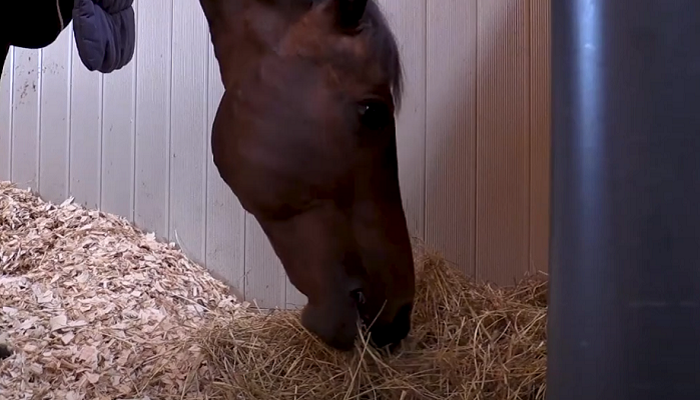
Equine producers were reminded to assess forage and bedding hygiene, and provide suitable storage facilities, through a video produced as part of the 10 Practical Steps to Protect Equine Health series.
In the video jointly produced by Teagasc, the Irish Equine Centre and University College Dublin, and featuring Richard Sheane of Cooley Farm, Associate Professor at the School of Veterinary Medicine at UCD, Vivienne Duggan explained: “Poor quality forage can harbour moulds, fungi, dust and toxins that if inhaled or ingested can cause significant performance-limiting and potentially life-threatening diseases of the lung, liver, gut kidney and brain, which can be expensive to treat.”
Wendy Conlon, Equine Specialist at Teagasc, shared key tips on sourcing and storing forages and bedding, and why an analysis is required to not only test for the presence of moulds but to also verify the nutritive value of forages.
Continuing on the topic of moulds, Alan Creighton, Head of Environment and Nutrition at the Irish Equine Centre, provided key advice on the storage and feeding of forages, adding: “Test hay every two months throughout storage to quantify if harmful mould levels have increased.”
On the timely usage of feedstuffs, Alan Creighton recommended that haylage be used within three days of opening during the summer months and within four days during the winter.
He also offered practical advice on feeding and storage management, explaining: “Adding new good quality forage or bedding to a storage area with existing moulded forage or moulds on the walls or roofs can result in it becoming contaminated. Dispose of any forage or bedding showing signs of mould or excessive dust.”
Also featuring in the video was Richard Sheane, who shared his experiences of forage and bedding quality gained over years of sourcing, producing and selling top quality Irish Sport Horses at Cooely Farm.
Watch the video below for more insights:
Also read: ‘10 Practical Steps to Protect Equine Health’ Video Series Launched
Also read: ‘If we don’t achieve a good clean environment, we don’t train winners’
The full 10 videos in the series are available to view here.