
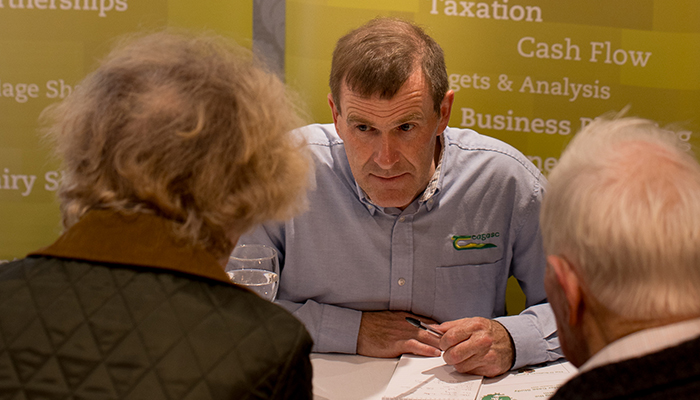
Hugh McEneaney, Farm Management Specialist, outlines how taking some simple steps when considering retirement will result in better outcomes for everyone involved.
From the day you step forward you should be planning to step back. Have you considered how your farm will look in the future? Planning is a crucial phase for farmers in Ireland, who often face unique challenges given that farming is overwhelmingly a family business.
Careful preparation will help ensure financial security and a smooth transition and transfer of farm assets to the next generation. Several key steps will help farmers prepare effectively for retirement: focusing on asset transfer, pensions, and state supports such as the Fair Deal Scheme.
1. Planning asset transfer
One of the most important considerations for retiring farmers is the transfer of assets. Typically, farmers want to pass their land and business on to children or other family members to maintain the family name on the land or the family legacy. Early and clear communication within the family is vital to avoid disputes and ensure all parties understand the process. In recent years farmers have been increasingly entering collaborative arrangements such as partnerships and share farming. This can be particularly appropriate if the successor isn’t ready to farm entirely in their own right or where the asset owner wishes to continue farming but at a less intense pace.
A will is a legal document that outlines how your assets, including farm property, will be distributed after your death, helping prevent family disputes. This is common knowledge but it is surprising that many people don’t actually make a will. A will greatly eases the administration of your estate, ensures your intentions are met, and reduces stress for those left behind.
An Enduring Power of Attorney (EPA) lets you appoint someone you trust to manage your financial and legal affairs if you become unable to do so, ensuring your farm and finances are cared for during incapacity. A Health Care Representative is appointed to make medical decisions on your behalf if you cannot express your wishes, protecting your health interests. Together, these legal tools provide vital protection for your farm, finances, and wellbeing in retirement and beyond.
Farmers should consult with agricultural advisors, accountants and solicitors to arrange appropriate legal mechanisms for asset transfer, such as wills, trusts, or farm partnerships. Utilising the “asset transfer” approach while the farmer is still alive can also have tax benefits, reducing inheritance tax liabilities through mechanisms like Retirement & Agricultural Relief, which offers significant relief if conditions are met. Transferring assets gradually can also help younger farmers gain experience managing the farm before full ownership is passed on. There is a succession planning advice grant which covers a maximum 50% of the costs of professional advice to a maximum ceiling of €3,000 to help with the transfer process.
2. Pension planning
Traditionally, many Irish farmers were not in a position to build formal pension plans and relied on farm assets for their retirement income. However, given rising costs and longer life expectancy, formal pension planning is increasingly important. Farmers and their partners should explore options such as the State Pension (Contributory or Non-Contributory), and private pension schemes like Personal Retirement Savings Accounts (PRSAs) or Self-Employed Retirement Schemes.
With the increased cost of living, the state pension may not be sufficient to meet all the desires of retirees. An additional source of income may be required. This may be achieved through a farm income payment or leasing some land in order to fill the gap. Contributing regularly to a pension can provide a steady income stream in retirement, reducing dependence on income from the farm. It’s advisable to start pension contributions as early as possible, but even those close to retirement can benefit from independent financial advice.
3. The Fair Deal Scheme
The Fair Deal Scheme, formally known as the Nursing Homes Support Scheme, provides state support to help cover the cost of long-term care in nursing homes. Farm families may need to consider this scheme as they age, especially if one of the members’ health deteriorates beyond the point that the family can cope and residential care is needed. It is means-tested, taking into account income and assets, including farm property.
Farmers need to understand how entering the Fair Deal Scheme might affect their farm assets. While the family home and farm may be included in the means test, certain protections exist, particularly if the farm remains in the family’s possession. Early financial planning can help mitigate the impact of these costs. The Fair Deal Scheme puts a charge of 7.5% on the assets for a period of three years, it also takes 80% of ones pension to pay towards the nursing home fees.
The three year cap on assets depends on having a successor identified and named in the application. This may be less depending on the cost of nursing home care and the duration of one’s stay. The average time a resident remains in care is about 2.5 years. Advice should be sought before applying for the Fair Deal Scheme. The fair deal looks back at assets five years prior to applying for the scheme.
Example: For assets worth €1 million, in the Fair Deal Scheme, they would be charged at 7.5% = €75,000 per annum. Three-year cap rule applies 3 x €75,000 = €225,000 would be charged.
In summary
- Irish farmers preparing for retirement should focus on clear asset transfer strategies, formal pension planning, and understanding state supports like the Fair Deal.
- Early advice from legal and financial experts can make this transition smoother, ensuring that farmers enjoy a secure and dignified retirement while preserving their farm legacy for future generations.
- Plan early for smooth farm asset transfer using wills, trusts, or partnerships, with tax relief and professional advice support.
- Establish formal pension plans alongside the State Pension to ensure stable retirement income beyond farm assets.
- Understand the Fair Deal Scheme’s impact on assets and nursing home costs; seek early financial advice to protect the farm legacy.
This article first appeared in the November/December 2025 edition of Today’s Farm