
03 April 2025
Excellent Spring Weather Boosts Tillage Progress across Ireland
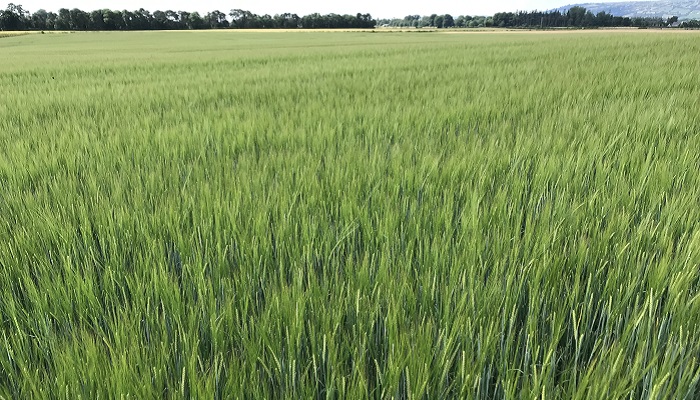
Tillage farmers across the country have taken full advantage of the recent spell of fine weather, making exceptional progress in planting spring crops. According to reports from Teagasc advisors, at least 90% of spring cereals have now been sown. Ciaran Collins tells us more.
The dry weather has enabled farmers to catch up on essential crop management tasks, such as spraying and fertilising of winter cereals. Disease levels in winter cereals are low in general but yellow rust has appeared in some crops, mainly in the North East and growers need to remain vigilant.
Spring barley
The dry, settled conditions have also contributed to excellent establishment in early sown crops, many of which are now at the two-leaf stage. Spring malting barley, particularly early sown crops, has reached the two-leaf stage and is set to receive its main split of nitrogen in the coming days—perfect timing for growers aiming to meet low protein targets for malting. One major advantage of sowing spring barley in March is the reduced need for insecticide treatments to control aphids. Most March sown crops should not need an insecticide unless there are aphids visible in the crop.
| Untreated plots | Tillers with virus symptomsAverage (range) |
| March sown | 0.85% (0 – 2%) |
| April sown | 5.9% (0 – 36%) |
Source: Teagasc Oak Park.
Winter cereals
Another benefit of the dry spell has been the slowdown of disease development in winter cereals. However, yellow rust has made a reappearance, particularly in the northeast, mainly affecting Graham but there are also reports in some other varieties. This disease is becoming an increasing concern for winter wheat growers, and Teagasc advisors urge farmers to remain vigilant and closely monitor their crops.
If yellow rust appears in winter wheat, immediate fungicide treatment is crucial. Products containing pyraclostrobin (Comet/LSPyrac), are highly effective for rust prevention. However, if the disease is already present, an azole containing tebuconazole (Tebucur/Tebulink) will be required for knockdown. Solatenol, a component of Elatus Era, is another highly effective option for managing yellow rust.
In winter barley, most crops have received their first fungicide and the main nitrogen split. There are widespread reports of blotching and spotting on leaves, which can be challenging to differentiate from fungal infections like Septoria nodorum. This fungus is increasingly being observed in winter barley crops each year, but it is typically well controlled by pyraclostrobin mixes and rarely causes significant yield loss.
Some early sown winter barley crops have entered the stem extension phase. If further growth regulation is needed, it should be applied before growth stage 39 for maximum effectiveness. The decision to apply additional plant growth regulators (PGRs) depends on several factors, including crop history, the presence of organic manure, nitrogen rates, and variety. Varieties like Tardis and Joyau, which offer excellent resistance to lodging, may not require additional growth regulation in certain situations.