
30 September 2024
Farmland has the capacity to make a big difference in halting biodiversity loss
Biodiversity provides us with clean air, fresh water, healthy soil, fuel, fibres and the food we eat. It can help us to mitigate against and adapt to climate change.
Despite the many benefits of biodiversity, it continues to decline and biodiversity loss has far-reaching consequences for future generations.
Farmland has the capacity to make a big difference in halting biodiversity loss. The key message to communicate in relation to managing farmland biodiversity is to, maintain first, enhance second and create if not already in existence. Protecting farmland biodiversity, while maintaining a productive farm business is achievable by following these key steps:
- Identify what habitats are already present;
- Maintain, enhance, diversify and connect existing habitats;
- Where there are few existing habitats, create new habitats.
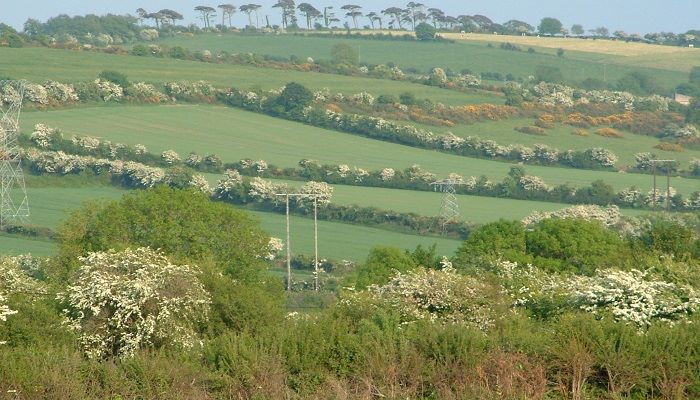
Every farm has some value for biodiversity, but some farms offer more value than others. One way to enhance biodiversity on your farm is to manage hedgerows less intensively.
Maintaining a diversity of habitats is important, as different habitats support different species. Different pollinators have different traits, thus supporting a higher species richness (diversity) of pollinators can contribute to increased pollination and increased pest control, which increases crop seed yield and economic value.
Habitats in poor condition can be enhanced through sensitive management. If invasive alien species are present, aim to remove them because they displace native species. Noxious weeds such as docks, ragwort and thistle can be kept under control by mechanical means or by spot treatment.
Linear farmland features such as hedgerows, field margins and watercourses, managed appropriately can act as corridors for nature through the landscape, allowing farming and biodiversity to co-exist. Maintaining and managing existing old hedgerows with high levels of associated fungi, lichen, moss and invertebrates is far more beneficial than planting new hedges.
No matter which biodiversity-friendly areas are on the farm, it is vital that evidence-based actions are used to manage these, to protect and enhance farmland biodiversity. It is imperative that new habitats such as planting trees or incorporating a pond, are located in the right part of the farm and that they do not replace existing habitats.
Six actions farmers can take that will allow biodiversity to co-exist within a productive farming system are:
- Create nesting sites for solitary mining bees;
- Create nesting sites for cavity nesting bees;
- Plant native trees;
- Avoid the use of herbicides and fertiliser under hedges;
- Allow hedgerows and margins to flower and fruit;
- Identify and protect species rich grassland.
The above was adapted for use on Teagasc Daily from the paper titled: ‘Practical actions for efficient and environmentally sustainable farms’, authored by Owen Fenton and Bridget Lynch and published as part of the Farming for a Better Future Open Day. For more insights, access the full publication (PDF) here.