
Farmyard manure – plan ahead for the November 1st closed period
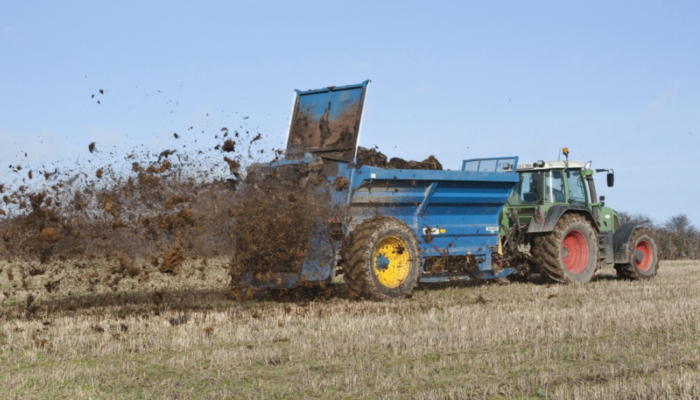
As the closed period for spreading farmyard manure (FYM) is fast approaching, Róisín McManus, ASSAP Advisor in the Tipperary region, reminds farmers that the 31st of October is the final day on which FYM can be spread, provided weather and ground conditions are suitable.
From November 1st, spreading FYM will be prohibited until the relevant reopening date in January or February, depending on the county.
The Agricultural Sustainability Support and Advisory Programme (ASSAP) works with farmers on a free and confidential basis to identify practical measures that can help improve water quality while maintaining productive and sustainable farming systems.
ASSAP advisors work closely with farmers, providing advice and support in areas such as farmyard management, nutrient management and land management, with the aim of reducing the risk of nutrient and sediment losses to water.
One important area of focus is the management of farmyard manure (FYM). FYM is a valuable source of nutrients and organic matter on farms. When managed and applied correctly, it can help improve soil fertility, maintain soil structure and reduce the requirement for purchased chemical fertiliser. However, it is important that FYM is applied at the correct time and under suitable conditions to maximise its nutrient value and minimise the risk of nutrient losses to water.
Know your closed period dates
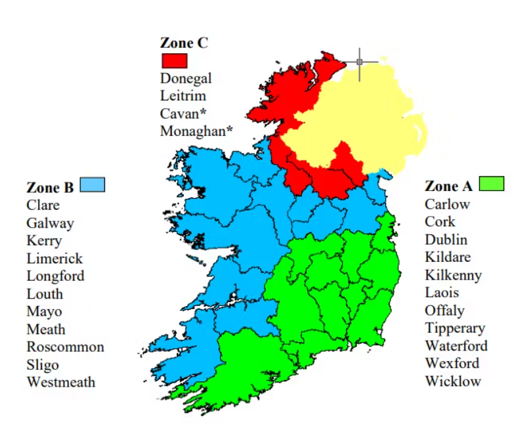
The closed period for spreading FYM begins on November 1st across the country. The dates on which spreading can recommence vary depending on the nitrates zone in which the farm is located. Farmers should familiarise themselves with the dates applicable to their county and plan accordingly.
| Zone | Spreading can recommence |
| A | 13th January |
| B | 16th January |
| C | 1st February |
Making best use of FYM
FYM contains valuable quantities of nitrogen (N), phosphorus (P) and potassium (K), along with organic matter that can benefit soil health. Farmyard manure contains approximately 3 units of nitrogen (N), 2 units of phosphorus (P) and 12 units of potassium (K) per tonne. Based on fertiliser prices in July 2026, this gives FYM an estimated nutrient value of €13 per tonne.
| Nutrient | Units per tonne |
| Nitrogen (N) | 3 |
| Phosphorous (P) | 2 |
| Potassium (K) | 12 |
| Estimated fertiliser value €13 per tonne | |
| Source: Teagasc, Available Nutrient Content & Guide Value (€) of Organic Fertilisers, July 2026. Figures are rounded. Estimated value excludes spreading and transport costs. | |
Farmers should use their soil sample results and Nutrient Management Plan to identify fields that would benefit most from an application. In particular, fields with low phosphorus and potassium fertility may benefit from FYM, provided applications are consistent with crop requirements and nutrient limits.
Spreading FYM simply to empty a slab or remove a heap in the field before the closed period should be avoided. Instead, farmers should target suitable fields where the nutrients can be utilised effectively.
Consider ground and weather conditions
Although spreading is permitted until 31st October, this does not mean that FYM should be spread regardless of conditions. As we move further into autumn, wetter weather and declining soil temperatures increase the risk of nutrient losses.
Farmers should avoid spreading FYM on waterlogged, flooded or frozen ground, or where heavy rainfall is forecast. Particular care should be taken on sloping fields and land adjacent to watercourses. During the final two weeks of the spreading season, the standard 5 metre buffer zone beside surface waters increases to 10 metres. Larger buffer zones may be required depending on field slope and proximity to water sources.
Protecting water quality must remain a priority when deciding whether conditions are suitable for spreading.
No field storage during the closed period
An important point for farmers to remember is that FYM cannot be stored in fields during the closed period. Any FYM currently stored in fields must be removed before 1st November.
Where FYM is stored in the farmyard over winter, it should be stored on a suitable concrete base rather than gravel or hardcore. The storage area should be free from cracks and have appropriate channels to collect any effluent produced, which must be directed to a suitable dedicated effluent tank or slurry tank.
Farmers should also ensure that clean rainwater is diverted away from manure storage areas where possible, helping to reduce the volume of effluent requiring storage.
Plan now rather than leaving it until the last minute
With the 1st of November deadline approaching, farmers should assess the quantity of FYM currently on the farm and decide whether it can be spread safely before the deadline or whether it will need to be stored over winter.
If using an agricultural contractor, arrangements should be made in good time. However, farmers should not feel under pressure to spread FYM in unsuitable conditions simply because the deadline is approaching.
The key message is simple: make good use of FYM when conditions allow, ensure adequate storage is available over winter, and remember that both spreading and field storage are prohibited during the closed period.
Once the closed period has ended, FYM can be spread and temporarily stored in fields again, provided conditions are suitable. Farmers should remember that any FYM stored in a field must be kept at least 20 metres away from surface waters.