
Fatal accidents involving livestock rise 7% nationwide
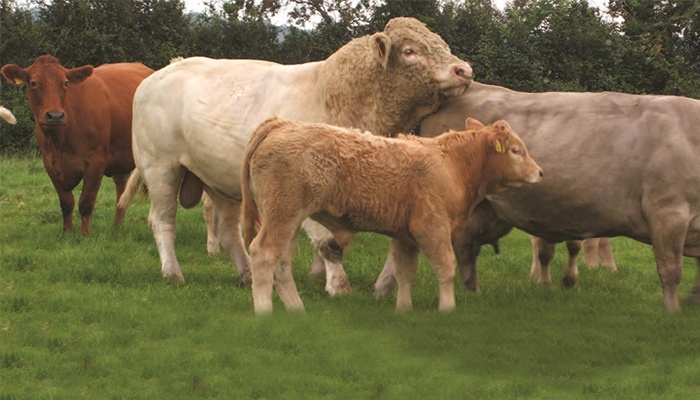
The recent Teagasc National Farm Survey shows a worrying increase in livestock-related farm fatalities, Manager of the Future Beef Programme, Martina Harrington, and Health and Safety Specialist, John McNamara tells us more.
Fatal accidents involving livestock account for 21% of all farm fatalities over the last 10 years – up from 14% in the previous 10 years. In the most recent period to 2024, 36% of these fatalities were associated with cattle, 31% with bulls and 25% with cows with calves. Teagasc National Farm Survey (NFS) farm accident data shows a disturbing trend. Over the last 20 years, livestock-related injuries have increased from 27% to 47% of all reported farm accidents. The most recent NFS survey indicated that 62% of accidents on drystock and 37% of accidents on dairy farms involved livestock.
Improved cattle handling with Miriam Parker
Miriam Parker MBE, Livestockwise UK, is a renowned expert in livestock behaviour and low stress, safe handling of cattle. Miriam recently spent a day with Future Beef farmers from around the country to consider livestock safety.
The following are a number of observations from those who attended: “One of the key lessons we learned is the importance of remaining cool, calm, and collected when handling animals. It’s essential to consider the animal’s point of view – understanding their flight zone, point of balance, and sensory perception is critical.”
Cattle see the world differently from humans. According to Miriam and the AHDB booklet Improving Cattle Handling for Better Returns, they have panoramic vision (around 330°) but poor depth perception.
They are more sensitive to movement and contrast in light and dark, and they struggle with judging distances. Sudden changes in lighting, shadows, and unexpected movements can startle them. Because of their vision, cattle respond best to calm, consistent handling and environments with few visual distractions.
Wearing goggles that simulate bovine vision was particularly eye-opening. It highlighted how limited their forward sight is, reinforcing the need to give them more time to assess surroundings and move confidently through space.
By adapting our handling techniques in this way, we can significantly improve animal welfare, reducing stress and the risk of injury. Another critical insight relates to handling facility design. Often, facilities are built to fit available space or human convenience, rather than the needs of the animals. However, effective design should prioritise natural cattle movement:
- Use curved chutes and pens instead of corners to encourage forward motion.
- Ensure movement is continuous, with no visual or physical obstacles.
- Avoid layouts where, for example, the crush gate faces a solid wall, which can create hesitation or stress.
- Maintain consistent lighting; avoid their transitions from bright to dark areas which can confuse or startle animals.
- Keep the environment bright and open to support calm, predictable behaviour.
- In summary, good handling is not just about technique – it’s about empathy, design and creating an environment that works with the animal’s instincts, not against them. When we do this, we not only improve safety and efficiency, but also promote better welfare for the animals in our care.
Breeding for quieter animals
Genetic studies show that heritability of genetic factors controlling docility is in the 0.2-0.4 range, which allows considerable scope to breed for docility over several generations. Breeding from aggressive animals should be avoided and such animals should be culled, Miriam Parker added.
Cow aggression around calving is a genetic trait that can also be reduced through breeding. Bovine maternal aggression has been viewed as a ‘physiological condition’, but this is not the case, and it has a genetic component.
A case-study involves a prominent livestock farmer who was not happy with the fractious nature of his herd and consequent number of injuries and difficulties in handling cattle. To achieve a ‘calm’ herd, he embarked on a strategy of culling fractious animals, breeding from calm animals along with use of ICBF docility data.
This approach along with upgrading handling facilities and using positive behaviours around cattle, led to a much safer workplace.
Overall livestock safety hinges on using a number of approaches including breeding, facilities and human behaviour towards cattle associated with understanding cattle behaviours. Having facilities on out farms is vital for safety. These approaches fit in well with the ‘principles of prevention’ underpinning safety management. Breeding and enhanced facilities make the work environment safer by removing danger in a collective way.
Applying behavioural approaches to cattle handling, is an individual skill. Watch our Teagasc video on safe cattle handling facilities below:
Safety with bulls
In the last 10 years, 34% (11) of livestock related deaths were associated with bull attacks. The well known saying ‘never trust a bull’ is absolutely true. Research by the H.S.A. indicates that a bull of any breed can kill. Never ‘turn your back’ on a bull.
At pasture, always have a means of protection available such as a farm vehicle. A bull should have a chain fitted to the nose ring – this is the last means of gaining control of a bull should an attack occur. Place a warning sign at entrance to fields with a bull, this is particularly important at field adjacent to public roads or rights of way. Bulls are habitual animals and should never be isolated from other livestock either at pasture or when housed.
Give consideration to winter housing of bulls. A bull pen should allow the bull to see the herd and have adequate space. Never enter a pen with a loose bull and have a headgate installed where the bull can be restrained if the pen has to be entered. Cull animals showing aggressive signs.
Cow attacks
Cow attacks around calving have accounted for 25% of all animals related fatalities over the last 10 years. Cows attack at close range. A surgeon who has treated cow-attacked farmers has described the injuries as being like being ‘struck by a juggernaut’. It is vital to have a robust physical barrier between yourself and a cow when handling or treating a calf, for example tagging, treating naval or dehorning. Excellent calving gates are available for calving. It is important that the cow can be restrained before entering a pen.
TAMS 3 grants
Department of Agriculture, Food and the Marine TAMS 3 grants are available for farm buildings and facilities and 60% for eligible health and safety items. Speak to your advisor about using grants to make your farm as safe as possible.
The above article first appeared in Today’s Farm. To access the full July/August edition of Today’s Farm, visit here.