David Gannon is the Teagasc/Aurivo Focus Farmer for Co. Galway. John McCabe, Teagasc caught up with David to see what was happening on the farm.
Feed space
Once the cows were dry, I started into the yard with a Kango and mini digger, and I have managed to squeeze in 8 more barriers into my existing housing facilities. 5 barriers on the side of my calving shed and 3 other barriers as extensions of existing feed rails. It has been the weak point of my yard over the last few years, especially when most of the cows have calved and it turns wet. Not being able to feed all cows at the same time really hit milk production in the wet springs of 2023 and in 2024. It wasn’t as much of an issue in 2025 because the weather was better. It is money well spent. Cows are lounging way more over the dry period and when the pressure comes on in March/April it’ll hopefully pay off.

Calving 2026
Calving is due to start on the 4th of February on paper, but I’m sure they will have a start made before that date. The last cow is due around the 11th of April because we stopped bulling at the end of June so it should be around 10 or 10.5 weeks of a calving season. We have 180 to calve this year and 160 of them are due before St. Patrick’s Day, so I will have plenty of cows going into the tank by then. Roughly one quarter are due to sexed dairy, one quarter to conventional dairy, one quarter to high carcass weight AA and one quarter is due to easy calving BB. This year, I have 40 heifers to calve and 36 of them are due in the first month which should set them up for a long career in dairying.
Herd health
There is nearly one day every week in January spent doing herd health work. Cows are now batched on calving date into 3 groups for management and to keep a handle on body condition score. I’m about to move the earliest calving bunch on to the low K bales which I fertilised with straight nitrogen (no slurry or K fertiliser) to try and avoid milk fever. Minerals are being given on the silage. Every second cow has been given the scour vaccine. Fluke and worm dose was given at dry off. When cows calve, they will be kept in for 4-5 days on silage in a part of the cubicle house that will have more cubicles than cows, to give them a chance after calving.
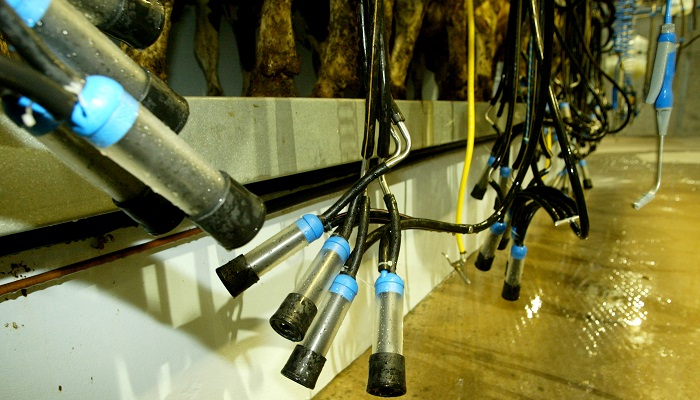
We had an SCC issue here over the last two years which turned out to be staph. aureus. To avoid it becoming a serious issue – I have installed an automatic cluster dipping system. It flushes the cluster with water and food grade peracetic acid to avoid spreading it to other cows. It was very expensive at €800 per unit but I am hoping it will help me to l get more of my heifers to their fifth lactation and beyond.
Young stock
We are training in-calf heifers to the parlour for an hour every day. We do not push heifers into the parlour. We put them at the front of the parlour, put meal in each trough and let them find their way in themselves in a low stress environment. The parlour is messy afterwards but nothing a good wash won’t solve. After a few days of this we start opening and closing the front and back gates to get them used to the sounds. I find that by this stage most of the heifers are running into the parlour for the meal.
We kept half of the maiden heifers out until early January to clip off the silage ground. We started with the wetter ground in Nov and finished with the driest in December/early Jan. They dirtied it a bit but they’re light stock so no major pugging was done. This is now closed and will be cut in the first few days of May for silage destined for milking cows. I have found this a good formula over the last few years.
Fertiliser
I intend to go with 16 units of protected urea in early February as soon as the ground is trafficable and warming up. Instead of using 23 units to start off last year, I went with 16 and used a bit more in April. Slurry will go to silage ground and the odd paddock with a low cover. I’ll wait a month after the slurry to spread N to save money and nitrogen allowance. Hopefully the weather will be kinder than the milk price this year. Best of luck to everyone for the calving season ahead.