
Feeding advice for late-cut grass silage
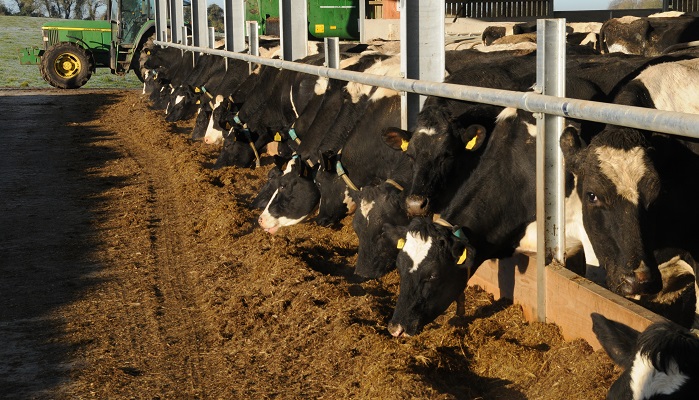
Silage harvested from mid-September onwards makes up a significant proportion of the additional fodder reserves on many farms. Here, Dr Joe Patton, Head of Dairy Knowledge Transfer, offers advice on how best to manage the feeding of this late-cut silage.
Autumn 2026 was certainly a vintage one in terms of pasture production, with daily grass growth rates exceeding the long-term average by at least 10-20% over a number of weeks.
This has led to a much-improved winter feed supply situation (Table 1) compared to initial estimates completed in late August. The proportion of farms with significant feed deficits now stands at about 5% with a further 6% requiring close management of stocks.
Table 1. Winter forage supply by region October 2026
| Region | Surplus Feed | On Target | 5-10% Deficit | 10-20% Deficit | >20% Deficit |
| South East | 34.5% | 34.5% | 18.1% | 6.0% | 6.9% |
| Midlands/NE | 30.1% | 41.7% | 17.5% | 5.8% | 4.9% |
| North/West | 27.4% | 47.9% | 13.7% | 5.5% | 5.5% |
| South West | 27.4% | 44.0% | 16.7% | 8.3% | 3.6% |
| Overall | 28.9% | 42.2% | 17.5% | 6.2% | 5.1% |
Managing late silage
A sizeable part of the additional feed inventory on many farms has come from late harvested silage, taken from mid-September onwards.
Of course, achieving good quality cuts can be a challenge given the declining day length, but thankfully the generally favourable weather this year made harvesting relatively straightforward.
Some points to note on managing the feeding of this material are:
- Allow about five weeks minimum to allow a settled fermentation in bales or pits.
- Test each cut of silage in stock to establish dry matter, and quality in terms of digestibility (DMD) and protein.
- If autumn silage was cut in wet conditions, it is worth also testing mineral profiles to check for mineral antagonists (iron and aluminium in particular). Adjust mineral supplementation if needed based on these results.
- While late-cut silage will tend to be lower in DMD and higher in crude protein compared to summer silage, it may still have quite acceptable feed characteristics. With test results in hand, it is possible to target the best quality cuts to the classes of stock with highest requirement for quality (milking cows, growing stock), whereas dry cows in good body condition can be fed the lower grade material in the early winter.
- Dry matter in October silage is likely to be low (<21%) as opportunities for drying/wilting were naturally limited. Adjust supplement feeding rates depending on the type of stock to be fed. Weanlings, for example, may require 0.5 to 1kg additional concentrate to maintain performance on very wet silage.
- Silage preservation is more difficult in October given the combination of low sugars (limiting lactic acid production) and high soluble Nitrogen content (increasing buffering capacity). To reduce waste at feed-out therefore, feed more frequently (daily instead of every second day for example) and ensure any feed refusals are removed regularly to keep feed fresh.
- Finally, low DM October bales with less-than-ideal preservation will not store well for extended periods. So, while the addition of these bales to feed stocks has been more than welcome, it is best to plan to use them up early in winter (from mid-November onward) and keep the better-quality bales for later in winter and early spring.
Also read: Significant improvements in supply of winter fodder on farms