
Fighting clubroot: Have you observed clubroot in your Brassica crop?
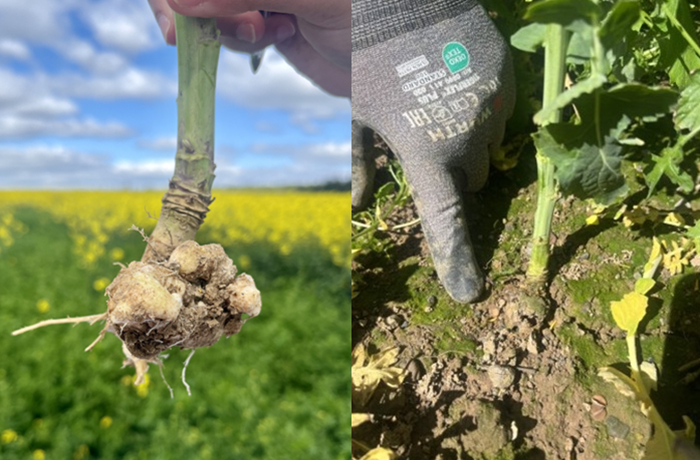
With the potential to lie dormant in the soil for more than 20 years, Teagasc Researcher, Dr. Marta Niedzicka writes on how the SAFE project is tracking clubroot to protect Brassica crops.
Clubroot is caused by the soilborne pathogen Plasmodiophora brassicae, which affects all Brassica crops, both oilseed rape and vegetable Brassica species.
Infection occurs when chemicals from growing Brassica roots effectively wake up dormant clubroot spores in the soil, which swim through wet soil to reach the delicate root hairs.
Once attached, they penetrate the cell wall and form a swollen structure in the roots from which the next generation of spores are generated.
The visible galls, typical of clubroot are caused by the pathogen’s ability to change the plant’s hormone levels, forcing root cells to divide in an unorganised fashion into a tumour or gall.
The characteristic galls rot later in the season, releasing new spores into the soil. Not surprisingly, the infected roots become functionally impaired, resulting in poor growth and commonly plant death.
A robust integrated pest management approach
Clubroot is a global problem with worldwide losses from clubroot estimated at 10–15% of Brassica production. Clubroot is particularly difficult to control because its resting spores can lie dormant for more than 20 years, waiting for a Brassica crop to be grown. This, coupled with reports of increased incidence in Ireland in recent years, underlines the need for a robust integrated pest management (IPM) approach.
The critical first IPM step is surveillance of the pathogen. Clubroot strains are genetically diverse, and we know strains differ in their ability to infect particular hosts. Understanding the strain composition of local populations is therefore essential for breeding durable resistance and to inform future management practices that reduce spore load in the soil and mitigate new introductions
How bad is clubroot in Ireland?
Although clubroot appears to be resurging, many questions remain unanswered. First of all, we don’t know the prevalence of clubroot across tillage and horticultural areas, and the diversity of strains present in Ireland are not yet known.
To develop evidence-based guidelines to limit its presence, we need to design and validate an early diagnostic for both soils and crops. This would allow us to evaluate the efficacy of resistant varieties and importantly assess novel management options such as bait crops. These would interrupt the disease cycle by encouraging clubroot spores in the soil to germinate but prevent spore penetration into the root structure thereby interrupting the disease cycle and reducing overall spore load in the soil.
Surveillance and action for fighting clubroot
In response to the recent increase in clubroot incidence, the Department of Agriculture, Food and the Marine (DAFM) funded SAFE project, a collaboration between NUI Maynooth and Teagasc, was established with several objectives:
- Surveillance of clubroot in soils and identification of the diversity of strains across the country
- Identification of high-risk pathways for clubroot spore transfer
- Assessment of both commercially available and pre-breeding varieties with reported resistance to clubroot strains
- Field validation of varieties with promising resistance profiles and detailed studies on how durable this material is to Irish clubroot strains
- Test a wide range of crop and plant species for their ability to act as a potential bait crop
Using these results, the team will design practical management strategies to reduce clubroot risk, including early-detection measures and guidance on variety choice and agronomic practices.
What are we doing now?
We have already collected initial samples from oilseed rape and forage crops, but these may not capture the full range of strains affecting other Brassicas. Samples from a wider range of crops, including horticultural Brassicas, and locations are critical to understanding strain diversity and their dominance patterns.
Have you observed clubroot in your Brassica crop?
If you have seen clubroot, please scan the QR code below to volunteer your field for sampling; our research officer will contact you to arrange sampling. Please contact us also if you observed clubroot in recent years. You can also contact us directly via email: marta.niedzicka@teagasc.ie

Alternatively, visit here to volunteer your field for sampling.