
First-cut silage: Planning for quality in 2026
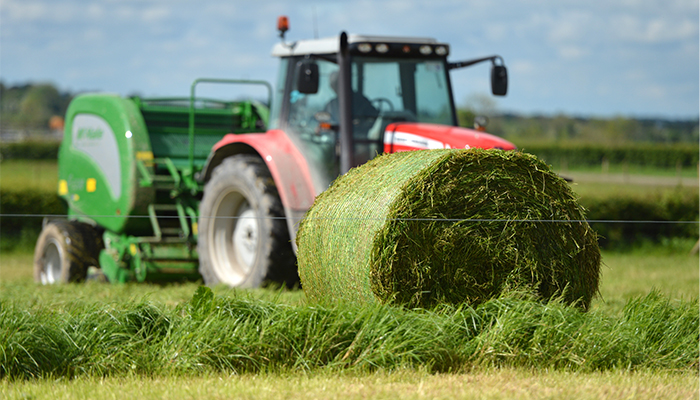
Planning and timing are key to producing high-quality grass silage. Peter Lawrence Drystock Advisor, Teagasc, Tinahely, delves into the key considerations when it comes to grazing, fertilising, cutting date and weed control.
It’s been a busy time on livestock farms, with calving and lambing finishing up on many holdings. As farms move from winter feeding systems to grazing, attention is quickly turning to the next major task – preparing for the 2026 first-cut silage crop.
Turnout to grass was delayed this spring on many farms due to the persistent wet weather and consequently poor ground conditions. However, relatively mild temperatures and low frost levels over the winter have resulted in a good supply of grass on many farms this spring. Some farmers on drier land were able to get cattle out to grass earlier enough to graze off some or all of their silage ground. This will help remove the dead butt and improve grass growth to establish a leafy digestible sward for harvest time.
In contrast, farms on heavier land that were unable to graze their silage ground this spring should now strongly consider closing up silage ground without grazing and prioritising an early cutting date instead. One of the main determinants of making high quality digestible grass silage is the cutting date of the crop. Research from Teagasc consistently shows that by delaying cutting date beyond late May can reduce silage dry matter digestibility (DMD) by 2-3% per week. To achieve high quality silage of 74% DMD or greater, crops should be adequately fertilised and targeted for cutting between 10th and 25th May.
Fertiliser requirements
The N:P:K nutrient requirement of a high yielding silage crop producing 5t DM/Ha or 10 bales of silage/ac needs are 100-20-125 kg N-P-K/Ha (or alternatively 80-16-100 units/ac).
Farms with cattle slurry should always ensure to spread it back on their silage ground to recycle nutrients removed in previous silage crops. Good quality cattle slurry (6% DM) has a typical N-P-K value equivalent to approximately 9-5-32 units/1000 gls. As the nutrient content of cattle slurry is ideally balanced for growing silage, applying 3,000 gls/ac will provide all the Phosphorus (P) and Potassium (K) requirements for first cut.
Given the recent fertiliser price rise, cattle slurry is the most economical way of providing the P & K nutrients. An additional 50-70 units of chemical Nitrogen (N) per acre should be applied in combination with the slurry. Higher nitrogen rates can be justified on newer reseed swards as they will have a better response to the extra inputs. Including Sulphur (S) in the nitrogen applications is also recommended, as it improves nitrogen use efficiency and supports better crop growth.
If no cattle slurry is available on the farm, then compounds such as 13-6-20, 0-7-30 or 10-5-25 are well balanced to meet the P & K requirements and extra nitrogen can be added separately in another application. As always farmers should refer to their nutrient management plans to remain within their permitted N and P allowances.
Farmers that didn’t get to graze their silage ground and want to cut it early for high quality feed should carefully consider nitrogen timing. As a useful guideline grass uses approximately 2 units of nitrogen per day. This means if 80 units of N are applied then the crop needs roughly 40 days before it is ready to harvest. Bearing this in mind, where an earlier harvest is planned, reducing nitrogen rates may be necessary to ensure the crop is fit to cut on time. As mentioned earlier,by delaying harvest date to increase the yield of the crop will reduce the quality and feed value especially for finishing and young growing cattle. Lodged or stemmy crops are also harder to wilt and ensile properly.
Weed issues
Docks and chickweed are persistent weeds on many silage fields and can significantly impact silage quality and yield if left unchecked. If spraying with a herbicide, it’s important to use the correct rate of chemical and water volume (always read the product label). Only spray when weeds are healthy and actively growing when temperatures are good. Target docks when they are at the rosette stage to early flower stem stage (April to early May). Ideally treat weeds a month before harvesting to allow sufficient time for the chemical to translocate to the roots ensuring a more effective kill and reducing the amount of dead material entering the silage.
Planning and timing are key to producing high-quality grass silage. With fertiliser costs still a concern, making the best use of slurry, targeting early cutting dates and managing swards effectively will all play a crucial role in delivering a leafy, digestible crop that meets winter demands.