
First financial baseline for Irish organic farms
A new analysis of 85 organic farms across Ireland has provided the first national financial baseline for Ireland’s expanded organic farming sector.
As part of the Teagasc Outlook 2026 Conference, findings from the National Farm Survey (NFS) analysis as part of the GROFarmS research project were shared by Dr. Kevin Kilcline across cattle rearing (single suckling), cattle other, sheep, dairy and tillage farms.
“This is the first step in a wider more comprehensive sustainability analysis of organic farms,” Dr. Kilcline said. Initially starting with 85 farms, the aim is to increase the dataset to 100 farms, allowing for metrics in relation to economic, environmental and social sustainability to be gathered and disseminated. This is particularly important considering the rise in organic farming since 2020, from which point the area farmed under and the number of organic farms effectively tripled.
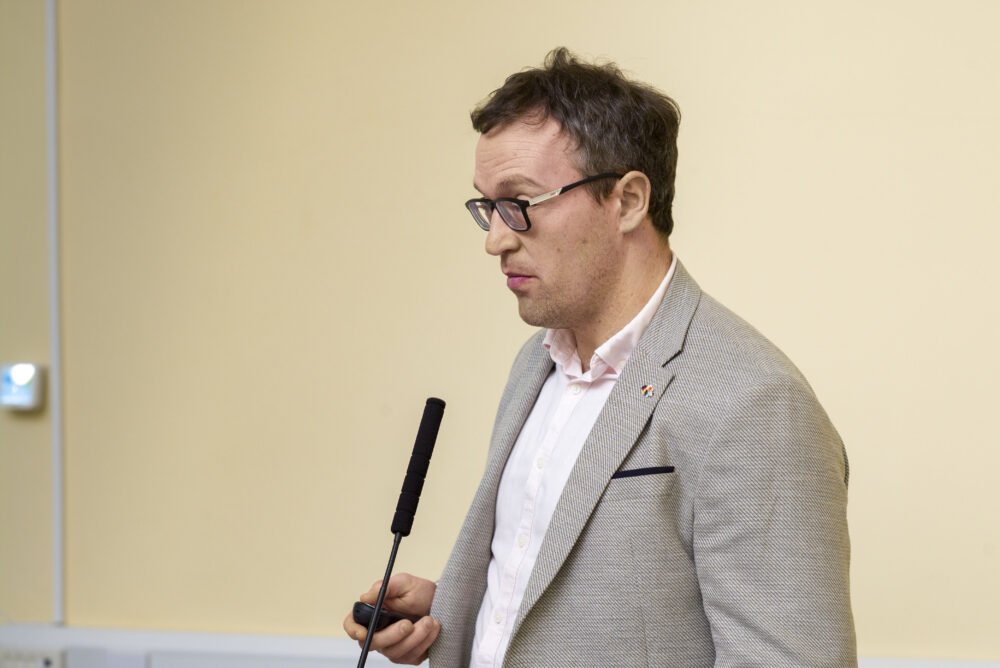
Dr Kevin Kilcline addressing the Teagasc Outlook 2026 Conference
Presenting the data on the basis of family farm income – a measure of total gross output including direct payments minus all farm costs excluding family labour – Dr. Kilcline noted that this analysis highlights marked variation in family farm income across the different organic systems. He added: “In 2024, cattle rearing or single suckling organic systems has the lowest family farm income at €19,653, whereas organic dairy farms had an average family farm income of €53,964.
“On a more directly comparable per hectare basis, organic cattle rearing farms generated family farm income of €455/ha, cattle other farms at €690/ha, sheep farms at €579/ha, dairy farms at €579/ha, dairy farms at €703/ha and tillage farms at €718/ha in 2024.”
Dr. Kilcline also provided an overview of direct costs across the organic farming systems, along with the proportion of income stemming from direct payments. In 2024, the organic farming scheme payment represented 35% and 33% of total direct payments on cattle rearing and cattle other farms, 32% and 38% respectively on organic sheep and dairy farms, and 31% of total direct payments on organic tillage farms.
“From this initial snapshot from the 2024 production year,” Dr. Kilcline explained, “The organic livestock farms in our sample are larger farms, they are more extensive production systems – particularly in terms of livestock, they have lower production intensity and lower stocking rates and lower market gross output.”
“On the other hand, organic livestock production systems have a lower direct cost base, particularly pasture and feed costs. They also have higher direct payments, with the Organic Farming Scheme providing an important component of that.”
Dr. Kilcline acknowledged the contribution of his colleagues Dr. Mary Ryan project task lead and Brian Moran, John Lennon and Niall Stringer of the National Farm Survey team for their ongoing work in developing the NFS Organic dataset that underpins this analysis.
For more from the Teagasc Outlook 2026 Conference, visit here.