
Five Practical Steps to Improve Water Quality on Your Farm in August

Protecting water quality has never been more important for farmers, not only to meet environmental requirements but also to safeguard the long-term productivity and sustainability of their land. The Teagasc Better Farming for Water Campaign shares 5 top tips to protect water quality on your farm this August.
Minor changes in farm management can make a significant difference in reducing nutrient losses and protecting local waterways. This August, farmers can focus on five key actions that will help improve water quality while maintaining efficient farm operations.
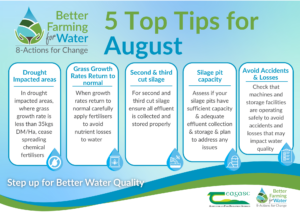
1. No chemical fertiliser below 35 kg DM/ha in drought impacted areas
In drought impacted areas, where grass growth rate is less than 35kgs DM/Ha, cease spreading chemical fertilisers. Soil Moisture Deficits (SMD) are continuing to increase in many parts of the Country and where grass growth rates have fallen below 35kgs DM/Ha, there is no point in spreading any fertiliser, as lack of moisture is the most limiting factor and this cannot be corrected until rain comes.
2. Apply fertiliser carefully as growth returns
When grass growth rates return to normal carefully apply fertilisers to avoid nutrient losses to water. Do not rush to apply fertiliser before the first rainfall is forecast, or even when it comes. Allow the rain to soak into the soil first and expect a burst of growth as there should be high levels of mineralisation from the soil at this point. Dont consider spreading fertiliser for at least 7-10 days after the rain, until grass growth rates return to normal (growing 50+ KgsDM/Ha consistently) as there is a risk that there could be a flush of nutrients, sediment and organic matter to water. Great care should be taken at this time. Spreading fertiliser too soon after a drought is a risk to animal health, water quality and a waste of fertiliser. Consult your veterinary practitioner or advisor for more advice.
3. Ensure proper effluent storage
For second and third cut silage ensure all effluent is collected and stored properly. Silage effluent losses to water remain as a potential threat for both second and third cut silages. The risk of water pollution and fish kills is perhaps greatest during prolonged dry spells as water levels are low in our streams and rivers in many cases. Even small amounts of silage effluent losses can rapidly deplete oxygen levels, and this threat is at its greatest for the first 6 weeks after ensiling but continues to remain for as long as the silage is stored. This means that vigilance is needed at all times to ensure that all effluent is collected and stored properly.
4. Plan for adequate silage and effluent storage
Assess if your silage pits have sufficient capacity & adequate effluent collection and storage and plan to address any issues. It should be obvious if there are any issues with storage capacity in silage pits and clamps once all the silage is made and ensiled. If the silage volume extends beyond the effluent channels, then the effluent has no where to go except outside the environs of the storage facility. There is a very high risk of effluent losses to water at this point and/or potential sanctions. The same applies to the storage tanks for silage effluent. They should also be carefully assessed to see if they are of adequate capacity and fit for purpose. Any issues with silage volume or effluent capacity should be addressed immediately as the consequences of losses to water can be very severe. If applying for grant aid under TAMs and/or putting in a planning application, ensure to get started as soon as possible to allow plenty of time for any delays in the system.
5. Check machinery and storage safety
Check that machines and storage facilities are operating safely to avoid accidents and losses that may impact water quality. The careful use of machinery and equipment as well as adequate storage facilities are paramount to prevent accidents that may lead to impacts on water quality e.g. when spreading slurry or using chemicals near water. The same goes for storage facilities such as underground or overground tanks that could have the potential to pollute if mismanaged or fall into disrepair. Regular checking and maintenance of machinery, equipment and storage facilities is vitally important to ensure that potential accidents do not occur.
By implementing these five practical measures, farmers can play a vital role in protecting water quality while improving the efficiency and sustainability of their farming systems. Small actions taken today can deliver lasting benefits for both the farm and the wider environment.
For more on the Teagasc Better Farming for Water Campaign, visit here.