
Focus shifts to fodder budgets and autumn grass on Teagasc/Lakeland demo farms
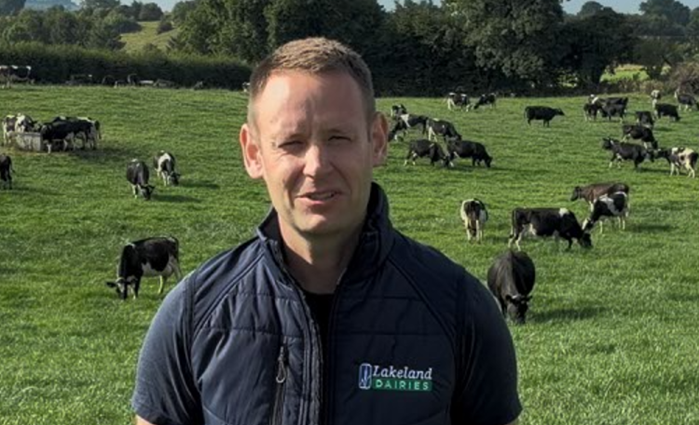
Teagasc Lakeland Dairies Joint Programme advisor, Sean Callan visits Sean Murtagh in Co. Westmeath, where the herd is producing an impressive 1.99kg MS/cow and has recovered well from this summer’s drought. He also provides an update on milk and grassland performance across the monitor farms.
Farmer update – Sean Murtagh
Sean Murtagh’s herd is currently producing an impressive 1.99 kg MS/cow, maintaining good production and dropping by just 0.01 kg MS/cow since the beginning of August. While average milk yield has fallen by 2 litres per cow, protein has increased by 0.22% and fat by 0.49%. Although Sean saw more repeats than he would have liked during the drought, he is happy with breeding performance, with an 11% empty rate in 12 weeks breeding.
At the beginning of August, growth rates dropped significantly due to the drought. As a result, Sean introduced high-quality baled silage to maintain adequate dry matter intake. With growth rates now exceeding demand, silage has been removed from the diet and cows are being allocated 19 kg DM of grass per day. Sean believes this allocation of high-quality, freshly reseeded grass is helping to maintain production while also improving milk solids.
Fodder budgets
Although the drought affected all six demo farmers this summer, the impact varied greatly between farms, particularly in terms of grass growth rates and the amount of winter fodder that had to be fed during the summer months.
Over recent weeks, all six farmers have completed a winter fodder budget to assess their individual situations heading into the winter. The results varied considerably, ranging from a 16% fodder deficit on Julie Mullarkey’s farm, to a 40% surplus on Sean Murtagh’s farm.
View Sean Murtagh’s fodder budget here.
Completing these fodder budgets has given the farmers peace of mind, knowing their feed situation for the coming winter. For others, it has provided the confirmation they needed to purchase additional feed to see them through the coming months.
Completing a fodder budget is important on every farm, but doing it early is key. Identifying a potential shortage now gives farmers more time and more options to take action and secure additional feed before the onset of winter.
Group performance update
Producing an average of 1.87 kg MS/cow last week, milk performance is holding up across our Demo Farms, with protein levels as high as 4.04% and fat levels reaching 5.29%.
Table 1: Milk production on the Teagasc/Lakeland demo farms (week starting September 7, 2026)
| Farmer | Location | Litres/cow | Fat % | Protein % | Kg MS/cow | SCC ‘000 | Meal kg |
| Julie Mullarkey | Monaghan | 22.0 | 4.73 | 3.88 | 1.95 | 171 | 3 |
| Cian Jobe | Longford | 19.5 | 5.21 | 3.83 | 1.82 | 77 | 3 |
| Killian Brennan | Cavan | 19.0 | 5.26 | 4.04 | 1.82 | 109 | 4 |
| Sean Murtagh | Westmeath | 22.0 | 4.88 | 3.9 | 1.99 | 118 | 4 |
| Eoin Corrigan | Meath | 19.0 | 5.29 | 3.89 | 1.80 | 220 | 4 |
| Andrew Cluskey | Louth | 20.4 | 4.9 | 3.75 | 1.82 | 140 | 4 |
| Average | 20.3 | 5.05 | 3.88 | 1.87 | 139 | 3.7 | |
Grass performance update
All farmers are now focused on building grass covers for the autumn, with the aim of having enough grass available to maintain grazing into early November. Since the first week of August, the group’s average farm cover has increased by 72% to 892 kg DM/ha, while cover per livestock unit has risen by 76% to 274 kg DM/LU.
To continue building grass, farmers are working to extend rotation length to 35-40 days while also reducing demand on the milking platform.
Where possible, heifers are being moved to out-blocks to reduce grazing demand. Some farmers are also removing cull and underperforming cows from the herd. This will further reduce overall demand on the farm and help build and protect grass supplies for the autumn, while also reducing winter feed requirements and the amount of additional fodder that may need to be purchased on farms facing a deficit.
Table 2: Grassland performance on the Teagasc/Lakeland demo farms (week starting September 7, 2026)
| Farmer | Location | Average farm cover | Cover/LU | Pre-grazing yield | Demand/ha | Growth rate/ha |
| Julie Mullarkey | Monaghan | 1,123 | 215 | 2,010 | 94 | 81 |
| Cian Jobe | Longford | 888 | 302 | 1,800 | 35 | 68 |
| Killian Brennan | Cavan | 907 | 294 | 1,800 | 59 | 70 |
| Sean Murtagh | Westmeath | 933 | 334 | 1,800 | 51 | 62 |
| Eoin Corrigan | Meath | 751 | 222 | 1,800 | 41 | 56 |
| Andrew Cluskey | Louth | 750 | 278 | 1,200 | 49 | 40 |
| Average | 892 | 274 | 1,200 | 55 | 63 |
Sean Callan, Teagasc Advisor on the Teagasc/Lakeland Joint Programme, joined Stuart Childs on a recent episode of the Dairy Edge podcast, providing an overview of how farmers in the catchment were affected by drought, along with how farms have recovered since. Listen in below: