
FORADVISE – Strengthening Europe’s Forestry Advisory Network
FORADVISE is a Horizon Europe funded project that is bringing together over 30 beneficiaries and stakeholders working to create a Europe-wide forestry advisory network. It seeks to empower the provision of forestry advice through sharing of knowledge, good practices, digital tools, training and peer to peer collaboration. Dr Mireille Ginesy, Teagasc Extension Officer with the FORADVISE project tells us more.
To advance towards more resilient, multifunctional, and productive forests in Europe, it is essential to continuously strengthen forest advisory services, enhance the capacity of forestry advice providers, and promote innovation adoption. As advisory methods, forest management types and objectives, and foresters’ experience with given challenges and opportunities vary across Europe, cross-border sharing of knowledge, skills, and practices will undoubtedly benefit all involved in advice provision.
FORADVISE, a European Union-funded project running from 2025 to 2029, is establishing a European forestry advisory network, improving knowledge exchange in the forestry sector, and making information on sustainable forest management practices and existing decision support tools more accessible. The objectives are both to increase the technical skills of actors involved in the provision of forestry advice and to enhance their capacity to engage and effectively support a wide range of forest owners. FORADVISE also aims at developing a strong Forest Knowledge and Innovation System (FOKIS) in Europe.
National Contact Points and networks
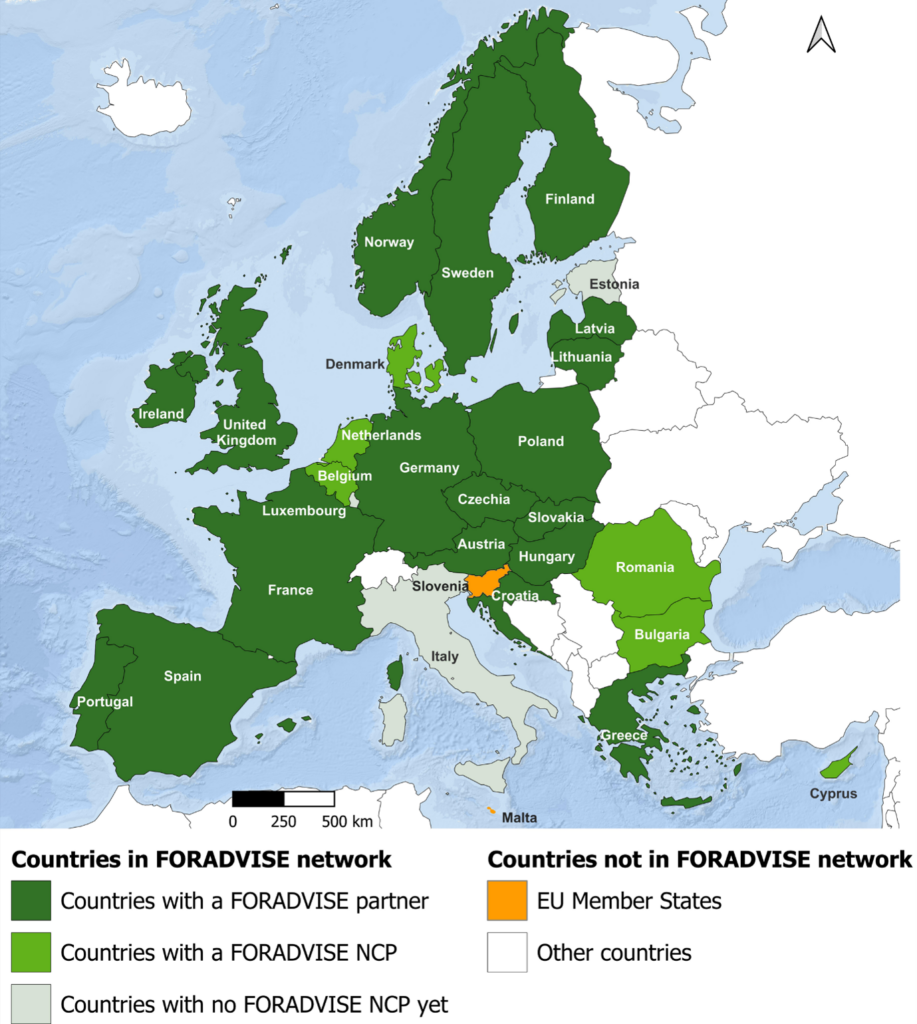
FORADVISE is coordinated by the European Forest Institute (EFI) and brings together 32 members in 18 European countries. The project’s partners represent a variety of stakeholders within the FOKIS, including forestry advice providers, research institutions, universities, and administrative authorities. In each country, project activities, including the setup and support of national advisory networks, are coordinated by a dedicated National Contact Point (NCP). Teagasc, the NCP for Ireland, has also been leading the task of identification and supporting these NCPs across Europe.
FORADVISE is actively working towards the creation of a forest advisory network covering all the European Union Member States. To this end, collaborations have also been established with forestry organisations in countries not represented within the project consortium, bringing the total number of countries involved in the network to 27.
The project established key thematic working groups, made up of experts and interested stakeholders across Europe, focusing on 6 key forestry areas:
- Climate change and forest protection, which covers how to build resilience in a changing climate and an increasing risk of disturbances (droughts, wildfires, windstorms, pests, and pathogens), as well as how to best respond to disturbance.
- Closer-to-nature forestry and biodiversity conservation, which focuses on how to take both forest productivity and biodiversity into account in forest management through continuous cover forestry or other practices.
- Agroforestry, which concentrates on how agricultural elements can be integrated into forest management and how timber production or other forestry objectives can be integrated into agriculture.
- Non-wood forest products, which intends to disseminate knowledge on forest management for the production of diverse products and the economic opportunities these offer.
- Sustainable wood supply, a wide topic encompassing the entire value chain from stakeholder engagement to forest inventory, harvesting techniques, and timber marketing.
- Payment for ecosystem services, which will look at options to generate income from other forest functions, i.e. carbon storage, water preservation, and biodiversity conservation.
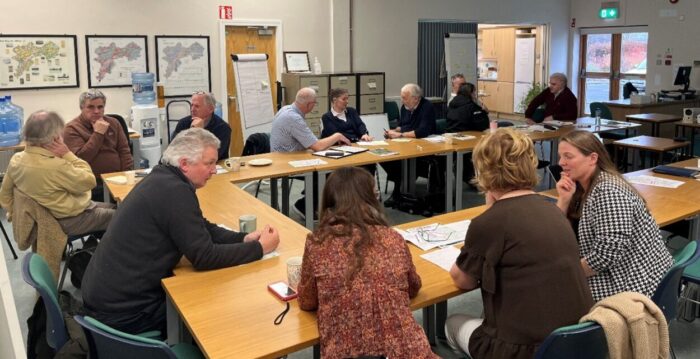
In the first phase of the project, national forest advisory networks were created and kick-off workshops bringing together stakeholders took place in 17 participating countries. Participants discussed the challenges they regularly face with regard to forest advisory, what advisory areas the FORADVISE project can help with, and what knowledge and good practices they could share with others.
In Ireland, the workshop was held on December 10th, 2025. Participants brought forward important themes including the need to learn about dealing with windblow and building resilience to future storms, dealing with biotic threats (pests and pathogens), best management of smaller and fragmented forest ownership, enabling wider private forest certification, and opportunities for payments for ecosystem services, among others.
Based on the outputs from all FORADVISE national forest advisory workshops, the thematic working groups identified the most important challenges and needs related to their subject area and are gathering relevant resources, existing tools, and good practices that can help address them. In the upcoming period, project partners will work to make this information readily available to forest advice providers through webinars, workshops, an online resources collection, and training materials.
From September 2026, monthly webinars will showcase examples of good practices, with opportunities for discussion. Each webinar will focus on one of the priority topics identified by the thematic working groups. The calendar of upcoming webinars will be made available soon. Factsheets will also be prepared to make resources and good practices related to a specific issue readily accessible.
A first webinar on “Marteloscope: a tool for closer-to-nature management“ was organised in June, in partnership with FOREXT. Watch the webinar below, and access the summary factsheet on the FOREXT website.
Members of the national forest advisory networks will get the opportunity to attend online or in-person workshops around the six themes covered.
National forest advisory workshops will be held annually for the duration of the project to disseminate the knowledge gathered through FORADVISE activities, update the needs and challenges to address in upcoming activities, and reflect on the outcomes of previous activities. Biannual ‘Communities of Practice’ bring together representatives of the national networks and of the thematic working groups, to discuss future activities, possible improvements, and emerging needs from the national networks.
Another aspect of the project is the organisation of five knowledge transfer pilots, each consisting of one project partner demonstrating an established and impactful advisory practice to another partner and helping the partner implement it in their country. These pilots will run for three years. Details of the practices, outcomes of their implementation in a new country, and lessons learned will be made available to promote adoption beyond the pilot participants and facilitate further practice exchanges. Teagasc is taking part in this initiative and will invite representatives from the National Forest Centre in Slovakia to attend the 2027 edition of their timber marketing event ‘Talking Timber’ and assist in creating and organising of a similar event in Slovakia. The pilot will also cover how to best promote forestry events, facilitating outreach and cross-sector engagement.
For further information on the FORADVISE project contact Mireille Ginesy, Teagasc FORADVISE Liaison Officer, at Mireille.ginesy@teagasc.ie or Tom Houlihan, Acting Head of Teagasc Forestry Development Department, at Tom.Houlihan@teagasc.ie