
Forest Gardens – working with nature
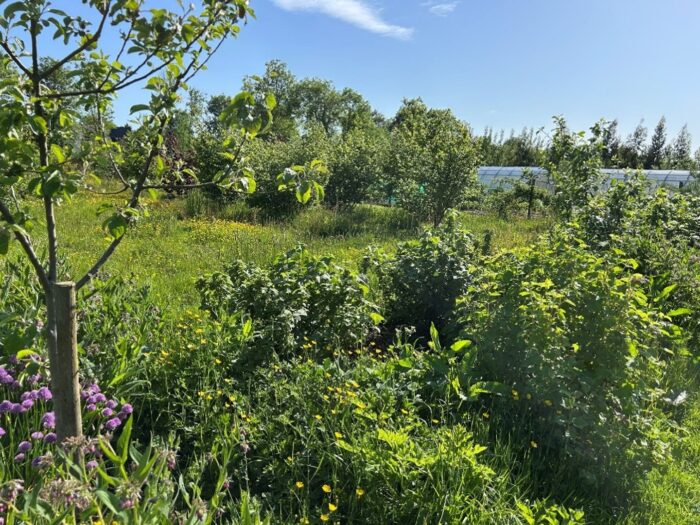
The Teagasc Forestry Development Department recently organised two Forest Garden walks. These events highlighted the opportunities provided by this recently launched planting option that allows participants work with nature. Teagasc Forestry Liaison Officer, Paul Butler tells us more.
What is a forest garden?
Forest gardens is a pilot forest type category (FT14) now available under the Department of Agriculture, Food and the Marine’s Afforestation Scheme. They can be created at small scale to make optimal use of available space on farms, smallholdings, community owned and public lands
The idea of a forest garden is to develop a diverse, low-maintenance, land management system combining a food producing understory (comprising of fruit and nut trees, shrubs, herbs and vegetables) along with an overstory forest layer.
One of our recent walks was held in Cuan Forest Garden in Louisburgh, Co Mayo and the other at Tonnog Farm in Cahir Co Tipperary. Both are young sites of approximately 7 years of age and participants were able to experience what a forest garden potentially looks and feels like.
There were very interesting discussions on planting layouts, fertilising, species selection and site variability. Another important design aspect was the influence of the personal preferences and skills of the landowner on the site.
Forest Garden characteristics
Some characteristics of forest gardens that were clear from these walks were:
- The forest garden design is site dependent
- The forest garden is highly influenced by owner skills and preferences
- It is largely self-fertilising using plants such as comfrey, broom and alder on. For example, a chop and drop system.
- It is made up of diverse layers of vegetation which maximise the photosynthetic activity of the site
- There is a high degree of diversity in both species selection and age structure of the plants used. In this sense the forest garden mimics a natural forest structure
- There is a dominant use of perennial plants
- Once established the forest garden has a relatively low labour requirement
- There is a selection of rootstocks available, both commercial and native, for the main fruit trees and the selection of an appropriate rootstock can enhance productivity
- There are a variety of potential products from a forest garden that include
- Nuts and fruits
- Medicine
- Basket material
- Sap
- Fuelwood
- Timber
- Honey from bees kept as part of the garden system
- Eggs or meat from poultry
- Mushrooms grown on timber logs
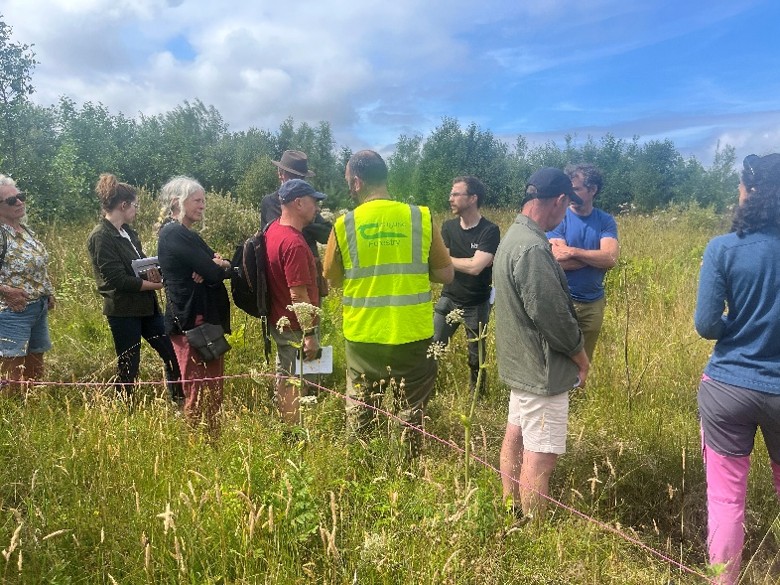
Forest garden group at Louisburgh
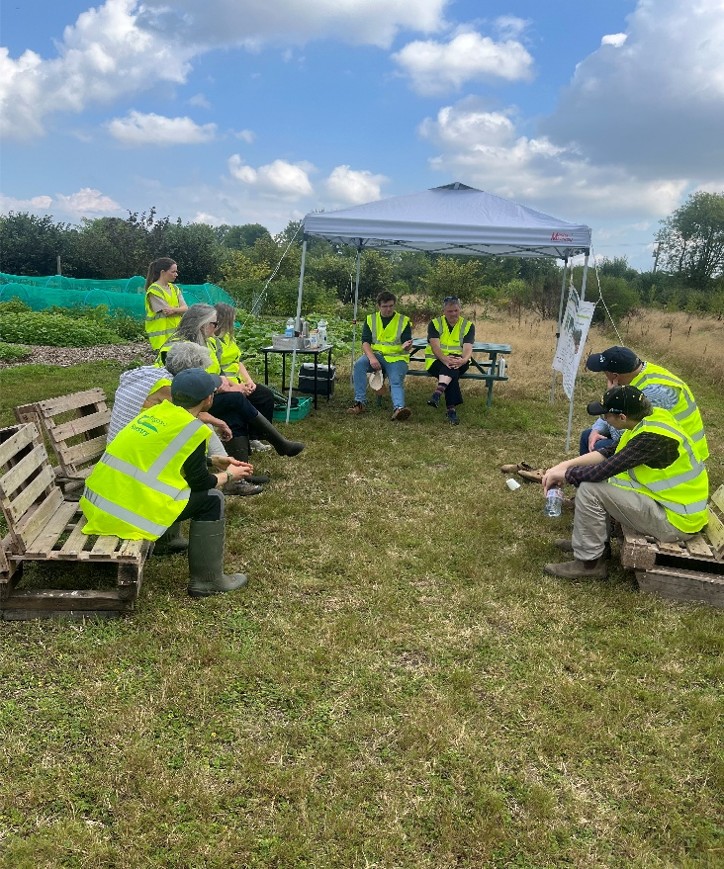
Forest Garden group at Cahir
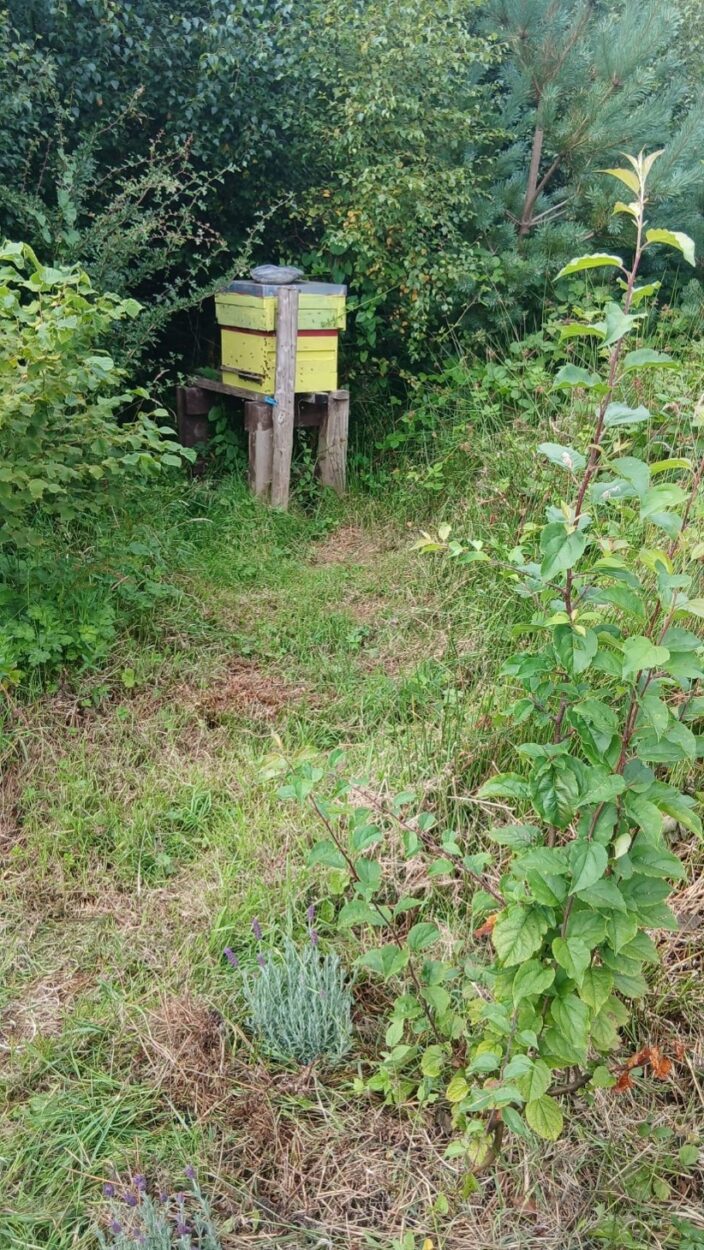
Typical layer structure – lavender (herb layer), crab apple, hazel and hawthorn (shrub layer) with birch and Scots pine as eventual overstory layer. Note bee hive for honey production
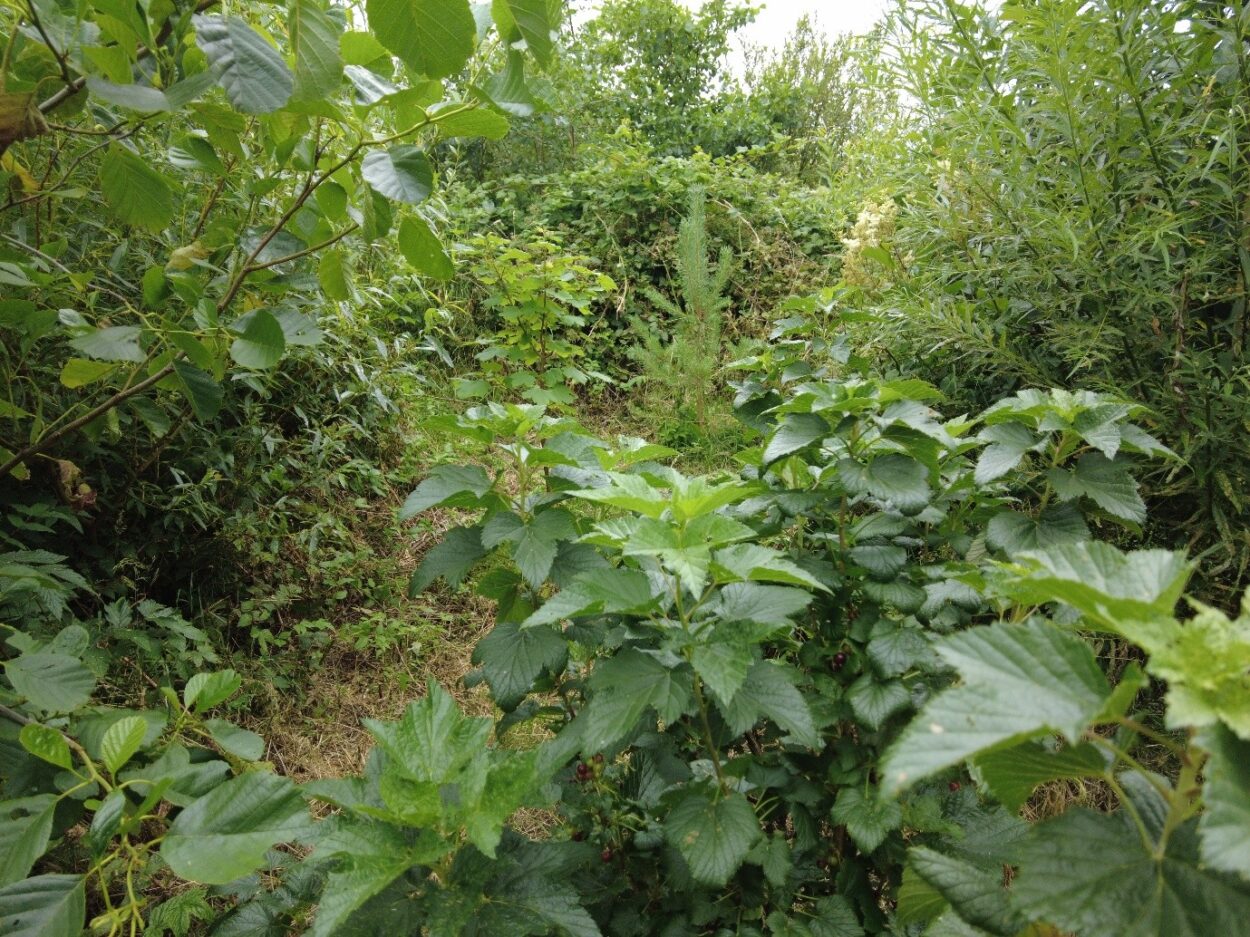
Diverse mix of blackcurrants for fruit , alder for fertiliser, willow for shelter and rod and Scots pine as eventual overstory timber tree
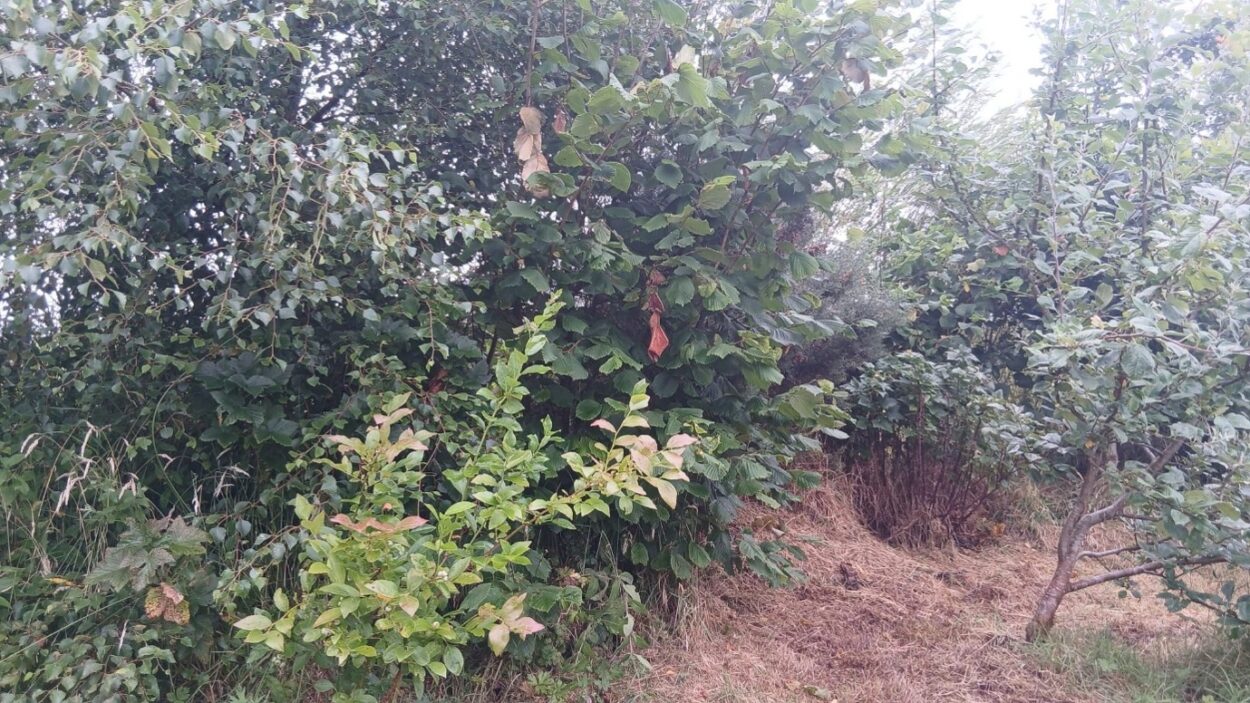
Blueberries, apples, hazels, currants and birch