
23 December 2024
Get the transition right to set the herd up for success in 2025
During the dry cow period, there are a number of key pillars to get right to ensure the successful transition of the herd into early lactation, Aisling Claffey, Teagasc Ruminant Nutrition Specialist, tells us more.
Body condition score
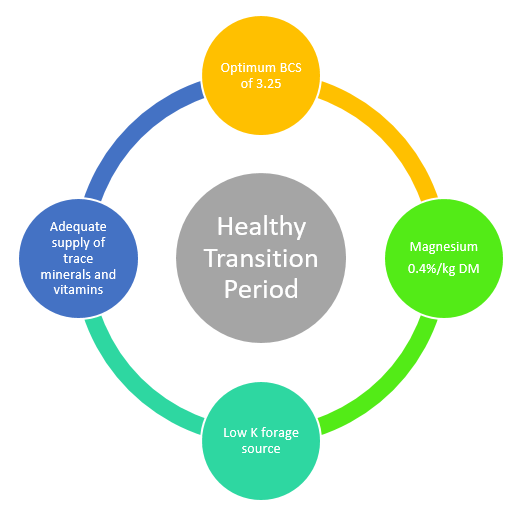
Ensure silage quality is sufficient for dry cows; 68 dry matter digestibility (DMD) silage will support moderate body condition score (BCS) gain provided cows have an adequate dry period (8 weeks) and are dried off in BCS of 2.75-3.0. Monitor body condition score fortnightly during this period to ensure cows are at BCS of 3.25 (range of 3.0-3.5) for calving.
It is particularly important to monitor later-calving cows (March/April) that have a longer dry period. Where possible group later-calving cows together, and depending on BCS now and silage quality, restrict access to silage if necessary until 3-4 weeks pre-calving to avoid cows exceeding a BCS of 3.5. Overfat cows have a higher risk of milk fever and metabolic disorders arising.
Pre-calver minerals
Ensure a consistent supply of pre-calving minerals (120g/cow/day) on a daily basis for 6-8 weeks pre-calving to allow adequate phosphorous, magnesium, trace elements and vitamins to be supplied for this period of rapid foetal growth. Dust minerals twice daily, particularly where feed space is limited.
As a rule of thumb, a 25kg bag of minerals should be used every two days for a 100-cow herd. Be particularly conscious of the calving shed /close-up group, where stock numbers may be changing regularly, to ensure cows are getting sufficient magnesium supply (0.4 %/kg DM) to support calcium mobilisation.
Low potassium forage source
High levels of potassium (K) in grass silages can be common due to the timing and volume of slurry application. Potassium interferes with the absorption of magnesium and can result in increased risk of sub-clinical milk fever. Avoid feeding silages with a potassium level in excess of 2.4% to cows in the final 2-3 weeks before calving to minimise these risks. If sub-clinical milk fever is an issue on your farm, consider an alternative silage source for close-up cows that got minimal K applications or consult with your advisor on alternative management strategies.
Keep good records
Indicators of sub-clinical milk fever (retained cleanings, mastitis, metabolic issues) can often be overlooked during such a busy time on farm, but they can result in impaired performance throughout early lactation, and result in negative health and fertility outcomes. Good records will prove helpful when seeking advice and support with issues.
Inadequate colostrum volume and/or poor quality may be an indicator of poor nutritional status of close-up cows. Test colostrum quality to ensure your newborn calves are receiving adequate transfer of immunity!