
Getting the Cow ready for Calving
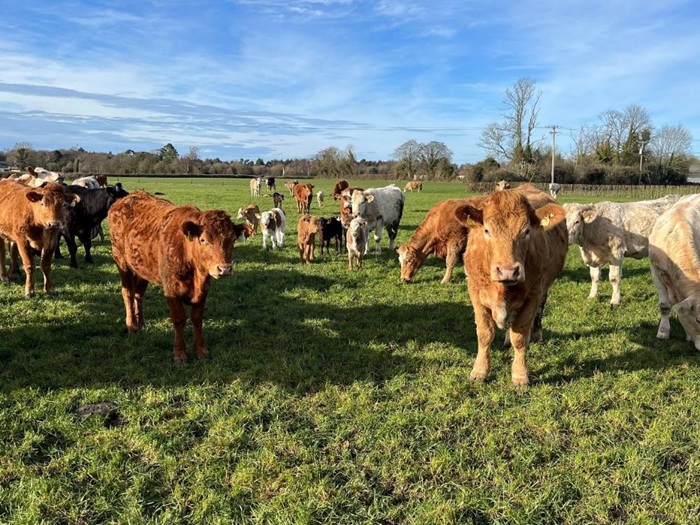
We’re quickly heading into calving on many suckler farms. Now is the time to prepare, because the steps you take in the coming weeks will set the foundation for a smooth calving period and, ultimately, the performance of the whole year. Enda Neylan tells us more.
Nutrition
Nutrition during pregnancy is central to suckler herd performance. It influences calving difficulty, calf losses, milk yield, retained cleanings, and how quickly cows resume cycling. Aim for cows that are “fit, not fat” at calving, with a target body condition score (BCS) of 2.5–3.0 on the 1–5 scale (1 = very thin, 5 = very fat).
On housing, divide cows into three groups so feeding can match need:
- BCS 2.5–3.0: feed moderate-quality grass silage (about 65–67 DMD) to appetite.
- Over-fat cows: restrict higher-quality forage or dilute with straw, as appropriate.
- Thin cows: offer silage ad lib and add concentrates if required.
If restricting feed, ensure adequate feed space so all cows can eat together. Plan winter feeding in two phases:
- First three months of housing: tailor diets by group to correct condition, aiming to have thin and fat cows back on target 50–60 days before calving.
- Final two months of pregnancy: move the whole herd onto one consistent pre-calving diet and maintain it up to calving.
You can’t solve calving difficulty by underfeeding cows
Many herds are now moving into the second feeding phase. Remember: aim to change BCS/live‑weight in mid‑gestation only. In the last two months before calving, the cow’s energy intake is directed to the calf, around 75–90% of calf growth happens in the final three months, so avoid trying to alter cow condition then.
Over or under feeding late in pregnancy raises risks:
- Overfeeding: increases calf birth weight and fat deposition in the pelvic canal, leading to dystocia.
- Underfeeding: results in weak, low‑vigour calves and cows lacking the strength to calve.
Difficult calvings reduce subsequent reproductive performance, and cows that calve down in poor BCS can take up to three weeks longer to resume cycling. Plan to correct condition in mid‑gestation, then hold cows steady on a consistent pre-calving diet in the final 6–8 weeks.
Pre-Calver Minerals
Offer a suitable pre-calver mineral for 4–6 weeks before calving. This supports better colostrum and a lively, vigorous calf. You can feed pre-calver minerals by dusting onto silage, via water systems, using boluses (trace elements only, do not cover macro minerals), or molasses mineral buckets. Typical feeding rate is around 120 g/cow/day, weigh it to be sure. If top-dressing on silage, apply twice daily and provide 1.5–2 ft of feed space per cow. Do not use leftover minerals from last year.
Focus on the key macro minerals, Magnesium (Mg), Phosphorus (P) and Sodium (Na), plus the necessary trace elements and vitamins. Do not feed Calcium (Ca) to dry cows; supplying Ca pre-calving interferes with calcium mobilisation and increases the risk of milk fever after calving.
For exact targets, see the pre-calving mineral and vitamin requirements for suckler cows in the tables below.
Macro Minerals
| Macro minerals | g/day | What you see % | 100g/kg | 120g/day | Notes |
|---|---|---|---|---|---|
| Magnesium | 17-20g | 17% | 17g | 20g | if silage >30% need to increase to 20g |
| Calcium | 0g | 0-2% | 0g | 0g | Keep higher on straw |
| Phosphorus | 4.5g | 14% | 4g | 4.8g | >3% if fed straw |
Micro Minerals
| Micro minerals / Required | What you see | /kg | Feeding | /day | Notes |
|---|---|---|---|---|---|
| Copper | 200-400mg | 0.7mg/kg | 170mg | 350mg | 1/2 Su, see note |
| Iodine | 20-60mg | 50mg/kg | 50mg | 60mg | NB for suckling |
| Manganese | 35-105mg | 1mg/kg | 100mg | 120mg | NB |
| Zinc*** | 335-600mg | 5mg/kg | 540mg | 648mg | 1/3 protected if Fe high |
Vitamins
| Vitamins | IU/day | What you see | 1000iu | 12000iu | Notes |
|---|---|---|---|---|---|
| A | 100000iu | 1000000ug | 100000iu | 120000iu | NB Milk Fever |
| E | 2000iu | 4000ug | 2000iu | 2400iu | Diet higher on straw |